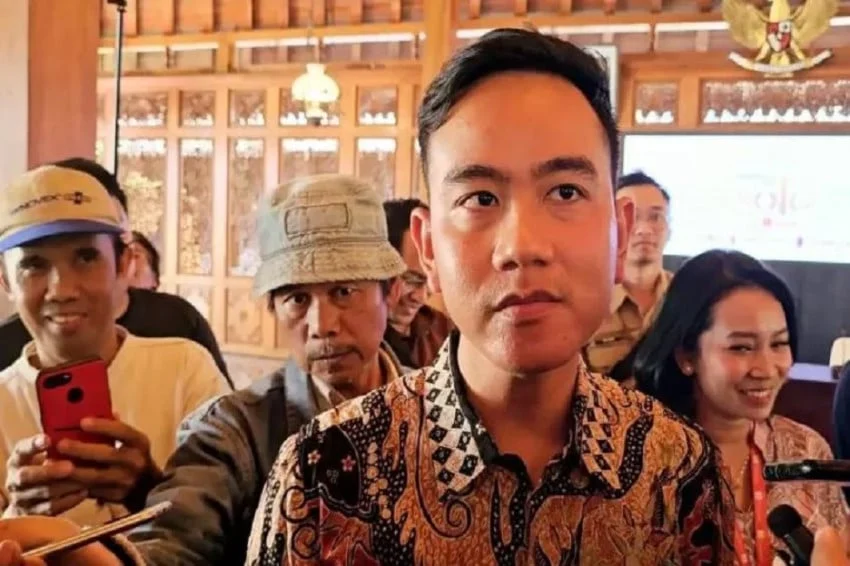
JAKARTA — The legal team representing the plaintiffs challenging the educational equivalence certificate (surat keterangan penyetaraan pendidikan) of Vice President Gibran Rakabuming Raka has formally clarified the underlying reasons for withdrawing their lawsuit at the Jakarta State Administrative Court (PTUN Jakarta). The decision to retract the legal action marks a strategic pivot in an ongoing controversy surrounding the academic credentials of Indonesia’s second-highest-ranking official, shifting the focal point of the legal and public discourse to testimonies previously entered into the national record.
The withdrawal of the lawsuit, which initially sought to invalidate the administrative issuance of the educational equivalence certificate for high school credentials obtained abroad, has drawn significant attention from legal practitioners, political analysts, and the general public. While the PTUN challenge has been formally dropped, the debate regarding the validity, procedural transparency, and documentary basis of the vice president’s academic background continues to resonate across legal and legislative spheres.
Background Context and Origins of the Dispute
The controversy concerning Gibran Rakabuming Raka’s educational background stems from public scrutiny over his formative academic years spent overseas before entering domestic higher education and subsequent political life. Questions regarding the exact nature of his secondary education qualifications prompted various civil society groups, educational activists, and legal practitioners to scrutinize the administrative procedures employed by the Ministry of Education, Culture, Research, and Technology—specifically the Directorate General of Higher Education, Research, and Technology—in issuing the equivalence certificate.
In administrative law, an educational equivalence certificate is a formal determination that verifies whether a foreign qualification meets domestic standards equivalent to a specific local credential, such as an Indonesian Senior High School (SMA) diploma. For public figures holding high office, the authenticity and procedural correctness of such documents are matters of substantial public interest, as they relate directly to the statutory requirements for public candidacy and general administrative accountability.
The legal challenge at PTUN Jakarta was initiated by plaintiffs who argued that the issuance of the equivalence certificate lacked sufficient foundational proof and did not adhere strictly to established administrative guidelines. However, as the legal battle unfolded across multiple judicial forums, the plaintiffs’ strategy underwent a significant reassessment.
The Shift in Legal Strategy: Why the PTUN Case Was Dropped
Speaking on behalf of the educational activists and legal practitioners involved in the case, attorney Mercy Sihombing, alongside co-counsel Heriyanto, elaborated on the rationale behind the voluntary withdrawal of the PTUN lawsuit. According to Heriyanto, the primary driver for dropping the administrative court case is that the core substantive facts regarding Gibran’s educational history have already been extensively ventilated and placed on the public record through open proceedings at the Constitutional Court (Mahkamah Konstitusi or MK).
Heriyanto emphasized that during the Constitutional Court hearings, competent authorities and official representatives—including relevant directors-general, members of the working group (Pokja) responsible for credential equivalence, and officials from the Embassy of the Republic of Indonesia (KBRI)—provided official testimonies under oath.
"In the Constitutional Court, open public hearings have already taken place. All authorized authorities have provided explanations. Meanwhile, the parties being sued at the PTUN are not the primary authorities competent to explain those specific matters," Heriyanto stated.
By shifting reliance to the testimonies and documentary evidence gathered during the Constitutional Court proceedings, the legal team determined that pursuing a parallel, protracted battle in the administrative court was redundant and less effective than analyzing the admissions made by state authorities in the constitutional hearings.
Scrutiny Over Documentary Evidence and Equivalence Procedures
A critical element highlighted by the plaintiffs’ legal team centers on the procedural steps utilized by the Ministry’s working group to grant the equivalence certificate. According to disclosures made during the MK proceedings, the credential evaluation was allegedly processed based primarily on three core documents: a Certificate of Attendance, an Enrollment document, and a comprehensive academic transcript.
This revelation has intensified skepticism among legal observers and educational watchdogs. Heriyanto noted that the heavy reliance on a Certificate of Attendance—which typically verifies physical presence rather than the successful completion of curriculum requirements or the passage of standardized examinations—raises serious questions about whether standard equivalency benchmarks were fully satisfied.
Critics and legal analysts point out that an enrollment record and attendance certificate alone do not necessarily equate to the fulfillment of graduation criteria mandated for a standard high school diploma. The defense and supporting authorities, however, have maintained that administrative discretion and established guidelines for foreign graduate evaluations permit the issuance of equivalence certificates under specific ministerial frameworks designed to accommodate diverse international educational systems.
Broader Legal Landscape: Parallel Challenges and Judicial Developments
The withdrawal of the PTUN Jakarta lawsuit does not occur in a vacuum. It is part of a broader, complex web of legal challenges involving various judicial bodies in Indonesia scrutinizing different aspects of the vice president’s administrative and educational documentation.
In a parallel development that energized critics of the administration, reports surrounding decisions by the Supreme Court (Mahkamah Agung or MA) regarding related educational equivalence challenges have fueled ongoing public debate. Activists and opposing figures have frequently framed these legal maneuvers as essential exercises in upholding institutional transparency and ensuring that executive officials meet the highest standards of documentary compliance.
Legal experts note that administrative law cases in Indonesia often face stringent procedural hurdles, including strict statutes of limitations for filing lawsuits against state administrative decisions (Keputusan Tata Usaha Negara) and the requirement for plaintiffs to prove direct legal standing (standing hukum). The decision to withdraw the PTUN case may also reflect a tactical assessment of these procedural constraints, allowing the legal team to conserve resources while leveraging evidence already admitted in higher-tier constitutional forums.
Implications for Administrative Governance and Public Trust
The ongoing discourse surrounding Vice President Gibran Rakabuming Raka’s educational credentials carries broader implications for administrative governance, bureaucratic transparency, and the rule of law in Indonesia.
-
Transparency in State Bureaucracy: The case has brought intense scrutiny to how government ministries handle the verification and equivalency of foreign academic qualifications. Civil society organizations argue that the procedures must be transparent, standardized, and robustly documented to prevent perceptions of preferential treatment or administrative laxity when evaluating credentials of high-ranking public figures.
-
Jurisdictional Boundaries: The rationale provided by the plaintiffs’ legal team—that testimony from higher authorities in the Constitutional Court supersedes the utility of lower administrative court proceedings against secondary defendants—highlights the strategic complexity of navigating Indonesia’s multi-layered judicial system. It underscores how evidence introduced in constitutional review processes can reshape strategies in administrative litigation.
-
Political and Public Perception: In the court of public opinion, the legal back-and-forth serves as a persistent flashpoint between supporters of the current administration and political opposition groups. While defenders of the vice president dismiss the challenges as politically motivated attempts to undermine his legitimacy, critics insist that absolute clarity regarding academic qualifications is a fundamental prerequisite for public accountability.
Future Outlook and Next Steps
As the dust settles on the withdrawal of the PTUN Jakarta lawsuit, legal analysts expect that civil society groups and educational watchdogs will continue to monitor administrative practices within the Ministry of Education. While a direct judicial order from the administrative court will no longer be pursued under this specific action, the public record established through the Constitutional Court testimonies remains accessible for academic, journalistic, and future legal scrutiny.
The legal team representing the plaintiffs has indicated that they will review the comprehensive transcripts from the MK hearings to determine the next appropriate steps in their ongoing advocacy for educational integrity and administrative transparency. For now, the legal battleground has shifted from the courtroom formalities of the PTUN back to the broader domain of public accountability, institutional oversight, and the ongoing debate over the standards governing official credentials in Indonesian public office.