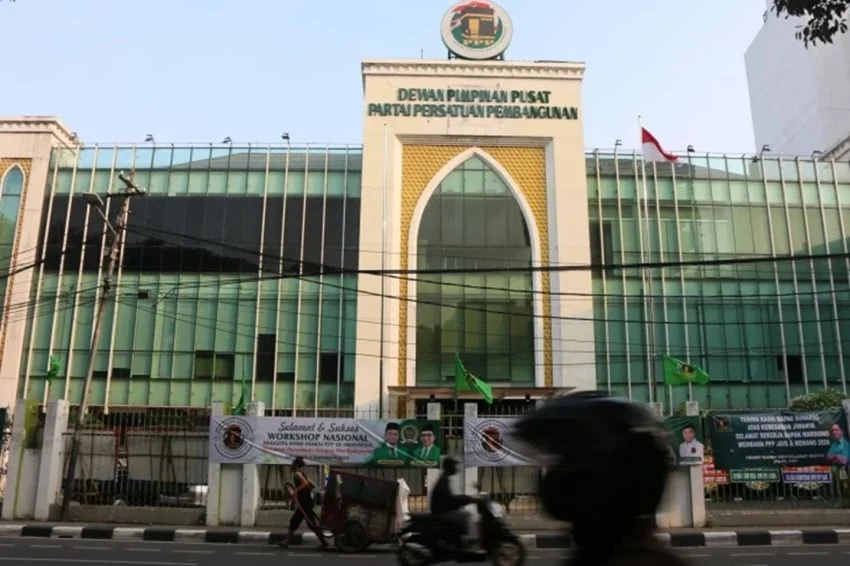
The recent high-profile decision by the Central Leadership Board of the United Development Party, known natively as Dewan Pimpinan Partai Persatuan Pembangunan (PPP), to dismiss Deputy Chairman Agus Suparmanto and Secretary-General Taj Yasin has generated significant political discourse across Indonesia. This major structural realignment, centered around the party headquarters located on Jalan Diponegoro in Central Jakarta, has been interpreted by legal and political analysts not merely as an internal disciplinary measure, but as a potential turning point for the historic Islamic-based party. As political actors across the archipelago begin positioning themselves well in advance of the 2029 general elections, legal representatives and regional stakeholders have stepped forward to evaluate the long-term ramifications of this decisive leadership purge, viewing it as a necessary catalyst for comprehensive institutional reform.
The unfolding dynamics within the party headquarters reflect a critical juncture in contemporary Indonesian party politics. By removing two of its most prominent figures from their respective executive portfolios, the central leadership has signaled an uncompromising approach to organizational alignment. While such drastic administrative actions frequently risk exacerbating factional friction, regional supporters and legal counsels argue that definitive governance is vastly superior to prolonged administrative ambiguity. This comprehensive report examines the chronology of the dismissals, the underlying structural challenges facing the party, regional reactions, and the broader implications for PPP as it seeks to rebuild its electoral viability following recent setbacks.
Chronology of the Leadership Realignment and Internal Strife
The friction leading to the removal of Agus Suparmanto and Taj Yasin did not occur in a vacuum; rather, it represents the culmination of mounting ideological and administrative tensions within the party apparatus. Over the preceding months, subtle disagreements regarding strategic direction, regional coordination, and alignment with broader national political trajectories began to fracture the unity of the central executive board.
As debates intensified behind closed doors at the Jalan Diponegoro headquarters, the leadership faced mounting pressure from regional chapters—known as Dewan Pimpinan Wilayah (DPW)—to resolve internal deadlocks that threatened to paralyze day-to-day operations. The lack of consensus on key policy positions and electoral preparations created an atmosphere of uncertainty that reportedly alienated grassroots supporters and local cadres.
Recognizing that prolonged internal paralysis could prove fatal to future electoral prospects, the core leadership convened to enact sweeping structural changes. The official dismissal of Agus Suparmanto and Taj Yasin was subsequently formalized, effectively stripping them of their executive authority within the party structure. This decisive intervention was designed to halt further factional drift and reassert central command over the organization. Although critics have pointed out that administrative interventions of this magnitude should ideally have been executed much earlier in the political cycle, the prevailing sentiment among loyalist factions is that immediate stabilization remains paramount.
Legal and Regional Perspectives on the Administrative Purge
Weighing heavily on the debate surrounding the dismissals, Zakirudin Chaniago, legal counsel for the PPP Regional Leadership Board of Banten, emerged as a prominent voice defending the central board’s actions. Offering a structured assessment of the situation, Chaniago asserted that the leadership’s refusal to tolerate internal ambiguity demonstrates a commendable commitment to organizational clarity.
According to Chaniago, modern political parties operating in Indonesia’s fiercely competitive electoral landscape cannot afford the luxury of divided leadership or conflicting public messaging. When key executives diverge from the collective platform, decisive administrative measures are required to protect the integrity of the institution. Speaking on the timing and execution of the maneuver, Chaniago acknowledged that while the intervention might be viewed by some observers as belated, it nonetheless opens a viable pathway for organizational recovery.
"Hemat saya, justru sikap dan tindakan DPP PPP seperti tersebut sangat tepat dan jelas lebih baik daripada mengambil sikap ambigu," stated Chaniago, emphasizing that resolute leadership outclasses indecisiveness every time. He further noted that although the party is currently navigating a challenging recovery phase, the structural clearing of the decks provides a clean slate for the appointment of more aligned and dynamic leaders capable of steering the party toward the next electoral horizon.
Historical Context and the Legacy of PPP in Indonesian Politics
To fully comprehend the significance of the current leadership turmoil, one must examine the historical trajectory of the United Development Party within the broader framework of Indonesian democracy. Founded in 1973 through the amalgamation of several Islamic political parties—namely Nahdlatul Ulama (NU), Parmusi, PSII, and Perti—PPP stands as one of the oldest surviving political entities in the post-independence era. Throughout the New Order period and well into the Reformasi era, the party served as a primary political vehicle for traditionalist and modernist Islamic constituents.
However, the contemporary political landscape has proven increasingly unforgiving to traditional middle-tier parties. In the legislative elections leading up to the most recent national polls, PPP faced severe electoral headwinds, culminating in a historic struggle to surpass the parliamentary threshold required to secure seats in the People’s Representative Council (DPR). This existential electoral threat transformed internal governance from a routine administrative matter into a high-stakes battle for survival.
The departure of figures such as Taj Yasin—a prominent religious figure and former regional leader with deep familial ties to traditional Islamic scholarship—also brings to the forefront the delicate relationship between political pragmatism and religious authority. Concerns voiced by figures within the party regarding the need for spiritual guidance rather than the alienation of traditional clerics underscore the delicate balancing act required to maintain the party’s historic identity while pursuing modernization.
Implications for the 2029 General Elections and Strategic Outlook
As the dust settles around the Jalan Diponegoro headquarters, political strategists are closely monitoring how PPP will leverage this restructuring to prepare for the 2029 general elections. The primary challenge facing the interim and newly appointed leadership is twofold: repairing fractured regional networks and formulating a compelling electoral narrative that resonates with a younger, increasingly urbanized Indonesian electorate.
-
Internal Consolidation and Regional Alignment
The immediate priority for the central board is to mend fences with disgruntled regional chapters. Discontent at the grassroots level, if left unaddressed, can severely impair the party’s ability to mobilize volunteers and secure logistical support during campaign cycles. By streamlining the central command, the party hopes to establish a more unified and responsive administrative pipeline that connects national policy directly to local execution. -
Rebranding and Ideological Positioning
PPP must carefully navigate its historical identity as an Islamic-oriented party while projecting a modern, inclusive image capable of capturing swing voters. The removal of key figures who may have held divergent ideological visions allows the current leadership to consolidate a singular, coherent platform focusing on economic justice, social welfare, and good governance. -
Rebuilding Relations with Religious Constituencies
Given the party’s deep historical roots in Indonesia’s Islamic boarding school (pesantren) networks and traditionalist clerical circles, repairing relationships with alienated religious leaders is critical. Figures within the party have repeatedly emphasized that institutional success depends heavily on maintaining the moral and spiritual guidance of ulama, ensuring that administrative restructuring does not alienate the party’s core demographic base.
Conclusion
The dismissal of senior executives Agus Suparmanto and Taj Yasin marks a watershed moment for the United Development Party. While the transition period is fraught with administrative challenges and potential factional friction, the decisive action taken by the central leadership has effectively eliminated prolonged ambiguity. As articulated by regional legal and political defenders, this bold move provides a much-needed opportunity for organizational recovery and strategic realignment.
With the 2029 general elections on the horizon, the success of PPP will ultimately depend on how effectively the party utilizes this period of internal consolidation. By resolving structural disputes, bridging gaps with regional stakeholders, and honoring its historical ties to the religious community, the party endeavors to re-establish its relevance and secure a resilient future within Indonesia’s democratic architecture.