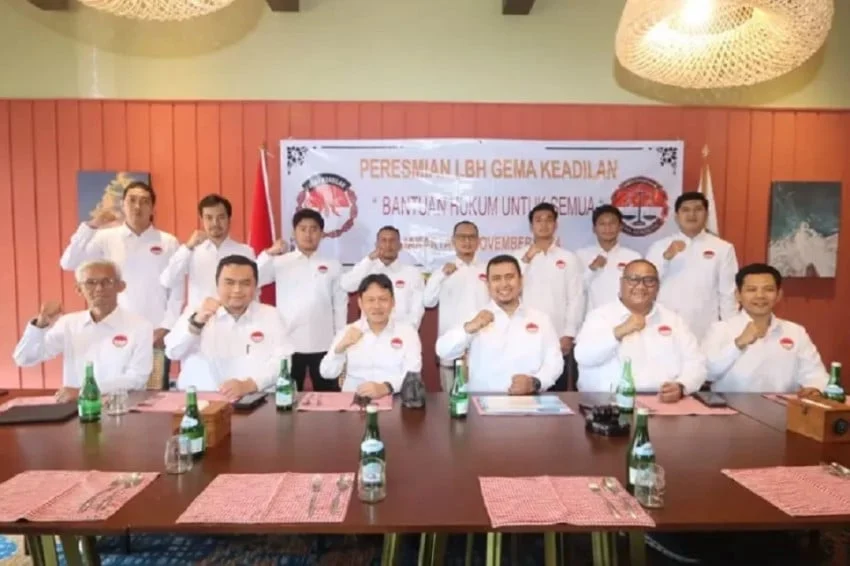
The human rights and legal advocacy organization Lembaga Bantuan Hukum (LBH) Gema Keadilan has formally issued a nationwide demand directed at the Chief of the Indonesian National Police (Kapolri), General Suyudi Ario Seto. The organization calls for a comprehensive, total institutional evaluation and the immediate establishment of an independent investigation team following a deeply contentious and disruptive nighttime police raid on a girls’ Islamic boarding school, or pondok pesantren, located in Central Java.
The incident, which took place in the early hours of Thursday, October 29, 2026, targeted the Ma’had Hamalatul Qur’an Girls’ Islamic Boarding School situated in Laban Wetan Hamlet, Laban Village, Mojolaban District, Sukoharjo Regency. According to legal representatives, community leaders, and affected witnesses, the operation was executed with a heavy-handed approach that fundamentally disregarded legal protocols, human rights standards, and the psychological vulnerability of the residents. The raid has since ignited widespread public debate, drawing sharp criticism from civil society organizations, legal experts, and legislative representatives regarding the boundaries of police authority, the protection of minors, and the appropriate deployment of elite counterterrorism units in routine domestic criminal inquiries.
Main Facts and Overview of the Incident
The early morning raid at the Ma’had Hamalatul Qur’an Islamic Boarding School disrupted what should have been a peaceful environment for minor students and educators. At approximately 03:20 AM, while the premises were completely dark and the occupants were fast asleep, law enforcement personnel entered the compound. The facility primarily houses 12 young female students—ranging in age from 10 to 16 years old—alongside four female instructors, known as ustazah.
For young adolescents in a residential educational setting, a predawn police raid conducted with aggressive tactical postures represents a severe psychological shock. Legal advocates emphasize that the targets of this operation were minors protected under national child protection frameworks. Rather than encountering individuals associated with high-level national security threats, the officers entered a residential dormitory space dedicated to the religious education and daily care of young girls.
LBH Gema Keadilan, through its spokesperson Syam Fharis, has categorized the operation not merely as a procedural misstep, but as an egregious violation of multiple statutory frameworks governing law enforcement conduct in Indonesia. The critique centers on the absence of transparency, the disproportionate use of force, the potential misuse of elite counterterrorism assets for minor property offenses, and the blatant disregard for the physical and psychological well-being of the minor residents.
Chronology and Sequence of Events
A detailed reconstruction of the events surrounding the raid highlights a troubling departure from standard legal procedures for searches, seizures, and apprehensions:
Thursday, October 29, 2026 (03:20 AM)
Law enforcement personnel arrived unannounced at the Ma’had Hamalatul Qur’an Girls’ Islamic Boarding School in Laban Wetan, Sukoharjo. Operating under the cover of night, the officers breached the compound while the 12 resident students and four instructors were asleep. The sudden commotion, flashlight beams, and authoritative presence of armed personnel induced immediate panic and profound distress among the young girls.
October 29–30, 2026
In the immediate aftermath of the operation, school administrators and local community representatives voiced deep confusion and alarm over the raid. Representatives of the boarding school stated that law enforcement officers failed to present or display a valid search warrant issued by a local court at the time of entry, a mandatory legal requirement under Indonesian criminal procedure code (KUHAP) to ensure accountability and legality during residential searches. Furthermore, various personal belongings, electronic devices, and educational materials belonging to the students and instructors were seized without proper inventory procedures or official seizure receipts.
Saturday, October 31, 2026
LBH Gema Keadilan formally stepped into the matter, holding a press conference to denounce the raid. The organization announced the filing of official demands addressed to the National Police Headquarters. Simultaneously, LBH Gema Keadilan established the Solo Raya Free Legal Aid Post specifically dedicated to supporting the affected families, coordinating psychological evaluations, and preparing potential legal challenges against the personnel involved in the operation.
Legal Violations and Regulatory Frameworks Breached
Legal analysts and human rights advocates reviewing the Sukoharjo incident have pointed to several distinct violations of Indonesian statutory law and internal police regulations. The primary legal concerns encompass child protection laws, criminal procedure codes, internal police regulations, and international human rights principles.
1. Violation of the Child Protection Act
The targeted residents of the boarding school include minors aged 10 to 16. Under Law No. 35 of 2014 concerning Amendments to Law No. 23 of 2002 on Child Protection, the state holds an affirmative obligation to protect children from all forms of violence, psychological trauma, and institutional maltreatment. Executing a sudden, aggressive nighttime raid in a dormitory housing young girls directly contravenes the principle of the best interests of the child.
2. Breach of Criminal Procedure Code (KUHAP)
Indonesian criminal procedure mandates strict protocols regarding search, arrest, and seizure operations. Law enforcement officers are legally required to show a valid, court-issued search warrant to the occupants or local community leaders prior to entering private premises, except under narrowly defined emergency circumstances that did not apply in this case. The alleged failure of the raiding party to present proper documentation renders the search legally flawed and procedurally invalid.
3. Infringement of Internal Police Regulations (Perkap)
National Police Regulation (Perkap) No. 6 of 2019 regarding Criminal Investigation Procedures outlines the mandatory ethical and operational standards police must uphold. This includes respecting human rights, maintaining proportionality, and ensuring that investigative actions do not cause unnecessary harm or social panic.
4. Controversial Deployment of Densus 88 Antiteror
One of the most contentious aspects of the Sukoharjo raid is the alleged involvement of personnel associated with Densus 88 Antiteror, the National Police’s elite counterterrorism detachment. According to public statements and preliminary reports, the underlying criminal inquiry allegedly stemmed from a relatively minor local property dispute—specifically, the burning of a local food stall (warung). LBH Gema Keadilan has vigorously questioned the legal basis for deploying a specialized counterterrorism unit—whose statutory mandate is strictly limited to investigating and preventing acts of terrorism—to handle a routine local criminal mischief or arson case. Critics warn that such misallocations of specialized forces risk stigmatizing educational institutions and creating an unwarranted perception of terrorism within religious communities, a phenomenon referred to by legal observers as the "terrorisation" of Islamic boarding schools.
Institutional Demands and Official Responses
In response to the escalating controversy, LBH Gema Keadilan has outlined a series of concrete, non-negotiable demands addressed to the nation’s top law enforcement officials:
- Total Institutional Evaluation: A comprehensive review by Kapolri General Suyudi Ario Seto of the operational command structures that authorized the raid, focusing particularly on accountability within regional commands.
- Independent Investigation Team: The immediate formation of an independent investigative body, coupled with a thorough internal review by the Internal Professionalism and Security Division (Propam), to probe potential abuses of power, procedural violations, and unauthorized deployments during the operation.
- Transparency from Central Java Police: A formal directive demanding that the Central Java Regional Police (Polda Jateng) publicly disclose and verify the court-issued search warrant allegedly utilized during the operation, addressing claims by the boarding school management that no such document was ever presented.
- Return of Confiscated Property: The immediate, unconditional return of all personal belongings, study materials, and electronic devices seized from the students and instructors without proper administrative documentation.
- Human Rights Interventions: Formal requests directed to the National Commission on Human Rights (Komnas HAM) and the National Commission on Violence Against Women (Komnas Perempuan) to dispatch fact-finding missions to Sukoharjo. These bodies are urged to conduct comprehensive trauma assessments and psychological rehabilitation programs for the 12 traumatized female students.
- Legislative and Oversight Involvement: Broader calls from legislative members within the House of Representatives (DPR) urging the Witness and Victim Protection Agency (LPSK) to intervene, provide psychological first aid, and safeguard the emotional well-being of the minors affected by the incident.
Broader Socio-Political Implications and Future Outlook
The raid on the Ma’had Hamalatul Qur’an Girls’ Islamic Boarding School carries significant implications for the broader relationship between the state security apparatus and religious educational institutions in Indonesia. Islamic boarding schools, or pesantren, occupy a central, highly respected position in the nation’s social and educational fabric, serving millions of students across the archipelago.
When law enforcement actions are perceived as heavy-handed, legally irregular, or culturally insensitive, they risk eroding public trust in state institutions. The incident in Sukoharjo highlights the delicate balance required in modern policing: the state retains a legitimate duty to investigate criminal activity and enforce the rule of law, but that duty must be exercised with strict adherence to constitutional safeguards, proportionality, and respect for human rights—particularly when dealing with children and educational sanctuaries.
As civil society groups mobilize legal aid posts and oversight bodies initiate inquiries, the pressure mounts on the Indonesian National Police leadership to deliver a transparent, accountable resolution. Whether the establishment of an independent investigation team will satisfy public demands and restore confidence remains to be seen, but the outcome of this case is expected to set a critical precedent for police accountability and institutional conduct in operations involving vulnerable populations across the country.