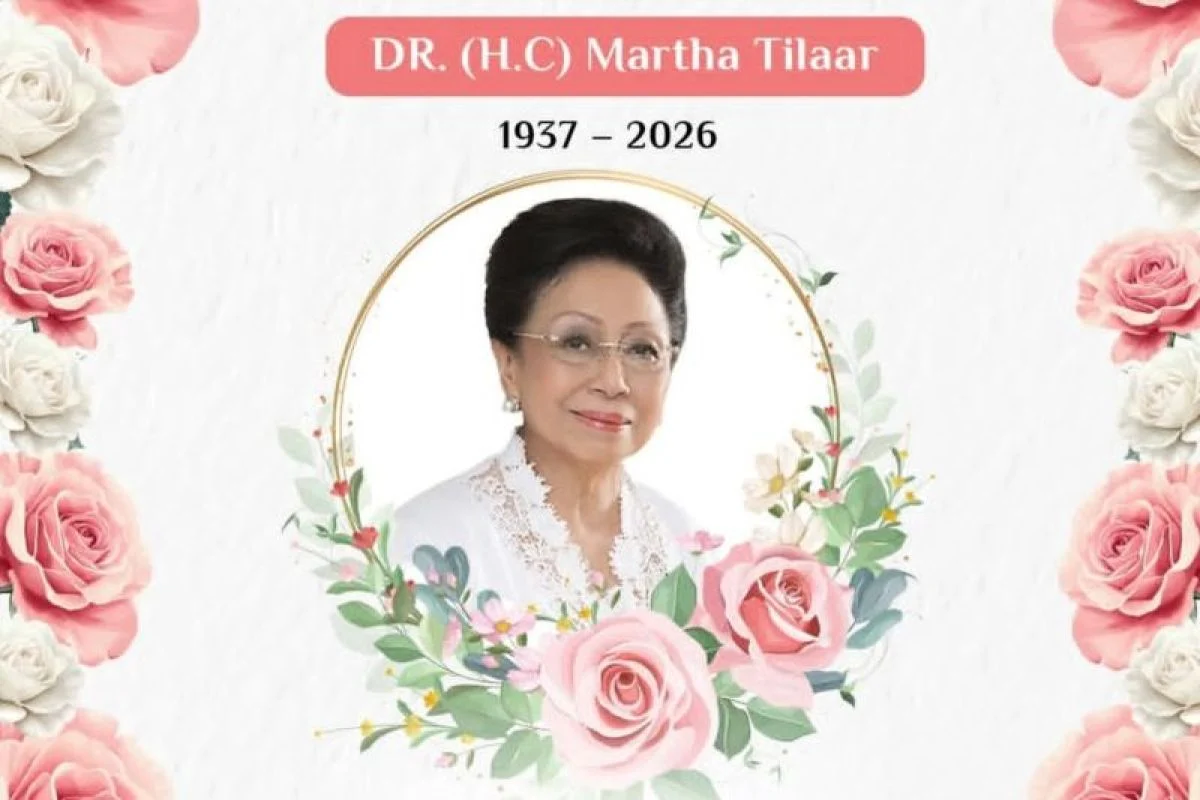
The Indonesian beauty and cosmetics industry is in deep mourning following the passing of one of its most visionary founding figures, Dr. (H.C.) Martha Tilaar. The visionary entrepreneur, who established the Martha Tilaar Group and blazed the trail for indigenous, nature-derived cosmetics in the archipelago, died on Wednesday, October 14, 2026, at the age of 89. Her death marks the end of an era for a woman whose life’s work elevated Indonesian traditional herbal remedies and beauty rituals—known collectively as jamu and Nusantara heritage—onto both national and international stages.
Widely recognized as a pioneer who fearlessly bridged the gap between modern dermatological science and ancestral Indonesian wisdom, Martha Tilaar left an indelible mark on the nation’s socio-economic landscape. Her flagship brand, Sariayu, became a household name synonymous with national pride, cultural preservation, and accessible local beauty products. As tributes pour in from industry titans, government officials, and everyday citizens whose lives she touched, her passing prompts a profound reflection on a legacy built over five decades of relentless innovation, female empowerment, and cultural stewardship.
Humble Beginnings: From a Menteng Garage to a National Empire
Born in Kebumen, Central Java, on September 4, 1937, Martha’s fascination with aesthetics, wellness, and botany manifested at an early age. Driven by an ambitious vision to professionalize and elevate traditional Indonesian beauty practices, she pursued formal education in her craft. Her academic pursuits eventually led her abroad to the prestigious Academy of Beauty Culture in Bloomington, Indiana, United States, where she honed her technical expertise in modern cosmetology.
Armed with international knowledge and a deep-seated love for her homeland’s natural resources, Martha returned to Indonesia determined to create a unique value proposition. In 1970, she took her first entrepreneurial leap by opening a modest beauty establishment named Martha Salon, operating out of a humble garage belonging to her parents in the upscale Menteng district of Central Jakarta.
At a time when the Indonesian market was heavily dominated by imported Western cosmetic brands, Martha’s salon offered something radically different: a fusion of cutting-edge modern beauty techniques with traditional Indonesian treatments derived from indigenous plants, roots, and flowers. This garage startup was not merely a commercial venture; it served as a living laboratory where Martha tested herbal formulations, observed customer preferences, and laid the conceptual groundwork for a multi-faceted business empire that would eventually encompass skincare manufacturing, nationwide salon and spa chains, and specialized vocational education institutions.
The Birth of Sariayu and the Institutionalization of Nusantara Heritage
The defining turning point in Martha’s business trajectory occurred in 1977. Partnering with strategic associates, she established PT Martina Berto and officially launched Sariayu, positioning it as an accessible line of modern cosmetics and traditional herbal formulations (jamu). Sariayu swiftly captured the imagination—and vanity—of Indonesian consumers, establishing itself as a pillar of domestic commerce.
To ensure authenticity and historical accuracy, Martha eschewed superficial marketing in favor of rigorous anthropological and historical research. In developing Sariayu, she famously collaborated with historians, anthropologists, and botanical experts. She dove deep into ancient palm-leaf manuscripts originating from the royal courts (Keraton) of Yogyakarta and Surakarta to decode centuries-old beauty regimens utilized by Javanese princesses.
This meticulous research translated into groundbreaking product lines. In 1987, Sariayu disrupted the local market by introducing thematic color trend collections inspired explicitly by the rich tapestry of Indonesian regional cultures—from the textile motifs of Sumatra to the vibrant rituals of Bali. This strategy of cultural storytelling through cosmetics proved wildly successful. Over the subsequent decades, the Martha Tilaar Group expanded its portfolio to include an array of specialized brands tailored to diverse demographic segments, including Biokos for anti-aging skincare, Caring Colours for professional cosmetics, Belia for teenagers, and PAC (Professional Artist Cosmetics) for makeup professionals.
Empowering Women as an Economic Catalyst
Beyond her commercial success, Martha Tilaar viewed entrepreneurship as an instrument for social transformation, specifically targeting the economic upliftment of Indonesian women. Recognizing that true national development requires grassroots participation, she integrated social responsibility into the very core of her business model.
Her commitment to sustainability and community empowerment garnered international acclaim. In 2018, the United Nations Global Compact honored Martha as one of its prestigious SDG Pioneers under the category of Advancing Sustainability through Community Engagement. This global recognition celebrated her holistic business approach, which consistently supported local raw material farmers, promoted ethical sourcing, and created structured pathways for female employment and vocational training.
A cornerstone of this social mission is the Martha Tilaar Training Center (MTTC). Established to combat unemployment and underemployment, the center provides marginalized and aspiring young women with professional certification in spa therapy, cosmetology, and salon management. According to data from the UN Global Compact, upwards of 5,600 women have graduated from these rigorous programs, securing gainful employment not only across Indonesia’s booming hospitality and wellness sectors but also internationally in cruise lines and luxury resorts abroad. Through these initiatives, Martha transformed her enterprise into a vehicle for human capital development, proving that corporate profitability and social welfare could mutually reinforce one another.
National Honors and International Accolades
Martha’s monumental contributions to the nation’s cultural heritage, industrial capacity, and economic empowerment did not go unnoticed by academic, scientific, and political institutions. Throughout her lifetime, she amassed a formidable collection of honors that underscored her multifaceted impact on Indonesian society.
In 2016, the administration of President Joko Widodo bestowed upon her the prestigious Tanda Kehormatan Bintang Budaya Parama Dharma (Cultural Star of Parama Dharma). This highest civilian honor in the field of culture recognized her decades-long dedication to preserving, developing, and promoting traditional Indonesian herbal medicine, jamu, and ancestral aesthetics.
Earlier in her career, international and domestic bodies alike rushed to celebrate her pioneering spirit. In 2013, the Indiana University Women’s Philanthropy Council presented her with the esteemed Women Leading the Way Award, acknowledging her global influence as a female business leader and philanthropist. Additionally, in 2012, the Agency for the Assessment and Application of Technology (BPPT) recognized her pioneering work in integrating scientific research with traditional herbal formulations, validating the empirical efficacy of her commercial products.
These accolades cemented her status as a national treasure—a businesswoman who successfully elevated indigenous knowledge systems to meet rigorous contemporary scientific and industrial standards.
Institutional Response and Industry Repercussions
The official confirmation of her passing, announced via the verified social media channels of Sariayu on Wednesday, triggered an outpouring of grief and respect from political figures, business associations, and prominent cultural figures across Indonesia.
The Indonesian Cosmetics Association (PPAK) released a formal statement mourning the loss of a foundational pillar who laid the groundwork for the modern domestic beauty sector. Industry analysts note that Martha’s passing comes at a time when the Indonesian beauty market is experiencing a massive renaissance, driven by a surge in nationalist pride and the "Buy Local" (Bangga Buatan Indonesia) movement. Modern indie brands currently dominating social media owe a profound debt of gratitude to Martha Tilaar, who proved nearly half a century ago that local consumers would proudly embrace domestic formulations if executed with quality, integrity, and cultural resonance.
Economic observers emphasize that the Martha Tilaar Group, now managed by the next generation of family leadership and professional executives, is well-positioned to weather the transition. However, the intangible leadership, visionary intuition, and sheer force of personality that Martha brought to the boardroom will be exceedingly difficult to replicate.
A Lasting Legacy for the Nusantara Beauty Landscape
As Indonesia bids farewell to Dr. (H.C.) Martha Tilaar, her legacy remains vibrantly alive on the shelves of retail stores, in the curricula of vocational training centers, and within the collective consciousness of an industry she practically single-handedly created.
Her life’s journey—from a small garage in Menteng to a sprawling corporate conglomerate—serves as an enduring masterclass in entrepreneurial grit, cultural pride, and visionary leadership. By demonstrating that ancient traditions do not need to be abandoned in the pursuit of modernity, but rather refined and elevated by it, Martha Tilaar secured her place in history not merely as a successful businesswoman, but as a true architect of modern Indonesian identity.