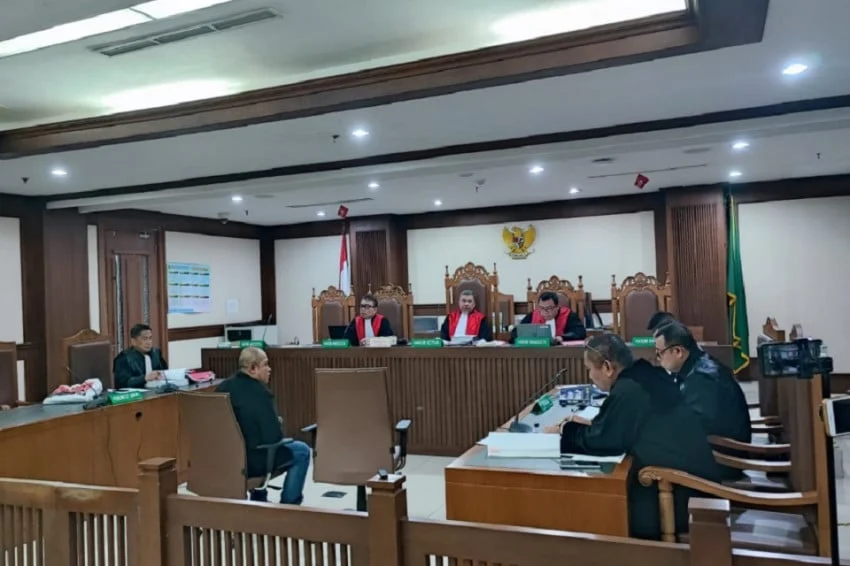
The Central Jakarta District Court recently played host to a tense and revealing court session concerning a high-profile extortion and criminal threat case. Prosecutors from the Jakarta Public Prosecutor’s Office summoned a key witness, Bripka Eko Haryanto, a seasoned investigator from the Central Jakarta Metro Police, alongside prominent criminal law expert Prof. Dr. Mudzakkir. The proceedings, centered around the defendant Bangun Paulus Tudungta (BPT), aimed to shed light on controversial investigative procedures, the handling of physical evidence, and the legal implications of rejected restitution attempts. As the judicial system continues to scrutinize due process in white-collar and predatory crime cases, this trial serves as a crucial examination of police protocols, the boundaries of evidence seizure, and the evidentiary standards required to secure convictions in extortion matters under Indonesian law.
The courtroom gallery watched intently as Bripka Eko, a law enforcement officer with over two decades of dedicated experience within the Central Jakarta Metro Police jurisdiction, took the stand. His testimony as a verbal-lisan (oral verification) witness was designed to bridge the gap between initial police reports and formal courtroom presentations. Throughout the judicial session, the witness outlined the exhaustive trajectory of the case—ranging from the initial intelligence gathering and preliminary investigations to the formal elevation of BPT’s status to a criminal suspect. The defense team, presided over by defense counsel, cross-examined the investigator regarding the granular details of case file compilation, known locally as the Berita Acara Pemeriksaan (BAP), and the strict statutory timelines that govern the Indonesian National Police’s investigative duties.
Chronology of the Investigation and Legal Proceedings
To fully understand the gravity of the testimony presented at the Central Jakarta District Court, one must examine the chronological sequence of events that brought the case to trial. The legal battle began following formal complaints filed by victims who alleged systematic coercion, intimidation, and financial extortion perpetrated by the defendant, BPT. According to case documents submitted by the prosecution, the alleged extortion scheme involved threats of severe legal or social repercussions unless significant financial concessions were made by the victims.
Following the initial complaint, the Central Jakarta Metro Police initiated a formal criminal investigation. Investigators gathered preliminary evidence, conducted witness interviews, and established a probable cause framework that ultimately justified the issuance of a suspect designation for BPT. Over the subsequent weeks, investigators compiled the BAP, detailing the mechanics of the alleged threats and tracking the flow of funds associated with the extortion demands. The case was eventually transferred to the public prosecutor’s office, leading to formal indictments and the commencement of court proceedings at the Central Jakarta District Court. The inclusion of Bripka Eko in the recent hearing was requested to address specific defense challenges regarding police methodology, specifically focusing on why certain pieces of physical evidence were handled in a particular manner and why a partial restitution attempt was rebuffed by law enforcement authorities during the investigative phase.
The Controversy Over Rejected Restitution and Seizure Protocols
One of the most contentious moments of the hearing emerged when the defendant directly questioned Bripka Eko regarding the rejection of a Rp50 million cash sum intended for return during the investigation. BPT pressed the investigator on why law enforcement officials explicitly refused to accept the money, which the defense presumably hoped would demonstrate cooperative behavior or mitigate potential sentencing impacts.
In response, Bripka Eko provided a detailed legal justification grounded in criminal procedure and evidence law. The investigator clarified that the money in question was classified directly as proceeds of a crime (hasil kejahatan). According to Bripka Eko’s testimony, the funds were offered by an individual identified as Cuaca, a family member or associate linked to the defendant. However, when investigators attempted to formally seize the funds as corpus delicti—physical evidence proving the commission of the crime—the bearer allegedly objected to the formal classification and seizure of the money as illicit proceeds.
"If the return is framed in such a way that it acknowledges the funds are proceeds of a crime, I am legally bound to seize them," Bripka Eko explained to the courtroom, addressing the panel of judges, the prosecution, and the defense. He added that the refusal stemmed from a fundamental contradiction: the representative of the defendant wanted the money handed over or acknowledged without accepting its legal status as tainted money derived from extortion. "If they refused to allow it to be formally categorized and seized as the spoils of a crime, there was no legal basis for me to accept it. If they had agreed to that classification, I would have accepted it, but they did not want it seized under those terms."
This exchange highlights a recurring tactical debate in Indonesian criminal trials: the distinction between voluntary restitution aimed at demonstrating remorse and the strategic maneuver of attempting to launder or sanitize tainted assets through informal police handovers without compromising defense arguments.
Scrutiny Over BAP Compilation and Physical Evidence
Beyond the restitution controversy, the defense subjected the veteran investigator to rigorous questioning regarding the transparency of the BAP compilation process. Specifically, BPT challenged why certain physical evidence items were allegedly not physically displayed or scrutinized during the immediate generation of the police investigation reports.
Legal experts observing the trial note that defense strategies in extortion cases frequently target procedural technicalities during the investigation phase. By questioning the synchronization between physical evidence inventories and the written testimonies recorded in the BAP, defense lawyers aim to cast doubt on the integrity of the police dossier. Bripka Eko maintained that all investigative actions adhered strictly to the Indonesian Criminal Procedure Code (KUHAP), which governs the protocols for evidence collection, documentation, and the rights of suspects during interrogation. He emphasized that the volume and nature of the evidence in extortion cases often require specialized handling to protect the chain of custody, especially when digital communications, financial transfer records, and cash assets are involved.
Expert Insights: The Role of Criminal Law Scholarship in the Trial
Adding intellectual and theoretical weight to the proceedings, the prosecution and court also integrated testimony from renowned criminal law expert Prof. Dr. Mudzakkir. The inclusion of an academic heavyweight in a trial featuring a verbal-lisan witness underscores the complexity of the legal questions at stake. Prof. Mudzakkir’s presence was intended to provide the judges with an objective, doctrinal analysis of how criminal intent (mens rea), the mechanics of extortion (pemerasan) and threats (pengancaman), and the legal weight of evidence handling interact within the framework of the Indonesian Criminal Code (KUHP).
In criminal law theory, extortion requires proof that the perpetrator unlawfully compelled someone to give something, deliver money, or write an acknowledgement of debt through the use of violence or intimidation. Expert testimony in such trials typically evaluates whether the communications and actions attributed to the defendant meet the statutory threshold of these offenses, distinguishing aggressive negotiation or civil disputes from outright criminal coercion. Furthermore, academic experts often assist the judiciary in interpreting how procedural missteps, if any, impact the substantive truth of a case, ensuring that technical defenses do not inadvertently obstruct the delivery of substantial justice.
Broader Implications for Law Enforcement and Judicial Integrity
The unfolding trial of Bangun Paulus Tudungta at the Central Jakarta District Court carries broader implications for both law enforcement accountability and judicial transparency in Indonesia. Extortion and intimidation cases often expose the delicate power dynamics between private actors and individuals wielding perceived influence. When allegations of extortion intersect with complex police investigations, public scrutiny naturally turns to the conduct of the investigators themselves.
The detailed testimony of Bripka Eko—a police officer with 23 years on the force—offers a rare public window into the operational realities and legal constraints faced by rank-and-file investigators. It demonstrates the constant friction between defense strategies designed to challenge police discretion and the statutory mandates that compel investigators to classify assets strictly according to their evidentiary value.
For the Indonesian judicial system, cases of this nature reinforce the critical importance of maintaining a rigorous chain of custody, documenting every phase of asset seizure, and adhering meticulously to the KUHAP to withstand intense courtroom scrutiny. As the trial progresses toward its eventual verdict, the presiding judges will need to weigh the testimonial evidence of the verbal-lisan witness, the expert opinions of legal scholars like Prof. Mudzakkir, and the totality of the documentary and physical evidence presented by both the prosecution and the defense. The final ruling will not only determine the legal fate of BPT but will also stand as a precedent regarding how courts evaluate police procedures, asset seizures, and restitution attempts in modern white-collar criminal prosecutions.