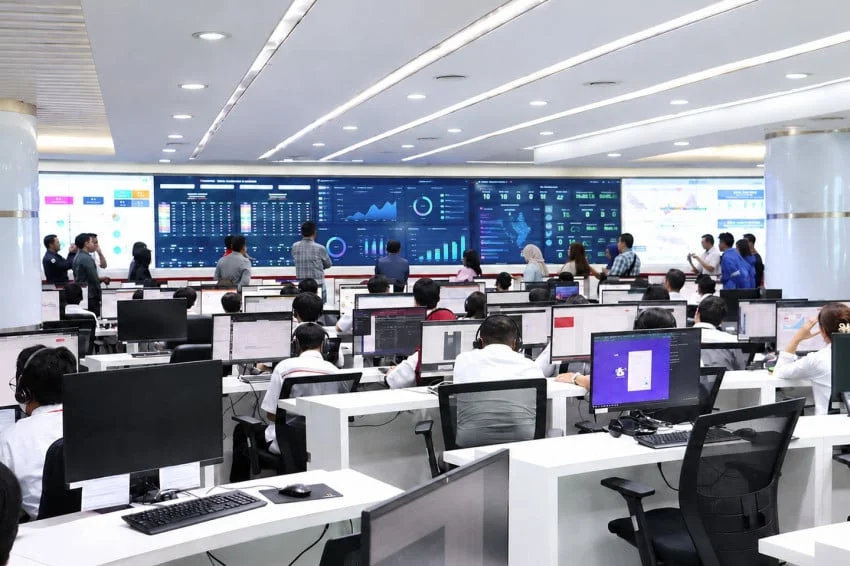
The landscape of corporate operations and customer management in Indonesia is undergoing a profound structural shift as smart automation and agentic artificial intelligence deeply penetrate the domestic business process outsourcing (BPO) sector. This technological evolution marks a decisive departure from traditional, labor-intensive outsourcing models toward hyper-efficient, autonomous digital ecosystems capable of executing complex workflows with minimal human intervention. At the forefront of this industrial transformation is PT Infomedia Nusantara, a prominent subsidiary of the Telkom Indonesia Group, which has successfully integrated advanced autonomous intelligence systems into its expansive service infrastructure.
This strategic pivot toward next-generation automation was officially recognized on the international stage when Frost & Sullivan bestowed upon Infomedia the prestigious title of Company of the Year 2026 within the Indonesian digital BPO category. The accolade highlights the company’s pioneering role in deploying sophisticated artificial intelligence solutions that not only optimize internal operational efficiencies but also fundamentally redefine how enterprise clients drive their own corporate transformations. Operating a sprawling, interconnected network of AI-enabled service hubs spanning 14 strategic locations across nine major urban centers throughout the archipelago, Infomedia has established a new benchmark for scalable digital outsourcing in Southeast Asia’s largest economy.
The acceleration of agentic AI adoption within Indonesia’s BPO sector represents a critical milestone in the nation’s broader digital economy roadmap. As enterprises across various industries—ranging from telecommunications and banking to retail and public utilities—grapple with escalating customer expectations and the imperative to reduce operational expenditures, the demand for intelligent, self-directed automation tools has reached unprecedented heights. Unlike conventional robotic process automation (RPA), which relies strictly on rigid, pre-programmed rules for repetitive tasks, agentic AI introduces autonomous reasoning, adaptive learning, and complex decision-making capabilities. These systems can proactively manage end-to-end business processes, resolve intricate customer grievances, analyze real-time data streams, and execute multi-step workflows autonomously, thereby liberating human workforces to focus on high-value strategic initiatives.
The Chronology of Technological Integration and Market Maturation
The widespread integration of agentic AI into Indonesia’s commercial BPO sector did not happen overnight; it is the culmination of a multi-year technological maturation process driven by rapid advancements in machine learning, natural language processing, and cloud computing infrastructure.
In the initial phase, spanning roughly from 2020 to 2022, Indonesian enterprises experimented primarily with basic conversational bots and isolated robotic process automation scripts. These early implementations were largely tactical, designed to handle high-volume, low-complexity inquiries such as routine billing questions or password resets. However, limitations in contextual understanding and adaptability restricted their utility, leaving deeper operational processes dependent on massive human-agent call centers and back-office teams.
By 2023 and 2024, as generative artificial intelligence captured global attention, forward-thinking digital service providers in Indonesia began transitioning from fragmented pilots to integrated enterprise platforms. Companies recognized that standalone software implementations failed to deliver sustainable return on investment. Consequently, the industry shifted toward managed services models where AI was embedded directly into the core operational fabric of client workflows.
Entering 2025 and moving toward 2026, the market crossed a critical threshold with the rise of agentic AI. Rather than merely responding to prompts or executing single-step tasks, these advanced systems gained the autonomy to pursue complex goals, coordinate across multiple software applications, and self-correct when encountering operational bottlenecks. Infomedia’s strategic realignment during this period proved instrumental. By systematically deploying AI-driven architectures across its 14 service locations in nine cities, the company successfully bridged the gap between cutting-edge global technology and the specific operational realities of the Indonesian market.
Expert Insights and the Frost & Sullivan Evaluation
The rigorous evaluation process conducted by Frost & Sullivan underscored the distinctiveness of Infomedia’s market approach. According to Krishna Baidya, Vice President of Information and Communication Technology (ICT) Practice at Frost & Sullivan, the defining characteristic of the company’s success lies in its holistic implementation methodology rather than mere commercial distribution of technology.
Baidya noted during the award presentation that Infomedia’s strategic edge stems from avoiding the trap of treating AI as a transient commercial commodity or a disconnected proof-of-concept project. Instead, the company integrated artificial intelligence directly into monitored, highly managed operational workflows. This methodology combines proprietary technology stacks, smart automation engines, advanced data analytics, specialized operational consulting, and comprehensive managed services. By fusing these elements, Infomedia enables its clients to achieve empirically measurable business outcomes, drastically compress cost-to-serve metrics, and fortify corporate governance frameworks.
Industry analysts emphasize that this consultative, outcome-based approach addresses a major pain point for corporate adopters. Many organizations struggle to realize the theoretical benefits of emerging technologies due to a lack of internal expertise, integration challenges, and difficulties in scaling pilot projects. By offering end-to-end managed agentic AI services, BPO providers effectively absorb the technological risk, allowing client enterprises to reap the rewards of digital transformation without incurring prohibitive capital expenditure or facing prolonged operational disruptions.
Data-Driven Implications for the Indonesian Digital Economy
The broader economic implications of agentic AI permeating Indonesia’s BPO sector are profound, touching upon employment dynamics, cost efficiencies, and macroeconomic competitiveness. Industry metrics indicate that the integration of smart automation significantly compresses the cost-to-serve for enterprise clients—often yielding operational cost reductions ranging between 25% and 40% depending on the complexity of the outsourced process. These savings allow corporations to reallocate capital toward product innovation, market expansion, and enhanced customer experience strategies.
Furthermore, the expansion of tech-enabled BPO operations across nine major cities outside of primary metropolitan centers like Jakarta reflects a growing decentralization of digital economic activity. This dispersion fosters regional technological capacity-building, creating high-value employment opportunities and cultivating localized digital talent pools across the archipelago. While traditional fears regarding automation-induced job displacement persist, industry leaders and labor economists emphasize that the rise of agentic AI is transforming the nature of work rather than entirely eradicating it. Human agents are increasingly transitioning from routine task executors to complex problem solvers, supervisors of autonomous systems, and relationship managers.
Strategic Challenges and Future Outlook
Despite the enthusiastic market adoption and accolades, the large-scale deployment of agentic AI in Indonesia’s BPO landscape is not without challenges. Key considerations for industry stakeholders moving forward include data privacy regulations, cybersecurity resilience, and the imperative to maintain ethical standards in automated decision-making. As autonomous agents process vast quantities of sensitive consumer data, compliance with national data protection laws—such as Indonesia’s Personal Data Protection (PDP) Undang-Undang—remains an absolute prerequisite for sustainable operations.
Additionally, ensuring the seamless interoperability of agentic AI systems with legacy enterprise software architectures requires continuous investment in technical infrastructure and workforce upskilling. BPO providers must maintain rigorous oversight mechanisms to prevent algorithmic drift and ensure that autonomous systems adhere strictly to corporate compliance guidelines and brand values.
Looking ahead, the milestone achieved by Infomedia in 2026 serves as a bellwether for the future trajectory of Indonesia’s digital service sector. As agentic AI capabilities continue to mature—becoming more intuitive, context-aware, and predictive—their integration into business process outsourcing will likely transition from a competitive differentiator to an essential baseline requirement for corporate survival. For Indonesia, the successful scaling of these advanced technologies strengthens its position as a competitive digital hub within the broader Southeast Asian regional economy, signaling a mature, innovation-driven phase in the nation’s ongoing digital transformation journey.