JAKARTA — In a stunning development that has sent shockwaves through the highest echelons of Indonesia’s government and security apparatus, the Indonesian National Police’s Criminal Investigation Agency (Bareskrim Polri) has officially named three high-ranking officials, including a former National Police Chief, as suspects in a massive illegal wiretapping, data deletion, and unauthorized access scandal. The sweeping investigation exposes an unprecedented breach of privacy and national security, allegedly targeting high-profile targets ranging from sitting President Prabowo Subianto to key political figures, media executives, civil society organizations, and prominent business leaders.
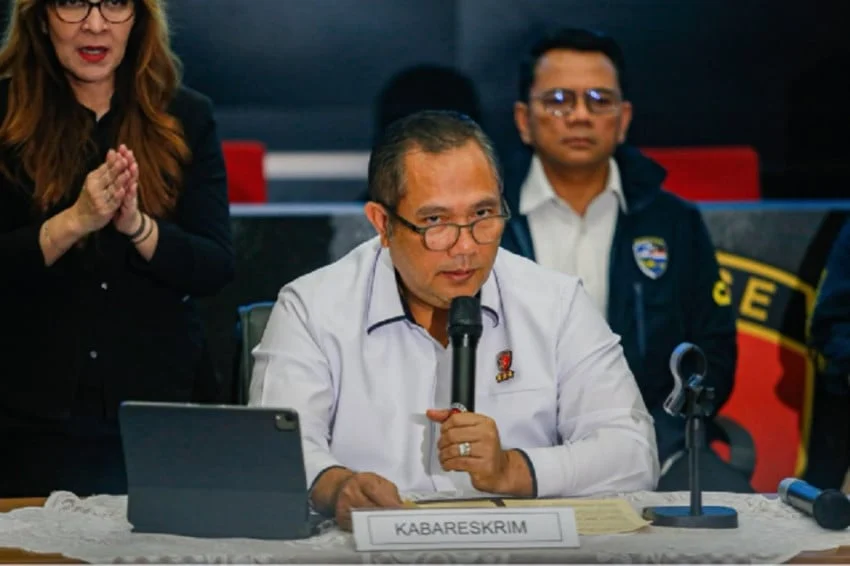
The announcement was made by the Head of Bareskrim Polri, Police Commissioner General Asep Safrudin, during a high-stakes press conference held at the National Police Headquarters in Jakarta on Tuesday, November 3, 2026. According to Safrudin, the primary suspect in the coordinated conspiracy is Listyo Sigit Prabowo (LSP), a former Chief of the Indonesian National Police who currently holds the powerful and strategic position of Chief of Staff to the President. Alongside Listyo, investigators have implicated two other active high-ranking police generals: Irjen Ahrie Sonta (ASN), who serves as the Head of the Legal Division (Kadivkum) of the National Police, and Irjen Eko Hadi Santoso (EH).
The revelations have plunged the administration into a profound crisis of institutional trust, raising urgent questions regarding cybersecurity, the abuse of state intelligence tools, and the ultimate oversight of executive and law enforcement powers in the democratic republic.
Scope of the Surveillance Operation and Targeted Figures
The investigation, spearheaded by Bareskrim using advanced scientific crime investigation methods, uncovered a sprawling and covert surveillance network operating well outside the bounds of legal authorization. Investigators revealed that the suspects systematically intercepted telecommunications, monitored private conversations, and harvested sensitive data from an extensive list of high-profile victims.
The roster of targets underscores the breathtaking scale of the operation. Among those whose communications were allegedly compromised are sitting President Prabowo Subianto, various cabinet ministers, key government officials, prominent political party leaders, journalists and media representatives, leaders of mass community organizations (ormas), figures from major Non-Governmental Organizations (NGOs), and influential national business tycoons.
The inclusion of the Head of State and top-tier policymakers among the targets of illegal interception has elevated the case from a standard criminal investigation to a matter of paramount national security. Legal experts and state officials have wasted no time in condemning the actions, with senior political figures describing the scandal as a direct threat to the stability and sovereignty of the Indonesian state.
Chronology of Events and Suspect Modus Operandi
The criminal conspiracy allegedly took shape over a prolonged period spanning across 2025 and 2026. According to detailed findings presented by Commissioner General Asep Safrudin, the operation was executed under a veneer of official authority, masked by systematic procedural violations.
Investigators established that the suspects orchestrated the unlawful wiretapping of numerous telephone numbers without adhering to the stringent statutory requirements mandated by Indonesian law. Specifically, the operation bypassed the mandatory protocols of securing official request letters from authorized investigators and failed to attach formal Police Reports (Laporan Polisi). Crucially, the wiretapping had no connection whatsoever to legitimate law enforcement operations, criminal investigations, or counter-terrorism efforts. Instead, the surveillance appeared designed for intelligence gathering of an undisclosed, highly sensitive nature.
As the political landscape shifted and scrutiny over unauthorized surveillance intensified in late 2026, the perpetrators allegedly sought to cover their tracks. In October 2026, the suspects executed a coordinated data wipe, deleting system logs, access trails, and electronic footprints in a frantic bid to destroy evidence and obstruct the unfolding investigation.
Despite these attempts to sanitize the digital ecosystem, forensic digital investigators recovered enough residual data to reconstruct the timeline of the conspiracy, leading directly to the identification of the primary actors. While three high-ranking officials have been formally designated as suspects, law enforcement authorities noted that the investigation remains active. A fourth individual, identified by the initials SU, is currently undergoing intensive examination in the capacity of a key witness as investigators determine the full extent of the conspiracy’s network.
Legal Framework and Severe Penalties Faced by the Suspects
In announcing the legal status of the three high-ranking officers, Bareskrim Polri outlined a robust slate of criminal charges reflecting the gravity of the violations. The statutory framework applied in this case draws heavily from Indonesia’s updated legal codes, underscoring the severe legislative stance against the abuse of digital technologies and unauthorized state surveillance.
The investigators have formally applied multiple provisions under the law. The primary charge is levied under Article 258 of Law Number 1 of 2023 concerning the Criminal Code (KUHP). This article specifically criminalizes the unlawful act of intercepting, listening to, recording, diverting, altering, inhibiting, and/or logging transmissions of electronic information that are not of a public nature without legal authorization.
Commissioner General Asep Safrudin emphasized the severity of the legal consequences attached to this charge during his briefing to the press. Under the provisions of Article 258, the suspects face a maximum penalty of 10 years of imprisonment.
In addition to the wiretapping charges, the suspects are facing cumulative prosecution under Article 332, paragraph (1) or paragraph (2), of Law Number 1 of 2023 regarding the KUHP. This specific set of provisions targets intentional and unauthorized acts of accessing computers or electronic systems belonging to other parties. The application of these articles highlights the dual nature of the crime—not merely an interception of voice or data streams, but a profound cyber intrusion into protected technological infrastructure.
Official Reactions and Institutional Implications
The naming of a sitting Presidential Chief of Staff and two senior police generals as criminal suspects has triggered an unprecedented institutional earthquake within the Indonesian government. The scandal forces a painful reckoning over accountability, internal oversight within the police force, and the vulnerability of state communications infrastructure.
Senior government officials and legal authorities have stepped forward to address the implications of the case. Prominent constitutional law expert and former minister Yusril Ihza Mahendra was among the first to voice deep concern over the unfolding crisis. In early public statements reacting to the developments, Yusril characterized the wiretapping of the Head of State and key national figures not merely as a localized criminal offense, but as a severe systemic issue that poses a direct hazard to the structural integrity of the nation.
"This is a serious matter for a sovereign state," Yusril noted, reflecting the sentiment shared by many legal scholars and political analysts across Jakarta. The breach strikes at the core of executive confidentiality and national security, raising fundamental questions about how high-level security apparatuses can be weaponized or manipulated outside of democratic oversight mechanisms.
The involvement of Listyo Sigit Prabowo—a towering figure in recent Indonesian law enforcement history who previously commanded the entire national police force before transitioning to a pivotal role in the executive branch—compounds the sensitivity of the situation. The juxtaposition of a former National Police Chief facing a decade-long prison sentence for illegal surveillance marks a historic low point for institutional reputation, while simultaneously testing the independence and impartiality of the current leadership under the National Police Headquarters.
Broader Impact and Analysis of Future Consequences
As the legal process moves forward, analysts anticipate far-reaching ramifications across Indonesia’s political and administrative landscape. The scandal is expected to accelerate demands for sweeping structural reforms regarding how intelligence and surveillance technologies are procured, authorized, and monitored across all branches of government.
Historically, the regulation of wiretapping and electronic surveillance in Indonesia has faced persistent criticism from civil liberties groups and digital rights advocates who argued that ambiguous statutory guidelines left ample room for abuse by security agencies. This case provides concrete, albeit alarming, proof that advanced interception capabilities were deployed outside legal frameworks, potentially targeting the very architects of state policy.
The immediate fallout will likely compel the administration of President Prabowo Subianto to enact rigorous internal audits of all communication networks utilized by high-ranking state officials. Furthermore, the handling of the prosecution will serve as a crucial litmus test for the rule of law in Indonesia, demonstrating whether the judicial and investigative systems can impartially prosecute top-tier elites without political interference.
With the suspects facing up to a decade behind bars, Bareskrim Polri faces mounting public pressure to maintain absolute transparency as the dossier is prepared for transfer to the Attorney General’s Office. As Indonesia navigates this turbulent chapter, the nation watches closely to see how its institutions recover from a betrayal of trust executed from within the very sanctuaries meant to uphold the law.