The Indonesian seamless pipe industry has reached a critical juncture, with domestic manufacturers asserting that they now possess the technical capability and manufacturing infrastructure to meet national demand. Consequently, industry leaders are urging the government to discontinue the issuance of import quota facilities and "masterlist" exemptions—a mechanism that allows companies to import capital goods or raw materials with reduced or zero duties—for secondary industries such as threading and heat treatment processors.
Michael Johan Gary, Director of PT Indo Sino Internasional, has emerged as a vocal proponent of this policy shift, arguing that the continued provision of these import facilities undermines the structural integrity of the national manufacturing sector. The crux of the argument lies in the maturation of local production capabilities, which industry players believe renders the existing import incentives for complementary industries obsolete and potentially detrimental to the national economic landscape.
The Regulatory Landscape and the Masterlist Controversy
At the center of this debate is the implementation of Peraturan Menteri Keuangan (PMK) Number 217/PMK.04/2019, which governs the exemption of import duties and non-collection of taxes for goods used in the upstream oil and gas sector. Under this regulation, the government provides significant fiscal incentives for imports, provided that the goods in question cannot be produced domestically, do not meet required technical specifications, or are produced in quantities insufficient to meet national demand.
Industry stakeholders argue that the spirit of this regulation is being circumvented. While the regulation was designed to facilitate essential imports for projects where local supply is unavailable, domestic seamless pipe producers contend that their current capacity is sufficient to satisfy the needs of the oil and gas industry. By granting masterlist facilities to secondary industries—such as companies specializing in threading pipes or heat treatment—the government is inadvertently prioritizing foreign-made products over locally manufactured alternatives, even when the latter are technically equivalent.
Chronology of Industry Development
To understand the urgency behind these calls, one must look at the evolution of Indonesia’s steel and pipe sector over the past decade. For years, Indonesia relied heavily on imports for high-grade seamless pipes, particularly those used in demanding oil and gas drilling environments.
- 2015–2018: The government initiated a "Downstream Industrialization" program, incentivizing firms to establish full-cycle pipe manufacturing facilities, including local seamless pipe plants.
- 2019: The Ministry of Finance issued PMK 217/2019, formalizing the framework for import duty exemptions to support the upstream oil and gas sector.
- 2020–2022: Despite global supply chain disruptions, several Indonesian manufacturers successfully scaled up their operations, achieving the technical certifications required by international standards (such as API – American Petroleum Institute).
- 2023–2024: Domestic producers began reporting a surplus of capacity. Simultaneously, concerns regarding the "flooding" of the market with imported seamless pipes intensified, leading to a direct confrontation between domestic manufacturers and firms utilizing masterlist facilities.
Data-Driven Analysis of the Domestic Capacity
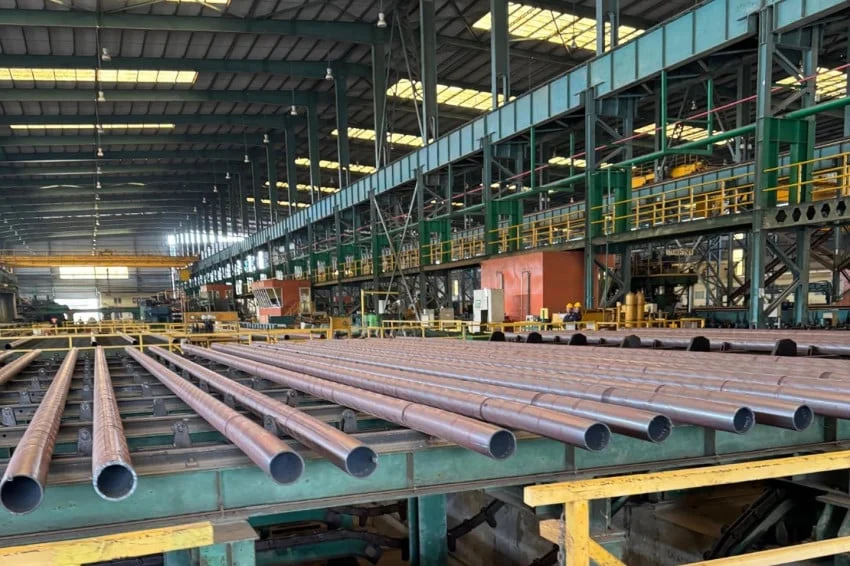
The Indonesian seamless pipe industry currently comprises several key players who have invested heavily in high-end machinery, including quenching and tempering lines that ensure the durability of pipes under high-pressure conditions. Data from the Ministry of Industry suggests that the combined capacity of national seamless pipe manufacturers has increased by approximately 25% over the last five years.
However, the utilization rate of these facilities remains a point of contention. Industry reports indicate that while total capacity is sufficient, the actual utilization rate has been suppressed by a significant influx of imported pipes that enter the country under the guise of "project-specific needs." When these imports are categorized under the masterlist, they bypass the domestic market, preventing local manufacturers from achieving the economies of scale necessary to lower prices further and invest in R&D.
The Stance of Domestic Manufacturers
The position articulated by PT Indo Sino Internasional is that the government must strictly enforce the verification of "local availability." The demand is not for a new, restrictive protectionist policy, but for the consistent application of existing regulations.
"We are not asking for new policies; we are asking for the government to verify the availability of local products before issuing recommendations for masterlist facilities," said Michael Johan Gary in a recent statement. He argued that if a domestic manufacturer can produce a pipe that meets the API specification and has the capacity to deliver it within the project timeframe, there is no legal or economic justification for granting an import facility.
The concern is that the current practice creates an uneven playing field. If a local processor can import finished or semi-finished seamless pipes duty-free, they will naturally prefer the lower-cost imports over purchasing from a domestic mill. This creates a "hollowing out" effect where the primary production stage of the industry—the pipe mill itself—is neglected, while the secondary processing stages continue to rely on external supply chains.
Implications for the National Economy
The potential consequences of failing to address this issue are twofold: the stagnation of domestic investment and the loss of long-term industrial competitiveness.
- Investment Stagnation: If domestic manufacturers cannot guarantee a market share because of imported competition, they are unlikely to commit to further capital expenditure or technology upgrades. This prevents the industry from moving up the value chain.
- Trade Balance Impact: The continued reliance on imports for goods that can be produced domestically contributes to a persistent trade deficit. By substituting imports with local production, the government could preserve foreign exchange reserves and stimulate domestic GDP growth.
- Job Creation: The seamless pipe industry is a high-value manufacturing sector. Expanding local production translates into demand for skilled engineering labor, chemical technicians, and logistics support, fostering a robust industrial ecosystem.
Government and Regulatory Responses
The Ministry of Industry (Kemenperin) has generally signaled support for the strengthening of the domestic pipe industry. Vice Minister of Industry, Faisol Riza, has previously emphasized the importance of high-quality domestic production, stating that the government is committed to ensuring that local manufacturers are the primary suppliers for national infrastructure and energy projects.
However, the coordination between the Ministry of Industry, the Ministry of Finance, and the Ministry of Energy and Mineral Resources remains complex. The Masterlist facility is often requested by project owners in the oil and gas sector who prioritize speed and historical procurement patterns. Bridging the gap between these procurement habits and the growing capacity of local manufacturers requires a more rigorous verification process during the "Local Content Requirement" (TKDN) certification phase.
Path Forward: Verification and Transparency
Industry experts suggest that the solution lies in a more transparent, real-time database of national production capacity. If procurement officers at oil and gas companies could easily verify that a specific type of seamless pipe is available from three different local suppliers, the justification for seeking a masterlist facility would evaporate.
Furthermore, a periodic audit of companies that have previously received masterlist exemptions could reveal whether those goods were indeed unavailable domestically at the time of procurement. By tightening the criteria for "unavailable" or "insufficient quantity," the government could ensure that the masterlist is used only as a last resort rather than a routine tool for cost-cutting.
Conclusion: A Balancing Act
The demand from the seamless pipe industry represents a broader trend in Indonesia’s industrialization strategy: the transition from an import-dependent economy to one that leverages its domestic manufacturing base to drive growth. The challenge for the government is to balance the immediate needs of the upstream oil and gas sector—which requires cost-effective and timely materials—with the long-term goal of fostering a self-reliant and competitive industrial base.
As the government continues to refine its import policies, the call from producers to prioritize national capacity is likely to gain traction. The future of Indonesia’s seamless pipe industry will depend on whether policymakers can enforce the spirit of current regulations, ensuring that domestic manufacturers are not bypassed in favor of foreign imports when local capabilities are more than sufficient to meet the nation’s growing demand for energy infrastructure. Through rigorous verification, improved coordination, and a steadfast commitment to the local content policy, Indonesia may well be on the path to securing a more resilient and self-sufficient manufacturing sector.