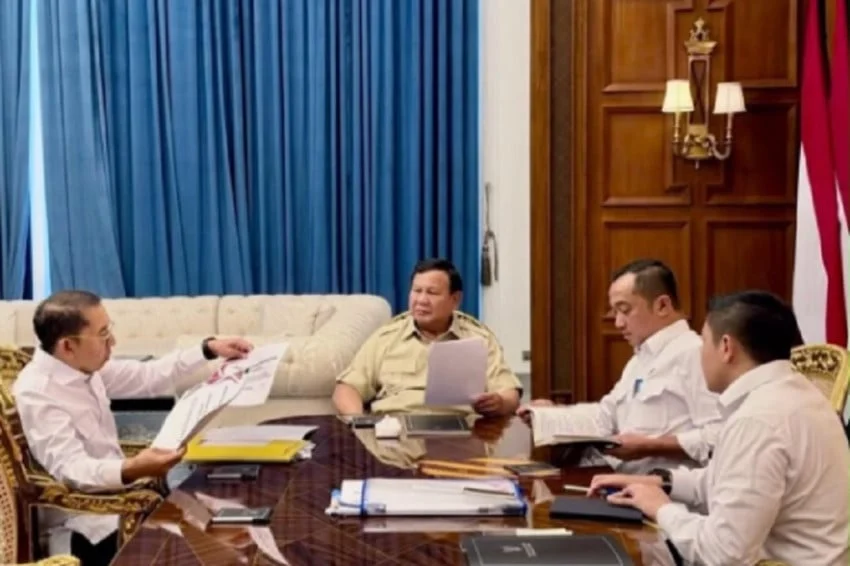
Minister of Culture and Chairman of the Council for Titles, Decorations, and Honors (GTK), Fadli Zon, officially submitted a list of proposed candidates for the title of National Hero to President Prabowo Subianto at the Merdeka Palace in Jakarta on Wednesday, November 4, 2026. This administrative milestone marks a critical step in the nation’s annual tradition of honoring historical figures who have made extraordinary contributions to the Republic of Indonesia. The submission comes just days before the country prepares to commemorate National Heroes Day on November 10, a date that serves as a cornerstone for national identity and historical reflection.
The meeting at the Merdeka Palace underscores the rigorous vetting process managed by the GTK Council. As the government seeks to balance historical recognition with contemporary national values, the role of the Ministry of Culture has become increasingly central in identifying individuals whose legacies remain vital to the country’s social and intellectual fabric.
The Selection Process: A Rigorous Methodology
The designation of a National Hero is not merely a symbolic gesture; it is a profound administrative and historical process governed by Law Number 20 of 2009 concerning Titles, Decorations, and Honors. Candidates must meet stringent criteria, including having led a national struggle, performed acts of heroism that have had a lasting impact on the nation, or having consistently demonstrated exemplary moral conduct throughout their lives.
Fadli Zon’s role as the Chairman of the GTK Council involves overseeing a multi-tiered evaluation. Proposals generally originate from regional governments or community organizations, which are then vetted by the Ministry of Social Affairs and the Ministry of Culture. Independent teams of historians and experts then scrutinize these files to ensure factual accuracy and historical merit. Once the council reaches a consensus, the final list is forwarded to the President, who holds the ultimate authority to confer the title through a Presidential Decree.
Chronology of the 2026 Nomination Cycle
The 2026 cycle began several months prior, characterized by extensive public discourse and academic deliberation. The following timeline illustrates the administrative trajectory leading up to the November 4 submission:
- Early 2026: Regional governments and civil society organizations submitted their initial dossiers to the Ministry of Social Affairs.
- Mid-2026: The GTK Council, under the leadership of Fadli Zon, initiated the formal verification process, including site visits and interviews with the families of the candidates.
- September 2026: Public forums and scholarly reviews were conducted to assess the historical impact of the proposed figures, including figures such as Sutan Takdir Alisjahbana, who has been widely discussed for his immense contributions to Indonesian language and cultural modernization.
- October 2026: The Council held final plenary sessions to narrow down the list based on merit, geographical representation, and diverse contributions to the fields of education, arts, politics, and military resistance.
- November 4, 2026: The formal submission of the refined list to President Prabowo Subianto at the Merdeka Palace.
Historical Context and Institutional Significance
The conferment of the National Hero title serves as a bridge between the struggles of the past and the challenges of the future. Since the inception of the Republic, this title has been used to solidify the narrative of a unified Indonesia, spanning diverse ethnicities and ideological backgrounds. By emphasizing the contributions of figures who shaped the intellectual and cultural landscape, the current administration is signaling a broader focus on "soft power"—the idea that national strength is built not only on military or political success but on the foundation of cultural identity and linguistic integrity.
Observers note that this year’s recommendations reflect a deliberate effort to diversify the types of heroism recognized by the state. While early years of the republic focused heavily on military figures who fought against colonial powers, recent nominations have increasingly recognized intellectuals, educators, and cultural icons who fought for the "soul" of the nation.
Analysis: Implications of the 2026 Nominations
The inclusion of figures like Sutan Takdir Alisjahbana in the public discourse surrounding the 2026 awards highlights a shifting priority. Alisjahbana, a central figure in the Pujangga Baru movement, was instrumental in modernizing the Indonesian language and integrating it into the global discourse. His potential recognition underscores an institutional shift toward acknowledging the architects of Indonesian intellectualism.

From a political perspective, this move allows the Prabowo Subianto administration to align itself with the preservation of national heritage. By actively engaging with the GTK Council and the Ministry of Culture, the President is reinforcing his administration’s commitment to historical continuity. This is particularly relevant in a period where national identity is often debated against the backdrop of rapid globalization and digital transformation.
Official Statements and Public Reception
In his social media communications following the meeting at the Merdeka Palace, Fadli Zon emphasized the gravity of the task. "This afternoon, as the Minister of Culture and Chairman of the GTK Council, I arrived at the Merdeka Palace to present the recommendations for the National Hero Awards to President Prabowo Subianto. These selections were made to honor those whose sacrifices and achievements have laid the foundation for our modern state as we approach Heroes Day 2026," Zon noted in his official statement.
Public reaction has been largely supportive, with various academic circles praising the inclusion of diverse cultural figures. Historians have argued that the recognition of cultural and educational heroes serves as an inspiration for the younger generation, encouraging them to pursue achievements in fields that may not involve traditional conflict but contribute equally to the nation’s development.
Challenges and Future Considerations
Despite the prestige of the title, the nomination process is not without its challenges. The GTK Council often faces the difficult task of managing public expectations and historical controversies. Some families of historical figures advocate for recognition that may not meet the strict legal criteria of the 2009 law, leading to complex negotiations and sometimes, public disappointment.
Furthermore, the government faces the challenge of "historical erasure," where figures from less-represented regions or those whose contributions were marginalized during previous political regimes are often left out. The 2026 cycle has attempted to address some of these disparities through more inclusive data collection methods and a more robust historical audit.
The Role of the Ministry of Culture
Since the separation of the Ministry of Culture from the previous education-heavy portfolio, there has been a more concentrated effort to elevate the status of historical preservation. The ministry now acts as a central hub for not only preserving physical monuments but also "living heritage"—the ideas, languages, and movements that define what it means to be Indonesian.
The collaboration between the Ministry of Culture and the GTK Council signifies a more holistic approach to history. Instead of viewing history as a static record, the current administration appears to view it as a living document that must be continuously re-evaluated and celebrated.
Conclusion
As Indonesia approaches the November 10 commemoration, the anticipation surrounding the final announcement of the new National Heroes remains high. The submission by Fadli Zon to President Prabowo Subianto represents the culmination of a year-long effort to distill the essence of Indonesian greatness into a select group of individuals. Whether the final list includes figures known for their literary prowess, scientific achievements, or their role in the struggle for independence, the act of naming them serves as a reminder that the nation is built upon the cumulative efforts of its citizens.
The process of recognizing National Heroes is, ultimately, an exercise in nation-building. It defines the values that the current generation holds dear and sets a standard for those who will follow. By meticulously vetting candidates and ensuring that their legacies are documented, the Indonesian government is ensuring that the memory of its heroes remains a guiding light for the future of the republic. As the country prepares to celebrate, the focus will shift from the administrative task of the GTK Council to the national celebration of the individuals who helped forge the path to sovereignty and cultural maturity.