The aggressive expansion of Chinese automotive brands in Southeast Asia’s largest economy reached another significant milestone this week as Omoda and Jaecoo officially inaugurated their latest comprehensive dealership facility in Pancoran, South Jakarta. Developed in strategic partnership with PT Antapura Global Indonesia, this state-of-the-art facility represents the inaugural retail and service footprint for the local partner, while simultaneously marking the 45th operational network point for the Omoda and Jaecoo marque across the vast Indonesian archipelago.
This strategic retail rollout occurs against a backdrop of unprecedented market momentum, propelled by surging consumer adoption of electrified vehicles. Industry figures from the Association of Indonesian Automotive Industries (Gaikindo) highlight a robust upward trajectory for the brand’s electrified portfolio throughout the first three quarters of the year. Particularly noteworthy is the commercial dominance achieved by the Jaecoo J5 EV, which has captured the imagination—and market share—of eco-conscious motorists nationwide. By capitalizing on this localized surge in green mobility, Omoda and Jaecoo are systematically reinforcing their distribution pipelines, customer touchpoints, and after-sales ecosystems to cater to an increasingly sophisticated demographic of Indonesian car buyers.
Strategic Network Expansion and Corporate Vision
The establishment of the Pancoran dealership is far from a localized real estate development; it is a calculated chess move designed to fortify the brand’s positioning in high-density urban centers where demand for next-generation mobility solutions is acutely concentrated. South Jakarta, known for its affluent demographic and progressive commuting patterns, serves as an ideal launchpad for luxury-leaning, technology-forward electrified vehicles.
Business Unit Director of Omoda and Jaecoo Indonesia, Jim Ma, articulated the overarching corporate philosophy guiding this rapid expansion during the official ribbon-cutting ceremony. According to Ma, the deployment of the 45th dealership is a pivotal mechanism for enhancing consumer accessibility and elevating the standard of after-sales care in a fiercely competitive market.
"The introduction of our 45th dealership underscores a critical milestone in our ongoing mission to bridge the gap between our innovative product lineup and the discerning Indonesian consumer," Ma stated in an official corporate briefing. "This momentum is heavily anchored by Jaecoo’s stellar performance, notably the Jaecoo J5 EV, which has firmly established itself as a frontrunner in the domestic electric vehicle landscape. We remain unswervingly committed to scaling our network infrastructure to match this extraordinary consumer enthusiasm."
Anatomically and architecturally, the new facility has been constructed to the rigorous global standards demanded by the brand. Spanning an impressive land area of 1,956 square meters with a total building footprint of 4,306 square meters, the Pancoran facility operates under the comprehensive 3S concept—encompassing Sales, Service, and Spare Parts.
The expansive showroom floor is architected to display four flagship models simultaneously, offering prospective buyers a tactile experience with the Omoda O4, the market-leading Jaecoo J5 EV, the Jaecoo J7 SHS-P (Super Hybrid System-Plug-in), and the flagship Jaecoo J8 SHS-P ARDIS. This diverse product display strategically showcases the brand’s dual-pronged technological approach, blending pure battery-electric vehicles (BEVs) with advanced plug-in hybrid electric vehicle (PHEV) architectures designed to alleviate range anxiety for long-distance drivers.
Chronology of Growth and Market Penetration
To fully comprehend the magnitude of Omoda and Jaecoo’s ascent in the Indonesian automotive sector, it is essential to examine the chronological evolution of their market penetration. Entering a market historically dominated by legacy Japanese manufacturers required a precise, phased strategy encompassing regulatory compliance, brand awareness campaigns, local assembly planning, and aggressive dealership acquisition.
The initial phase involved rigorous market research and brand introduction, where both nameplates tested the waters by showcasing their futuristic designs and intelligent cockpit technologies at major domestic auto shows. Positive reception from these exhibitions laid the groundwork for formal corporate establishment. Following the corporate setup, the joint venture swiftly initiated negotiations with established local dealership networks—such as PT Antapura Global Indonesia—to establish robust, trustworthy retail partners capable of meeting international service standards.
By mid-cycle, the introduction of localized and imported units triggered a wave of commercial interest. The tipping point arrived with the rollout of the Jaecoo J5 EV, which capitalized on government incentives for electric vehicles, tax exemptions, and expanding urban charging infrastructure. Within a remarkably short operational window, the brand scaled its physical footprint from a handful of pilot showrooms in the capital to a robust network of 45 strategic outposts spanning major metropolitan areas across the archipelago. The opening of the Pancoran branch in November serves as the culmination of this aggressive, year-long infrastructure drive.
Decoding the Data: The Rise of the Jaecoo J5 EV
The economic viability of Omoda and Jaecoo’s rapid retail expansion is powerfully substantiated by hard market data. According to comprehensive wholesale figures compiled and released by Gaikindo covering the January to September reporting period, the Jaecoo J5 EV has emerged as a titan within the national electric vehicle segment.
During this nine-month fiscal window, wholesales of the Jaecoo J5 EV reached an astounding 27,234 units. This performance not only outstripped internal corporate projections but also positioned the model at the pinnacle of the domestic EV leaderboard. Several converging factors explain this commercial triumph:
- Competitive Pricing and Value Proposition: The J5 EV successfully bridged the gap between premium technological features and accessible pricing, offering high-end driver-assistance systems (ADAS) and generous battery range at a competitive price point.
- Infrastructure Synergy: As municipal and federal authorities continue to expand public charging networks, consumers have grown increasingly confident in adopting battery-powered alternatives for daily commuting.
- Aesthetic and Functional Appeal: Designed with modern urban aesthetics and practical utility, the vehicle resonated strongly with younger professionals and urban families seeking sustainable mobility without compromising on comfort or prestige.
This staggering sales volume has provided the parent company with the necessary capital and brand equity to aggressively fund expansion projects like the Pancoran facility, creating a self-reinforcing cycle of sales growth and infrastructure development.
Operational Excellence and After-Sales Ecosystem
Recognizing that modern automotive retail extends far beyond the showroom floor, PT Antapura Global Indonesia has invested heavily in the technical infrastructure of the Pancoran facility. To ensure that the surging population of Omoda and Jaecoo owners receive prompt and professional maintenance, the service department has been engineered for high throughput and technical precision.
The facility houses a total of 14 dedicated service bays, strategically divided into eight lift-type bays and six non-lift bays. This configuration allows technicians to simultaneously handle routine maintenance, complex electrical diagnostics, and heavy mechanical repairs. Operating at full capacity, the service center is equipped to service between 25 and 30 vehicles daily, effectively mitigating the bottlenecks that often plague emerging automotive brands experiencing rapid customer acquisition.
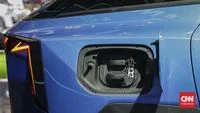
Furthermore, the dealership addresses the evolving needs of EV owners by integrating dedicated on-site charging stations. Understanding that convenience is paramount for modern motorists, the facility also deploys a specialized mobile fleet to offer home-service maintenance within a 5-kilometer radius, alongside a 24-hour emergency roadside assistance program. These initiatives reflect a mature approach to customer retention, signaling to the market that the brand is committed to long-term ownership satisfaction rather than merely pushing initial sales volume.
Commercial Optimism and Partnership Perspectives
From the perspective of the local operational partner, the alignment with Omoda and Jaecoo represents a high-conviction bet on the future of Indonesian mobility. Harris Kristanto Sutrisno, Director of PT Antapura Global Indonesia, views the partnership as a foundational pillar for a prosperous, multi-decade business relationship.
"Our decision to invest in this sprawling Pancoran facility is rooted in a deep analysis of market trends and consumer behavior in South Jakarta," Sutrisno noted during the inauguration proceedings. "We are operating in an era where consumers are rapidly shifting toward sustainable, technologically advanced vehicles. By combining Antapura’s deep local market expertise with Omoda and Jaecoo’s world-class engineering, competitive product portfolios, and proven market dominance—exemplified by the phenomenal sales figures of the Jaecoo J5 EV—we are exceptionally well-positioned to capture significant market share and deliver enduring value to our clientele."
Sutrisno’s optimism is echoed by industry analysts who monitor the broader Southeast Asian automotive transition. The willingness of seasoned domestic dealer groups to commit substantial capital to Chinese automotive brands signals a structural shift in consumer trust and corporate confidence. No longer viewed as fringe alternatives, brands like Omoda and Jaecoo are actively reshaping the competitive landscape, compelling legacy automakers to accelerate their own electrification strategies and enhance their digital integration.
Broader Industry Implications and Future Outlook
The successful launch of the 45th dealership in Pancoran carries profound implications for the broader Indonesian automotive ecosystem. As the government continues to aggressively promote green energy initiatives, tax holidays for EV manufacturers, and the establishment of domestic battery supply chains, early movers like Omoda and Jaecoo are securing critical first-mover advantages.
By anchoring their market dominance with high-volume models like the J5 EV and diversifying their showroom offerings with advanced plug-in hybrids like the J7 and J8 SHS-P, the brands are hedging against transitional consumer hesitation. While pure electric vehicles capture urban commuters, plug-in hybrids provide a comfortable bridge for motorists traveling between provinces where charging infrastructure remains under development.
Looking forward, the trajectory of Omoda and Jaecoo in Indonesia will likely serve as a case study for international automotive expansion. The ability to rapidly scale physical infrastructure while maintaining rigorous 3S service standards will determine whether the brand can sustain its current growth velocity. For now, with 45 operational facilities firmly established and sales figures breaking records, the alliance between Omoda, Jaecoo, and local partners like PT Antapura Global Indonesia demonstrates that the future of Indonesian mobility is arriving ahead of schedule—recharged, electrified, and expanding rapidly across the capital.