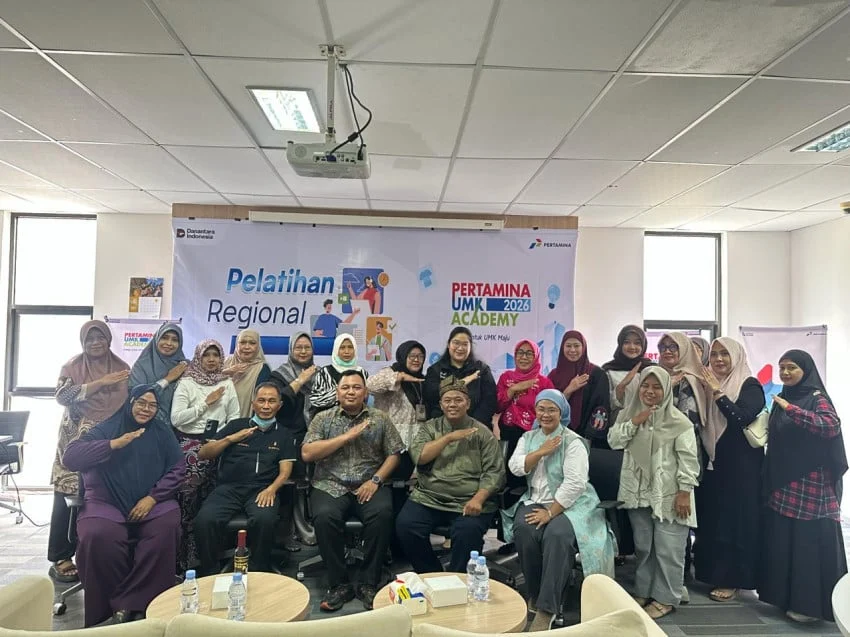
The national landscape of Indonesia’s micro and small enterprise (MSE) sector has reached a significant milestone as 857 businesses, nurtured under the Pertamina UMK Academy 2026 program, have successfully advanced to the national level of competition. This progression follows a rigorous series of regional development cycles that commenced in September 2026, marking a pivotal moment in the state-owned energy giant’s ongoing commitment to fostering grassroots economic resilience. These selected enterprises emerged from a competitive pool of over 1,500 initial applicants across the archipelago, representing a diverse array of industries ranging from creative crafts to sustainable food production.
A Strategic Approach to Economic Empowerment
The Pertamina UMK Academy is not merely a training program; it functions as a comprehensive incubation ecosystem designed to elevate the standard of local businesses. By focusing on three critical pillars—management optimization, digital transformation, and market expansion—the program aims to address the structural hurdles that often prevent small businesses from scaling effectively.
According to Rudi Ariffianto, Vice President of CSR & SMEPP Management at Pertamina, the program is engineered to build long-term institutional capacity. "Through the Pertamina UMK Academy, we want to ensure that MSMEs possess superior capabilities and quality, extending beyond the physical product to encompass robust business management," Ariffianto stated in an official release on Saturday, November 7, 2026. This focus on "business health" reflects a broader shift in corporate social responsibility (CSR) strategy, moving away from simple financial aid toward sustainable knowledge transfer and professionalization.
Chronology of the 2026 Development Cycle
The path to the national stage has been marked by a high-intensity schedule of intervention. Since September 2026, the program has mobilized resources across ten distinct geographic regions, ensuring that participants from both urban centers and remote areas received equitable access to mentorship.
The execution phase of the regional program exceeded initial institutional benchmarks. Pertamina conducted 43 specialized training sessions, surpassing their original target of 40 sessions, effectively achieving a 108 percent performance rate. The support structure was multi-layered, consisting of:
- Capacity Building: 43 intensive training workshops tailored to regional industry needs.
- Market Exposure: 11 large-scale exhibitions designed to provide these enterprises with direct access to consumer markets and supply chain partners.
- Direct Mentorship: Over 600 individual mentoring sessions, split between digital remote consulting and physical, on-site field visits to the business premises.
This high frequency of engagement allowed mentors to diagnose specific operational bottlenecks—such as supply chain fragmentation or lack of digital financial literacy—and implement targeted solutions for each participating enterprise.
Regional Performance Metrics and Data Analysis
The geographic distribution of the successful participants provides a telling snapshot of the current state of regional entrepreneurship in Indonesia. Central Java and the Special Region of Yogyakarta emerged as the powerhouses of the 2026 cohort, contributing 135 successful enterprises out of 211 initial participants. This high success rate highlights the robust existing ecosystem of craft and manufacturing industries in the region.
East Java followed closely in terms of sheer volume, with 129 successful UMKs originating from a pool of 215 applicants. However, perhaps the most notable statistic comes from the Bali and Nusa Tenggara region, which achieved a 60.9 percent success rate, the highest percentage of graduation among all participating regions. This data suggests that the business climate in the eastern provinces is increasingly primed for formalization and professional growth, potentially indicating a successful shift toward service-oriented and value-added agricultural business models in those areas.
The Broader Economic Implications
The success of these 857 enterprises carries weight beyond the immediate metrics of the Pertamina UMK Academy. In the context of the Indonesian economy, MSMEs are often described as the backbone of the national GDP, accounting for a vast majority of employment opportunities. Programs like this serve as a crucial "bridge" that helps informal or semi-formal businesses transition into the formal economy, where they can access banking facilities, government procurement tenders, and international trade opportunities.
The focus on digital transformation is particularly critical. As the Indonesian retail sector moves increasingly online, many local UMKs face the "digital divide." By providing training in e-commerce, digital marketing, and electronic bookkeeping, Pertamina is effectively equipping these business owners to survive in a competitive, tech-driven market. This is consistent with national efforts to digitize 30 million MSMEs by 2030, a goal currently supported by various state-owned enterprises (SOEs).
Complementary Ecosystems
Pertamina is not alone in this endeavor. Similar initiatives, such as the efforts by state-owned telecommunications firm Telkom to assist MSMEs in tapping into 18 international markets, underscore a nationwide policy push by the Indonesian government to harmonize CSR efforts toward economic internationalization. The synergy between these various SOE programs suggests that the 857 UMKs currently in the Pertamina academy are being prepared not just for domestic stability, but for potential export readiness.
For the participating entrepreneurs, the national stage represents an opportunity for higher-level networking. They will likely be exposed to investors, regulatory experts, and industry leaders who can provide the capital and strategic guidance necessary to scale their operations from micro-entities to small or medium-sized businesses.
Looking Toward the National Finals
As the 857 participants transition to the national stage, the challenges will undoubtedly intensify. The national curriculum is expected to focus on advanced topics such as business scaling strategies, intellectual property registration, international standardization (such as ISO or Halal certification), and complex financial management.
For Pertamina, the success of the 2026 academy serves as a validation of their updated CSR framework. By shifting from a philanthropic model to a value-creation model, the corporation is ensuring that its social investments yield measurable returns in the form of increased tax revenue, job creation, and strengthened supply chains for the energy and retail sectors.
Ultimately, the Pertamina UMK Academy 2026 is a testament to the resilience of the Indonesian entrepreneurial spirit. As these 857 businesses move forward, they carry the potential to influence local economic stability significantly. The coming months will be critical in determining how many of these enterprises can leverage their newfound knowledge to secure long-term contracts and sustained growth in an increasingly volatile global economy. The program remains a vital component of Indonesia’s broader strategy to cultivate a more resilient, self-sufficient, and globally competitive SME sector.