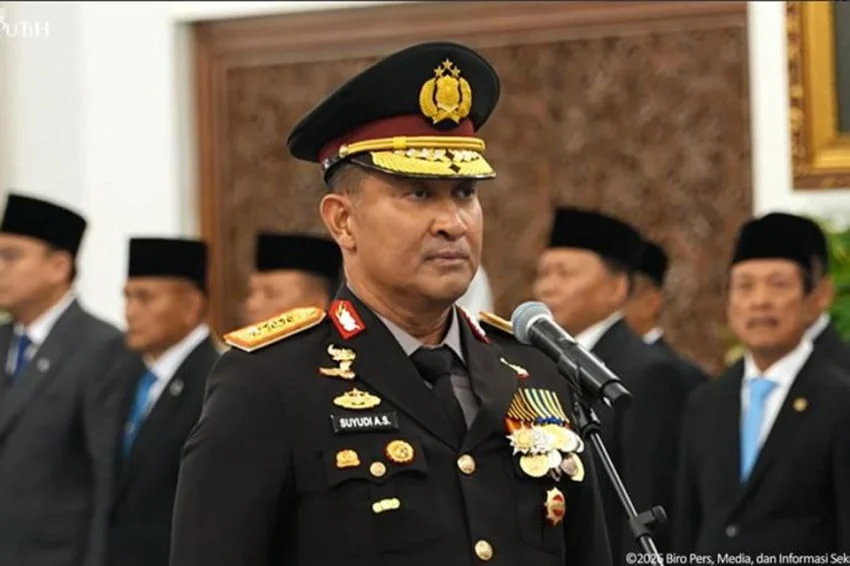
The Indonesian National Police (Polri) has officially enacted a strategic restructuring of its high-ranking leadership, marked by the reassignment of 264 officers, including the prominent transfer of five Brigadier Generals (Brigjen Pol) to the Mobile Brigade Corps (Korbrimob). The directive, formalized under the Police Chief’s Telegram Letter (Surat Telegram Kapolri) Number ST/2467/XI/KEP./2026, issued on November 2, 2026, represents a significant shift in the operational management of one of the nation’s most critical security pillars.
The five officers appointed to new roles within the Korbrimob are Brigadier General Dadang Rahardja, Brigadier General Djadjuli, Brigadier General Mulyadi, Brigadier General Amostian, and Brigadier General I Ketut Gede Wijatmika. This move is part of a broader, sweeping organizational change that has affected both High-Ranking Officers (Pati) and Mid-Ranking Officers (Pamen) across the archipelago, signaling a deliberate effort by Kapolri Jenderal Polisi Suyudi Ario Seto to streamline the force’s capabilities as the country enters the final quarter of 2026.
The Strategic Context of the November 2026 Restructuring
The transition of leadership within the National Police is rarely merely administrative; it serves as a barometer for the force’s evolving operational priorities. By reassigning these five Brigadier Generals to the Korbrimob—the paramilitary wing of the police force responsible for high-risk operations, counter-terrorism, and public order maintenance—the leadership is signaling a renewed focus on tactical preparedness.
Korbrimob has historically functioned as the primary rapid-response element of the Indonesian police. In an era defined by rapid technological shifts, internal security challenges, and the need for enhanced crowd management during potential civil unrest, the injection of seasoned leadership into this division is viewed by analysts as a strategic move to bolster the force’s institutional integrity.
This latest reshuffle occurs against the backdrop of a larger trend in Indonesian law enforcement, where the rotation of personnel is utilized as a mechanism for institutional "refreshment." By moving officers between divisions, the police leadership seeks to prevent bureaucratic stagnation and ensure that experienced officers are positioned where their specific expertise is most required.
Chronology of the Reassignment
The decision, disseminated through the official channels of the National Police headquarters in Jakarta, follows a meticulous internal review process. The timeline of these events in November 2026 reflects the urgency with which the Polri leadership is addressing current personnel needs:
- October 30 – October 31, 2026: Finalization of the assessment reports by the Police Personnel Bureau (SSDMP Polri), evaluating the performance and career trajectories of senior officers.
- November 2, 2026: The issuance of Telegram Letter ST/2467/XI/KEP./2026, officially authorizing the rotation of 264 officers across various commands and specialized units.
- November 4, 2026: Administrative processing and official notification of the reassigned officers.
- November 7, 2026: Official acknowledgment by the Head of the Public Relations Division (Kadiv Humas) to the public, emphasizing the procedural necessity of these changes.
This prompt execution highlights a shift toward a more agile command structure, ensuring that administrative delays do not hinder the deployment of key personnel to critical security roles.
Analyzing the Impact of High-Level Rotations
The transfer of five Brigadier Generals to Korbrimob is just one component of a wider move that included 13 other Brigadier Generals being reassigned to the Education and Training Institute (Lemdiklat Polri) during the same period. This indicates a bifurcated strategy: strengthening the tactical front (Korbrimob) while simultaneously upgrading the educational and training infrastructure (Lemdiklat).
For the Indonesian police, human capital is the most significant asset. By placing senior officers in the Korbrimob, the institution is effectively decentralizing experience. These officers bring years of regional command and administrative knowledge to a division that often operates under high-pressure, field-centric conditions.
Furthermore, analysts suggest that these rotations are designed to align the force with the government’s broader objectives for 2027. With national security requirements becoming increasingly complex—ranging from cyber-security threats to the management of large-scale social dynamics—the presence of officers with diverse backgrounds within the Korbrimob is expected to provide a more nuanced approach to operational decision-making.
Official Stance and Internal Justification
The official narrative provided by the National Police reflects a commitment to institutional professionalism. Irjen Pol Johnny Eddizon Isir, the Head of the Public Relations Division, underscored that these changes are a routine component of police governance.
"The rotation and mutation of personnel are inherent to the organizational lifecycle of the National Police," Isir stated in Jakarta. "This is not an exceptional event but a necessary one to ensure continuity. We are facing a landscape of challenges that is becoming more complex, and our leadership structure must be agile enough to meet those demands."
Isir further clarified that the primary objective is "organizational refreshment." This term, commonly used in the context of the Indonesian bureaucracy, refers to the prevention of "siloing"—the tendency for departments to become insular—and the encouragement of knowledge transfer. By rotating senior leaders, the Polri ensures that fresh perspectives are brought into units like the Korbrimob, preventing the entrenchment of static management styles.
Broader Implications for National Security
The broader impact of this policy is the maintenance of institutional stability. When a police force undergoes significant leadership changes, the primary concern of the public and the government is the preservation of stability and the prevention of operational gaps. The systematic nature of the Telegram Letter system used by the Polri is designed specifically to mitigate these risks.
The concentration of Brigadier Generals in the Korbrimob and Lemdiklat suggests that the National Police is currently prioritizing two specific pillars:
- Tactical Readiness: Enhancing the capability of the Mobile Brigade to respond to internal security threats with precision.
- Professional Development: Investing in the training of the next generation of officers to ensure that the force remains intellectually and technically capable of handling the demands of modern policing.
This dual focus is essential for maintaining public trust. As the National Police continues to undergo modernization, the ability to rotate leadership effectively without disrupting core services is a testament to the maturation of the force’s administrative systems.
Data and Trends in Personnel Management
Data regarding previous rotations over the last decade shows a consistent pattern of increased mobility among senior officers. In 2025, the frequency of "tour of duty" assignments increased by approximately 15% compared to the 2020-2022 period, largely attributed to the demands of digital transformation and the restructuring of regional police commands.
The current rotation of 264 officers is considered a medium-to-large-scale operation. Historically, such figures are typical of biannual restructurings, but the specific focus on Brigadier Generals indicates a high-level recalibration of the command structure. The selection of Brigjen Pol Dadang Rahardja and his colleagues for the Korbrimob reflects a preference for leaders with proven track records in crisis management and organizational oversight.
Future Outlook for the Indonesian National Police
Looking ahead, the success of these reassignments will be measured by the effectiveness of the Korbrimob in its upcoming operational cycles. The expectation is that the new leadership team will bring a cohesive vision to the division, particularly as it relates to the integration of modern intelligence-led policing into traditional paramilitary tactics.
Furthermore, the simultaneous move to bolster the Lemdiklat indicates that the Polri is preparing for a long-term shift in its educational requirements. By placing experienced Brigadier Generals in training roles, the institution is ensuring that the curriculum for new recruits and mid-level officers remains grounded in contemporary field experience rather than purely theoretical frameworks.
In conclusion, the November 2026 restructuring is a clear reflection of the Indonesian National Police’s commitment to strategic evolution. Through the careful selection and movement of senior officers like the five Brigadier Generals now assigned to the Korbrimob, the leadership is positioning the force to remain a robust and adaptable institution. As Indonesia continues to navigate the complexities of the 21st-century security environment, these personnel adjustments remain the primary mechanism for maintaining the integrity, effectiveness, and readiness of the national police force.