The Attorney General’s Office of the Republic of Indonesia has taken the unprecedented step of detaining the former Junior Attorney General for Special Crimes (Jampidsus), Febrie Adriansyah, late Friday night on July 24, 2026. In a move that has sent shockwaves through the nation’s legal and political corridors, the high-ranking former official was escorted to the Corruption Eradication Commission (KPK) detention center, where he will be held as investigations into his alleged involvement in undisclosed legal irregularities continue. The detention signifies a dramatic reversal of fortune for a man who, for years, was the spearhead of Indonesia’s most aggressive anti-corruption drives, overseeing the prosecution of multi-billion dollar scandals that rocked the state’s financial foundations.
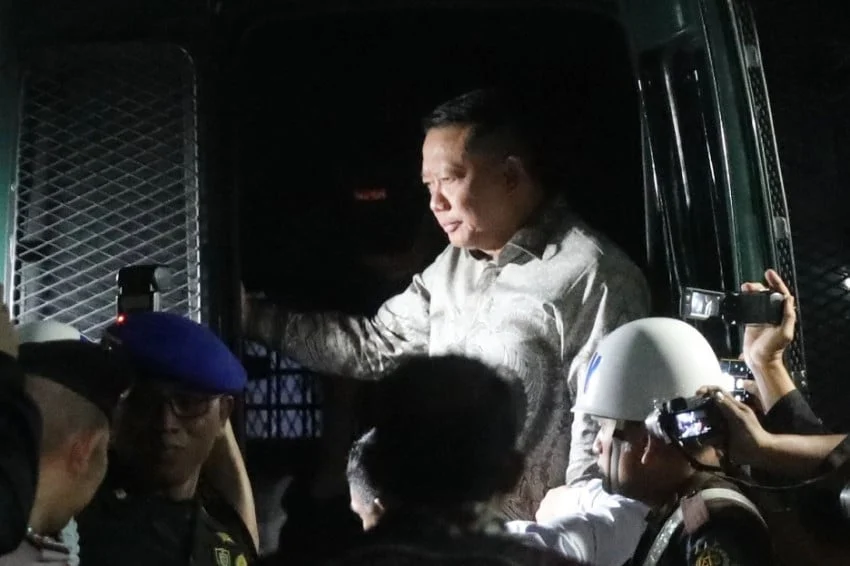
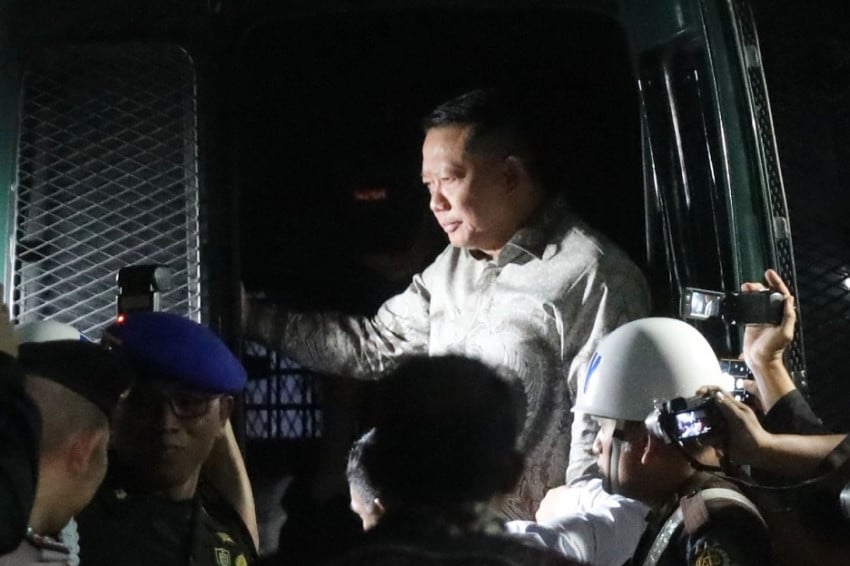
According to eyewitness accounts and reports from the scene at the KPK’s Red and White Building in Kuningan, South Jakarta, Febrie Adriansyah arrived at approximately 11:23 PM WIB. He was transported in a black prisoner transport vehicle belonging to the Attorney General’s Office (Kejagung). Observers noted several anomalies during his arrival; despite the gravity of the situation, the former top prosecutor was not seen wearing the standard bright orange or pink prisoner’s vest typically mandated for detainees. Furthermore, his hands were not restrained by handcuffs as he exited the vehicle and was ushered into the facility by a security detail. This lack of standard procedure for high-profile suspects has already sparked debate regarding the potential for preferential treatment among the elite ranks of law enforcement.
Chronology of the Late-Night Detention
The events leading to the detention began earlier on Friday evening when Febrie Adriansyah was summoned to the Attorney General’s Office for an intensive questioning session. While the specific nature of the charges has not been fully disclosed to the public, the decision to move him to a detention facility suggests that investigators have secured "sufficient preliminary evidence" to justify a 20-day initial holding period, as permitted under the Indonesian Criminal Procedure Code (KUHAP).
At around 11:00 PM, the convoy departed from the Attorney General’s Office in Kebayoran Baru, heading toward the KPK headquarters. The choice of the KPK detention center as a "deposit" (titipan) location for the AGO’s suspect is a procedural move often utilized in cases involving high-level state officials to ensure maximum security and to maintain a degree of institutional distance. Upon his arrival at 11:23 PM, Febrie appeared composed, maintaining a stoic expression as he navigated a gauntlet of media cameras. He offered no statement to the press before entering the building for administrative processing and medical checks.
The Profile of a Former Corruption Buster
To understand the magnitude of this arrest, one must look at Febrie Adriansyah’s storied career within the Adhyaksa corps. As the Junior Attorney General for Special Crimes, Febrie was the architect of some of the largest corruption prosecutions in Indonesian history. His portfolio included the massive corruption case involving the state-owned insurer PT Asabri, which resulted in trillions of rupiah in state losses, and the PT Jiwasraya scandal.
Most notably, Febrie was at the helm during the investigation into the mega-corruption case regarding tin mining permits (IUP) involving PT Timah Tbk. This specific case was estimated to have caused environmental and financial damages exceeding Rp300 trillion, making it one of the largest environmental crime cases ever prosecuted in the region. His tenure was marked by a "no-nonsense" approach to corporate malfeasance, which earned him both public acclaim and significant institutional pushback. His detention now raises uncomfortable questions about whether the very systems he used to hunt corruption were themselves compromised or if he has become a casualty of internal institutional friction.
Context of Institutional Tension and Security Incidents
The detention of Febrie Adriansyah does not occur in a vacuum. His career was previously marred by a high-profile security incident in early 2024, where he was reportedly stalked by members of the National Police’s elite counter-terrorism unit, Densus 88, while dining at a restaurant in South Jakarta. That incident exposed a deep-seated rift between the Attorney General’s Office and the National Police, leading to a national security debate and requiring the intervention of the President to de-escalate the tension.
While it is unclear if the current investigation is linked to the fallout of those previous inter-agency conflicts, the move by the Attorney General’s Office to detain one of its own "shining stars" suggests a "cleansing" operation within the institution. The Attorney General, ST Burhanuddin, has frequently stated his commitment to "zero tolerance" for internal misconduct, often remarking that he would not hesitate to "cut off the tail" of the institution if it was found to be "rotten."
Official Statements and Institutional Responses
While the Attorney General’s Office has been relatively tight-lipped regarding the specific articles of the Anti-Corruption Law being applied, the Head of the Legal Information Center (Kapuspenkum) indicated that more details would be provided in a formal press conference. "We are following the legal process as it stands. The detention is a necessary step for the integrity of the ongoing investigation," the spokesperson noted briefly.
Simultaneously, the KPK has confirmed that they are providing the detention facility as requested by the AGO. "The KPK’s detention center is a secure facility, and we are cooperating with the Attorney General’s Office to facilitate their legal requirements," said a KPK representative. This cooperation highlights a rare moment of logistical synergy between the two most powerful anti-graft bodies in the country, even as one investigates its own former leadership.
Analysis of the Lack of Prisoner Attire
The absence of the prisoner vest and handcuffs during Febrie’s transfer has become a focal point for legal analysts. In Indonesia, the "orange vest" has become a potent symbol of the "social sanction" against corruption suspects. Legal expert Dr. Romli Atmasasmita has previously noted that the application of such symbols should be universal to maintain the principle of equality before the law.
The decision to allow Febrie to appear in his civilian clothes may be interpreted in two ways. Critically, it could be seen as "professional courtesy" extended to a former high-ranking colleague, which undermines the AGO’s message of impartial justice. Conversely, from a procedural standpoint, if the suspect is deemed non-combative and not a flight risk, investigators occasionally exercise discretion regarding physical restraints, though the lack of a vest remains highly unusual for a detainee being processed into a KPK-managed facility.
Broader Implications for the Indonesian Legal Landscape
The arrest of Febrie Adriansyah is likely to have several long-term implications for Indonesia:
- Institutional Credibility: If the AGO successfully prosecutes one of its own top officials, it could bolster public trust in the institution’s willingness to self-regulate. However, if the case is perceived as politically motivated or lacks transparency, it could severely damage the credibility of the special crimes division.
- Review of Past Cases: Defense lawyers for those convicted during Febrie’s tenure may seek to use his detention to cast doubt on the integrity of previous investigations. This could lead to a wave of judicial reviews (PK) for high-profile corruption convicts.
- Legislative Oversight: The House of Representatives (DPR) Commission III, which oversees legal affairs, is expected to summon the Attorney General to explain the basis of this detention. This will likely spark a broader debate on the oversight mechanisms for "super-powerful" investigators within the AGO.
- Anti-Corruption Momentum: There is a risk that the "fall" of a prominent corruption buster could demoralize the rank-and-file investigators within the Jampidsus division, potentially slowing down other major ongoing investigations into the private and public sectors.
Conclusion and Future Outlook
As of Saturday morning, Febrie Adriansyah remains in the custody of the KPK detention center. The legal team representing the former Jampidsus is expected to file a pre-trial motion (praperadilan) to challenge the legality of the detention and the evidence presented by the AGO.
The coming weeks will be critical for the Attorney General’s Office. They must balance the need for investigative secrecy with the public’s demand for transparency in a case that involves the very heart of the nation’s legal enforcement apparatus. For now, the image of the man who once hunted the nation’s most powerful corruptors, now sitting behind the bars of a KPK cell, serves as a stark reminder of the volatile nature of power and justice in Indonesia. The public remains watchful, waiting to see if this is a genuine step toward institutional purity or another chapter in the complex saga of elite power struggles.