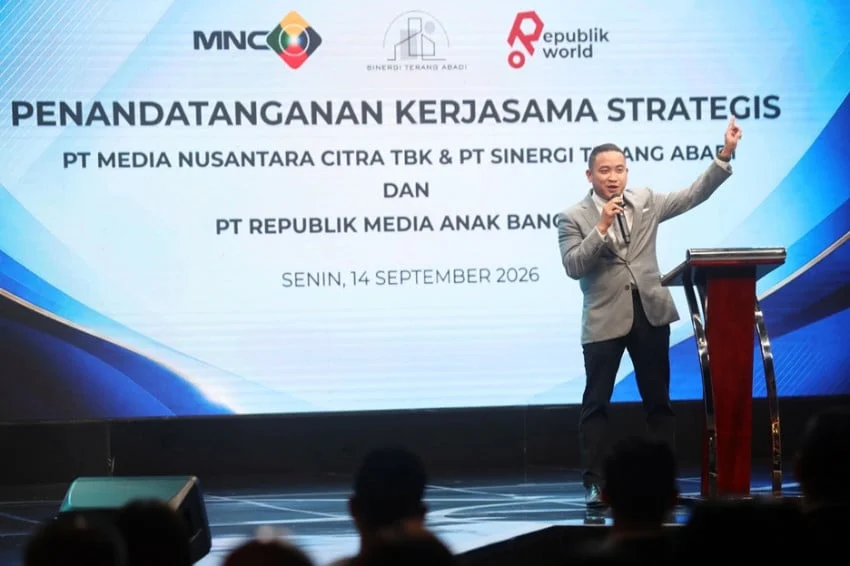
In a move set to redefine the nation’s standing in the international information landscape, PT Republik Media Anak Bangsa (RMAB), a subsidiary of the Republikorp Group, has entered into a landmark strategic partnership with PT Media Nusantara Citra Tbk (MNCN) and PT Sinergi Terang Abadi (STA). The collaboration, formalized during a signing ceremony held at the iNews Tower in Jakarta on Monday, September 14, 2026, aims to consolidate resources and technical expertise to build a robust, integrated media ecosystem. By leveraging the combined strengths of these three industry leaders, the partnership seeks to transition Indonesia from a passive consumer of international news content to a proactive exporter of accurate, high-quality information on the global stage.
The agreement was signed by prominent industry figures, including Founder and Chairman of Republikorp Group Norman Joesoef, Executive Chairman of MNC Group Hary Tanoesoedibjo, and CEO of iNews Media Group and Co-CEO of MNC Group Angela Tanoesoedibjo. This tripartite alliance is viewed by industry analysts as a tactical response to the increasing demand for localized, reliable perspectives in a globalized digital era where information sovereignty is becoming a key pillar of national policy.
The Vision for Media Sovereignty
At the heart of this initiative is the belief that Indonesia’s narrative in the international arena has long been dictated by foreign media conglomerates. Norman Joesoef emphasized that the current dynamic, where Indonesia frequently occupies the role of an information recipient, is unsustainable for a nation with the world’s fourth-largest population and a rapidly expanding digital economy.
"Indonesia must no longer be a mere spectator or a secondary source of information," Joesoef stated following the signing. "To assert our position in the global discourse, we must possess the infrastructure and the capacity to generate, curate, and disseminate news that reflects our national values and accurate realities to the international community. This partnership is designed to bridge that gap, ensuring that the Indonesian perspective is both heard and respected globally."
The initiative acknowledges the geopolitical importance of media power. As emerging markets continue to play a pivotal role in the global economy, the ability to control the narrative—specifically regarding trade, tourism, and diplomatic relations—is essential. By aligning with MNCN, which boasts one of the most extensive media footprints in Southeast Asia, and STA’s specialized operational capabilities, RMAB aims to create a powerhouse capable of competing with established international news networks.
A Chronology of Strategic Integration
The path to this collaboration began months prior to the formal signing in September 2026. The discussions were rooted in a shared recognition that the fragmentation of Indonesian media, while serving local audiences well, left a vacuum in the international sphere.
- Q1 2026: Initial exploratory talks were held between the leadership teams of Republikorp and MNC Group regarding the modernization of news production workflows.
- Q2 2026: PT Sinergi Terang Abadi (STA) was brought into the fold to provide specialized technical integration and logistics support, ensuring that the infrastructure could handle high-speed, cross-platform distribution.
- July 2026: Strategic feasibility studies were completed, highlighting the potential for a unified content hub that could feed both domestic terrestrial networks and global digital platforms.
- September 14, 2026: The formal memorandum of understanding (MoU) and definitive agreement were signed at iNews Tower, marking the official launch of the collaborative framework.
This timeline reflects a deliberate approach to organizational restructuring. Unlike past media collaborations which were often limited to content sharing, this partnership involves deep integration at the infrastructure and operational levels, signaling a long-term commitment to changing the media landscape.
Supporting Data: The Indonesian Media Landscape
To understand the necessity of this alliance, one must examine the current state of Indonesia’s media penetration. According to industry reports from 2025, Indonesia’s internet penetration rate surpassed 78%, with a significant portion of the population consuming news primarily through social media platforms dominated by foreign algorithms.
MNCN, as the flagship entity of MNC Group, operates a massive ecosystem that includes free-to-air television stations (RCTI, MNCTV, GTV, and iNews), an extensive digital portal network, and a growing presence in over-the-top (OTT) streaming services. By integrating RMAB’s strategic vision and STA’s technical agility, the partnership aims to leverage MNCN’s existing reach to scale international content production.
Furthermore, the economic implications are significant. The Indonesian creative economy, which includes media and advertising, contributed approximately 7% to the national GDP as of the last fiscal reporting cycle. By enhancing the quality and international distribution of local media, this alliance aims to capture a larger share of global advertising revenue and bolster the "Nation Branding" efforts of the Indonesian government.
Official Responses and Strategic Roles
The leadership involved in the signing ceremony outlined distinct roles for each entity to ensure the partnership operates efficiently.
Hary Tanoesoedibjo, Executive Chairman of MNC Group, highlighted the importance of synergy. "Our strength lies in our comprehensive infrastructure—from broadcasting facilities to digital reach. By partnering with Republikorp and STA, we are essentially unlocking new potential for our newsrooms to transcend national borders. This is not just about expanding business; it is about raising the standard of Indonesian journalism."
Angela Tanoesoedibjo, in her capacity as CEO of iNews Media Group, emphasized the digital-first nature of the initiative. "The audience of 2026 is mobile, global, and highly discerning. Our goal is to ensure that when the world seeks information about Indonesia—or even about global events viewed through an Indonesian lens—they find our platforms first. We are investing in the technology and the storytelling talent necessary to make that a reality."
The involvement of STA is equally critical. As a firm specializing in operational synergy, STA is tasked with streamlining the distribution pipeline. This involves optimizing data transmission, cloud-based news processing, and ensuring that content is localized effectively for different international markets, including Southeast Asia, the Middle East, and the West.
Broader Impact and Global Implications
The implications of this partnership extend far beyond the corporate sphere. In the realm of international relations, "soft power" is heavily dependent on a nation’s ability to communicate its own story. For years, international coverage of Indonesia has been filtered through foreign correspondents. While these journalists often provide objective reporting, they may lack the nuanced understanding of local socio-political intricacies.
By establishing a robust, indigenous media entity capable of producing international-grade news, Indonesia is essentially taking charge of its own public relations narrative. This could have several tangible effects:
- Investment Climate: Accurate and consistent reporting on Indonesia’s economic reforms and industrial growth can attract more high-quality foreign direct investment (FDI).
- Cultural Diplomacy: Increased visibility of Indonesian culture, arts, and tourism through a professional media network will naturally lead to higher awareness and engagement from the global community.
- Regional Leadership: As a leader in ASEAN, Indonesia’s media presence will influence the regional discourse, providing a counterweight to external narratives that may not always align with the interests of Southeast Asian nations.
Challenges and Future Outlook
Despite the optimism surrounding the launch of this partnership, the road ahead involves significant challenges. Competing with global media giants like Reuters, Bloomberg, or Al Jazeera requires not only massive financial capital but also an unwavering commitment to editorial independence and speed.
Journalistic integrity will be the ultimate litmus test for this alliance. For the international community to trust the news produced by this new integrated ecosystem, the content must adhere to the highest standards of objectivity and transparency. Norman Joesoef acknowledged this during his post-signing address, noting that the partnership is committed to fostering a culture of journalistic excellence.
Looking forward, the partnership plans to expand its network of foreign bureaus and increase its investment in AI-driven translation and content localization tools. These investments will allow the group to produce real-time news in multiple languages, making Indonesian perspectives accessible to a global audience.
The September 14 agreement is effectively a call to action for the Indonesian media industry. It serves as a reminder that in the 21st century, information is a strategic asset. By pooling their resources, RMAB, MNCN, and STA have laid the foundation for an enterprise that could eventually become the definitive voice of the archipelago in the global theater. As the project enters its operational phase, the world will be watching to see how this ambitious alliance maneuvers through the complex dynamics of international media, aiming to transform Indonesia from a recipient of global news into a primary architect of it.