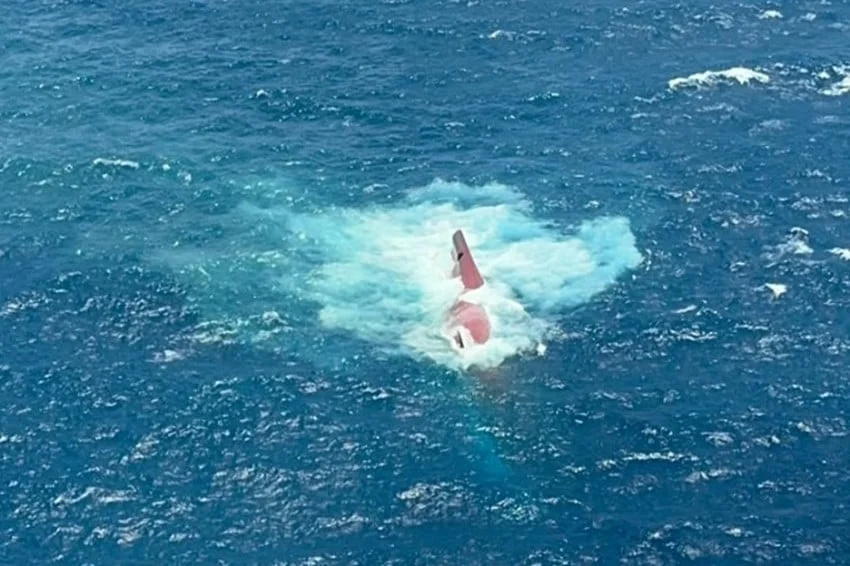
The search and rescue mission for the ill-fated KM Virgo Transport 8 entered a critical phase on Monday, September 14, 2026, as authorities confirmed that the vessel had drifted 1.6 nautical miles from its initial sinking coordinates. The ship, which remains in an inverted position, continues to present significant logistical and safety hurdles for dive teams operating in the area. As the search enters its second full day, the shifting position of the hull underscores the volatile maritime conditions that have hampered efforts to locate the 129 passengers and crew members who remain missing following the tragedy.
Head of the National Search and Rescue Agency (Basarnas), Marsekal Madya TNI Mohammad Syafii, provided a briefing on Monday, confirming that the current trajectory of the vessel is being driven by powerful sub-surface currents. The shift in location, while expected in maritime disasters involving partially buoyant vessels, complicates the recovery mission by forcing search teams to recalibrate their underwater grids and deployment zones continuously.
Chronology of the Maritime Disaster
The disaster involving the KM Virgo Transport 8 has become one of the most significant maritime search operations in recent regional history. The vessel, which was operating on a routine route, encountered catastrophic failure under conditions that have yet to be fully determined by the National Transportation Safety Committee (NTSC).
Initial reports from the early hours of Sunday, September 13, 2026, indicated that the vessel began taking on water rapidly. Despite distress calls being transmitted, the ship capsized before rescue vessels could arrive. Immediate response units, including the Indonesian Navy and local maritime authorities, mobilized within hours. By the end of the first day, the official tally indicated that 108 individuals had been rescued from the water, while 6 fatalities were confirmed. The sheer scale of the 129 missing individuals prompted the mobilization of specialized deep-sea divers and remote-operated vehicles (ROVs) to assist in the search.
Understanding the Physics of the Drifting Hull
The 1.6-nautical-mile drift observed on Monday is attributed to the internal structural integrity of the vessel. Marsekal Madya TNI Mohammad Syafii explained that the ship is not resting firmly on the seabed but is instead caught in a state of partial buoyancy.
"The fact that the vessel has shifted suggests that there are still intact bulkheads and air pockets trapped within the ship’s structure," Syafii stated. "These pockets of air provide a degree of buoyancy, allowing the ship to effectively ‘hover’ or drift along with the underwater currents rather than settling into the silt."
From a maritime engineering perspective, this "hovering" effect is highly dangerous for rescue divers. When a vessel remains partially buoyant, it is inherently unstable. Any external force—such as the movement of a rescue team, the opening of a hatch, or even minor changes in current—could cause the ship to shift suddenly, potentially trapping personnel inside or causing the structure to collapse further.
Safety Protocols and Risks to Diving Operations
The primary obstacle facing the search mission is the extreme risk posed by the trapped air pockets inside the inverted hull. The phenomenon of "compressed air pockets" presents a dual threat to rescue operations. First, if a diver were to breach a compartment holding pressurized air, the sudden release could trigger an uncontrolled change in the ship’s buoyancy, potentially causing the vessel to roll or move violently.
Second, the risk of "gas pockets" involves the accumulation of hazardous gases resulting from the decomposition of cargo or the degradation of materials within the submerged vessel. Basarnas has mandated that all dive teams strictly adhere to safety protocols that prioritize the integrity of these air pockets. Divers are currently restricted from entering certain sections of the vessel where the risk of structural collapse or sudden shifts is deemed too high.
"We are balancing the urgency of the search with the imperative of protecting our personnel," Syafii noted. "We cannot allow our rescuers to become victims. The search must be methodical, and the movement of the ship must be continuously monitored via sonar and ROVs before we commit divers to specific compartments."
Statistical Context and Current Status
The statistical reality of the disaster remains sobering. With 129 individuals still unaccounted for, the search operation has expanded its radius to account for the current drift of the wreck. The following data points outline the scope of the emergency response:
- Total Passengers and Crew: 243 (initial manifest)
- Confirmed Survivors: 108
- Confirmed Deceased: 6
- Missing Persons: 129
- Search Radius: Expanded to a 15-nautical-mile zone to account for potential debris and surface drift.
- Asset Deployment: 12 surface vessels, 3 maritime patrol aircraft, and 4 specialized diving teams.
The high number of missing persons relative to the size of the vessel suggests that many individuals may still be trapped within the internal decks of the KM Virgo Transport 8. The configuration of the ship, which is currently inverted, means that typical emergency exits are likely blocked by debris or submerged deep underwater, further complicating the extraction process.
Broader Implications and Institutional Response
The tragedy of the KM Virgo Transport 8 has reignited national discussions regarding maritime safety standards, the age and maintenance schedules of commercial passenger vessels, and the readiness of search and rescue infrastructure in archipelagic waters.
Industry analysts suggest that the incident highlights a critical need for more advanced maritime tracking systems and mandatory underwater stability testing for vessels operating in regions known for strong, unpredictable currents. Furthermore, the incident serves as a grim reminder of the limitations of deep-sea search operations. Even with modern sonar technology, the unpredictable nature of an inverted vessel’s movement makes the "golden hour" of search and rescue extremely difficult to manage.
The government has promised a full, independent inquiry into the causes of the sinking. Preliminary questions from investigators are expected to focus on the vessel’s cargo manifest, weight distribution at the time of departure, and whether the vessel met the necessary safety certifications for its final voyage.
Coordination with External Agencies
The search operation is currently a multi-agency effort, coordinated by Basarnas, with significant contributions from the Indonesian Navy’s search and rescue unit (Dislambair), the National Police, and local volunteer organizations. International maritime experts have also been consulted regarding the stability of the hull to ensure that the recovery of the vessel—once the search phase is concluded—can be carried out with minimal environmental impact.
As of Monday evening, the focus remains on the "search" phase. The transition to a "recovery" phase will be determined by the progression of the dive teams and the likelihood of finding survivors in the remaining compartments. The families of the missing have been provided with support centers, and authorities have committed to daily updates on the status of the search, emphasizing transparency as the operation progresses through its most difficult phase.
Conclusion of Day Two
The second day of operations ended with no change in the status of the missing, but with a clearer understanding of the vessel’s behavior underwater. As the KM Virgo Transport 8 continues to drift slowly, the search teams are adapting their tactics to account for the instability of the wreck. The mission remains a race against time, complicated by the very nature of the vessel’s resting state, which serves as both a tomb and a final, precarious refuge for those who remain lost at sea.
Basarnas has urged the public and the media to rely on official channels for updates, noting that speculation regarding the fate of the missing only adds to the distress of the families involved. The operation is expected to continue with intensified efforts through the night, utilizing sonar-equipped vessels to monitor the wreck’s movement and ensure the safety of the perimeter.