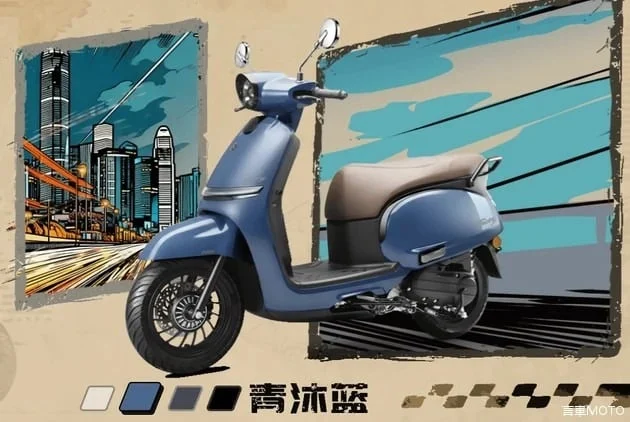
Yamaha Motor Corporation has officially expanded its global small-displacement scooter portfolio with the introduction of the all-new Yamaha Fuzzy 125. Debuting in the Chinese market, this latest addition to the brand’s urban mobility lineup breaks away from Yamaha’s traditionally aggressive and sporty design language, opting instead for a timeless retro aesthetic combined with practical daily utility. Engineered specifically to cater to the evolving demands of modern city commuters, the Fuzzy 125 blends nostalgic visual appeal with a robust feature set, aiming to carve out a distinct niche in the fiercely competitive 125cc scooter segment.
The official market entry of the Yamaha Fuzzy 125 took place on September 11, 2026, rolling out across authorized dealerships in China. Positioned as a versatile everyday commuter vehicle, the model arrives with a competitive retail price of 11,580 yuan, which roughly translates to 43 million Vietnamese Dong or approximately $1,600 USD. Currently, Yamaha is offering the Fuzzy 125 in a single, well-equipped specification complemented by a curated palette of contemporary color options designed to appeal to a broad demographic of urban riders.
Design Philosophy and Aesthetic Approach
In stark contrast to mainstream Yamaha offerings like the Aerox or NMAX series, which leverage sharp angles, aggressive front fascias, and high-performance visual cues, the Fuzzy 125 adopts a softer, classic design philosophy. The scooter’s visual identity is anchored by a prominent circular LED headlamp, gracefully curved body panels, and a clean, uncluttered silhouette. This harmonious blend of retro elements is further complemented by a traditional flat floorboard—enhancing daily convenience for carrying groceries or personal items—and a sturdy rear passenger grab rail that integrates seamlessly into the overall chassis lines.
The deliberate choice of a gender-neutral, universally appealing design language ensures that the Fuzzy 125 transcends traditional demographic boundaries. Rather than targeting a hyper-specific audience of young male speed enthusiasts or strictly female commuters, Yamaha’s styling team has crafted a machine designed to suit riders of all ages and backgrounds. The minimalist yet sophisticated approach reflects a broader global design trend within the urban mobility sector, where consumers increasingly gravitate toward vehicles that offer personal expression alongside functional simplicity.
Ergonomics, Dimensions, and Handling Dynamics
Urban mobility demands agility, and the physical dimensions of the Yamaha Fuzzy 125 have been meticulously optimized for navigating congested city streets and tight parking spaces. The scooter boasts a dry-to-curb weight of approximately 108 kilograms, making it remarkably lightweight and approachable for riders of varying statures and experience levels.
Complementing its manageable weight is an accessible seat height of 765 millimeters, ensuring that most riders can plant both feet firmly on the ground when coming to a halt. The vehicle features a wheelbase of 1,285 millimeters, striking an ideal balance between straight-line stability at moderate speeds and nimble cornering capabilities in dense traffic.
The Fuzzy 125 rides on compact 12-inch wheels outfitted at both the front and rear. While slightly smaller than some high-clearance adventure scooters, these 12-inch rims provide an optimal compromise between low-speed maneuverability, shock absorption over urban potholes, and ample under-seat storage capacity. The geometry of the chassis allows for effortless handling, enabling riders to weave through gridlock with confidence and ease.
Powertrain and Performance Capabilities
Beneath its retro-inspired exterior, the Yamaha Fuzzy 125 houses a refined 125cc internal combustion engine engineered to deliver smooth, predictable power delivery tailored specifically for urban environments. While small-displacement commuter scooters are rarely judged by racetrack standards, the powertrain has been optimized for low-to-mid-range torque delivery, ensuring brisk acceleration from traffic lights and effortless cruising speeds on metropolitan thoroughfares.
One of the standout engineering highlights of the Fuzzy 125 is its surprisingly generous fuel capacity, featuring a nearly 7-liter fuel tank. In a displacement category where fuel tanks frequently hover around 4 to 5 liters, the inclusion of a larger reservoir significantly extends the operating range between fill-ups. Combined with the inherent fuel efficiency of a modern 125cc fuel-injected power unit, the Fuzzy 125 promises exceptional economy, allowing daily commuters to minimize trips to the petrol station and reduce overall cost-of-ownership expenses.
Chronology and Market Development
The journey of the Yamaha Fuzzy 125 from concept viability to commercial reality reflects the manufacturer’s strategic pivot toward regional customization and segment diversification. Over the preceding twenty-four months, Yamaha’s research and development divisions noted a significant global surge in consumer preference for retro-styled small-displacement motorcycles and scooters, particularly across rapidly developing urban centers in Asia.
By early 2025, initial design blueprints for a retro-themed urban commuter had gained internal approval. Testing phases commenced quietly in late 2025, focusing on powertrain durability, emissions compliance, and suspension tuning suited to uneven metropolitan road surfaces. The official unveiling announcement on September 11, 2026, marked the culmination of this development cycle, positioning the Chinese market as the primary launchpad for the model given its massive appetite for versatile, stylish, and economical two-wheeled transportation.
Industry Context and Competitive Landscape
The launch of the Fuzzy 125 arrives at a time when the 125cc scooter market is experiencing intense competition from both legacy Japanese manufacturers and rapidly innovating domestic Chinese brands. Competitors have increasingly flooded the market with retro-styled offerings equipped with advanced connectivity features, keyless ignition systems, and hybrid powertrains.
To remain competitive, Yamaha has focused on building a reputation for mechanical reliability, build quality, and ergonomic refinement. While the Fuzzy 125 enters a crowded segment, its positioning as a reliable, daily-use machine backed by Yamaha’s extensive global service network gives it a distinct advantage over lesser-known alternative brands. Industry analysts note that by combining classic visual charm with practical utility—such as the expansive nearly 7-liter fuel tank and flat floorboard—Yamaha has successfully addressed the primary pain points of urban commuters who refuse to sacrifice style for substance.
Broader Market Implications and Future Outlook
The introduction of the Yamaha Fuzzy 125 carries several noteworthy implications for the regional and potentially global micro-mobility sector. First and foremost, it signals Yamaha’s willingness to experiment with design paradigms outside its comfort zone. For years, the brand’s small-displacement identity was synonymous with sporty commuting and racing heritage. The success of the Fuzzy 125 could pave the way for a broader sub-brand of retro-inspired vehicles aimed at lifestyle-conscious consumers.
Furthermore, the pricing strategy implemented in the Chinese market—pegged at 11,580 yuan (approximately 43 million VND)—indicates a deliberate attempt to capture high-volume market share by undercutting premium European retro competitors while outperforming budget domestic alternatives in perceived quality. If consumer reception in China remains strong throughout the remainder of 2026, automotive industry insiders speculate that Yamaha may evaluate the feasibility of exporting the Fuzzy 125 to neighboring Southeast Asian markets, where demand for stylish, accessible urban scooters remains exceptionally high.
Ultimately, the Yamaha Fuzzy 125 demonstrates that practical urban mobility does not need to be devoid of personality. By merging heritage design cues with contemporary engineering standards, Yamaha has delivered a compelling product that addresses the functional realities of modern city life while offering riders a distinct sense of individuality on the road.