The fragile security landscape in Indonesia’s Papua region has once again claimed the life of an innocent civilian, underscoring the persistent dangers faced by transport workers operating in remote territories. Aris Sanda, a widely known travel driver originally from Toraja, South Sulawesi, and affectionately called Bapak Tasya by his peers and regular passengers, met a tragic end after his vehicle was intercepted by an unidentified armed faction along the treacherous highland route connecting Wamena to Mbua in Jayawijaya Regency, Highland Papua (Papua Pegunungan). What began as a routine commercial transit assignment dissolved into a nightmare of abduction, alleged coercion, and ultimately murder, as the victim was found dead inside his burned-out vehicle near the scenic yet isolated Lake Habema region.
This incident has sent shockwaves through local transport communities, prompting widespread condemnation from civil society groups, security analysts, and legislative bodies. It highlights the immense physical risks absorbed by civilian workers—including inter-district drivers, logistics haulers, and public servants—who sustain the economic and social lifelines of isolated highland communities. As joint security forces intensify their manhunt for the perpetrators, investigators continue to piece together a comprehensive timeline of the events that transpired between Tuesday, September 15, and Thursday, September 17, shedding light on a security crisis that continues to demand urgent evaluation from the central government.
Detailed Chronology of Events
The sequence of events leading to Aris Sanda’s death began early in the morning on Tuesday, September 15. At approximately 06:00 WIT, Sanda was operating his commercial passenger vehicle—locally known as a lajuran—transporting a group of travelers from the bustling town of Wamena toward the interior district of Mbua. The route is notoriously difficult, characterized by rugged terrain, dense fog, and limited communication infrastructure, making travelers heavily reliant on experienced local drivers who navigate the highlands daily.
According to official briefings provided by the Head of Information for Koops TNI Habema, Lieutenant Colonel Inf. M. Wirya Arthadiguna, the convoy of vehicles traversing the route was suddenly halted near the intersection of Lake Habema, close to Gunung Boy in Trikora District, Jayawijaya Regency. An armed group intercepted the transport, immediately halting traffic to conduct forced inspections of both drivers and passengers.
While the general passengers were subjected to questioning before being ordered to turn around and return safely toward Wamena, the situation took a sinister turn for Aris Sanda. Singled out from the rest of the travelers, Sanda was forcibly separated from the group and abducted by the armed faction, who led him deeper into the desolate terrain surrounding Lake Habema.
By Wednesday, September 16, disturbing digital evidence began to circulate across various media platforms and messaging applications. A video recording emerged showing Sanda standing in the middle of a highland road, visibly distressed and surrounded by armed individuals. In the footage, the abducted driver was reportedly coerced into holding a Bintang Kejora (Morning Star) flag—a symbol associated with the Free Papua Movement (OPM)—and compelled to make statements regarding the political situation in Papua. Law enforcement agencies subsequently secured the footage, utilizing it as a crucial piece of digital evidence to reconstruct the hours leading up to the driver’s death.
Later that same day, search and rescue elements from Koops TNI Habema launched intensive sweeping operations across the rugged terrain to locate the missing driver. Initially, adverse weather conditions, including torrential rain and thick, blinding mountain fog, severely hampered search efforts, leaving authorities unable to immediately confirm the driver’s whereabouts or the condition of his vehicle. However, persistent efforts by the joint search teams paid off a few hours later when they located a heavily damaged, charred vehicle near Lake Habema. Inside the burned wreckage, rescue workers discovered the remains of Aris Sanda. The severe thermal damage inflicted on both the car and the body necessitated immediate tactical evacuation to ensure proper forensic identification.
Forensic Investigation and Processing the Scene
Following the gruesome discovery, a joint team of investigators from the Indonesian National Police (Polri) and the Indonesian National Armed Forces (TNI) secured the crime scene to conduct a comprehensive on-site investigation (Olah Tempat Kejadian Perkara or TKP). The primary objectives of the investigation were to gather ballistic evidence, analyze the mechanics of the arson, and establish the exact cause of death.
The remains of Aris Sanda were swiftly evacuated and transported to the Regional General Hospital (RSUD) in Wamena for a detailed post-mortem examination. Forensic experts examined the remains to determine whether the victim succumbed to gunshot wounds sustained during the initial interception or if other forms of violence were inflicted prior to the vehicle being set ablaze. Concurrently, criminal investigators scoured the vicinity of Lake Habema for shell casings, personal belongings, and other physical evidence that could definitively link specific members of the armed group to the crime.
By Thursday, September 17, the investigation had advanced sufficiently for authorities to publicly outline the preliminary framework of the case. Officials confirmed that the incident involved multiple actionable criminal offenses, ranging from illegal deprivation of liberty (abduction and hostage-taking) and coercion under duress to premeditated murder and the destruction of civilian property through arson.
Attribution and Security Forces’ Response
In the wake of the tragedy, security authorities pointed toward the armed faction associated with the West Papua National Liberation Army (TPNPB), specifically factions linked to the OPM Kodap III Ndugama. This region has historically been a stronghold for armed separatist groups engaged in a protracted low-intensity conflict with the Indonesian state. The TNI emphasized that Aris Sanda was a civilian worker performing essential transportation services, carrying routine logistics and facilitating the movement of everyday citizens who rely on these vital communication corridors.
In response to the killing, joint security apparatuses in Highland Papua escalated operational readiness, deploying specialized pursuit teams to track down the perpetrators hiding within the dense highland jungles. Military and police leadership reiterated their commitment to bringing those responsible to justice while ensuring that regional transport routes are subjected to heightened security patrols to protect civilian workers from further targeted violence.
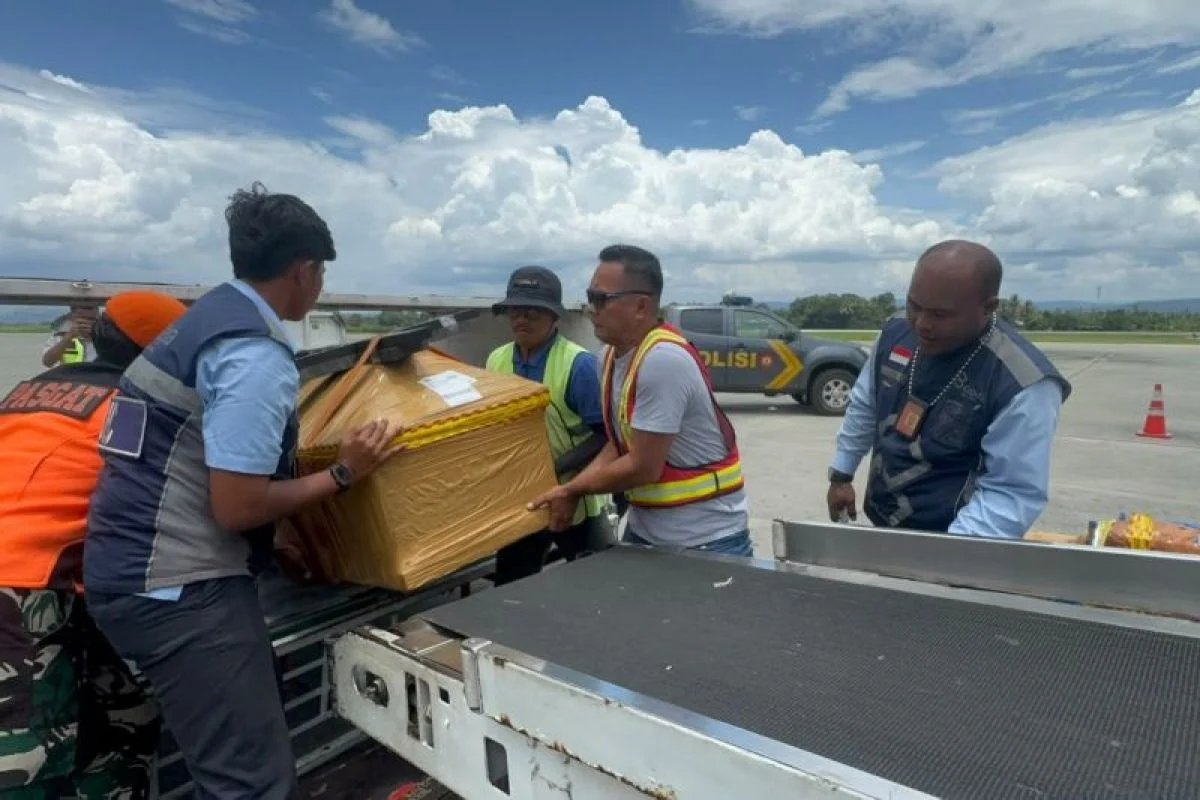
The tragedy has also triggered profound grief and solidarity back in Sanda’s hometown of Toraja, where family members, community leaders, and transport associations mourned the loss of a hardworking provider. Arrangements were promptly made to facilitate the repatriation of his remains from Wamena to Makassar, South Sulawesi, before final transport to his family home in Toraja for traditional burial rites.
Broader Implications for Civilian Safety and Regional Conflict
The killing of Aris Sanda has reignited fierce national debates concerning the safety of civilian contractors, public servants, and transport workers operating in conflict-prone areas of Papua. The incident underscores a grim reality: infrastructural isolation and political conflict frequently intersect to create high-risk environments where ordinary citizens bearing no combat role are caught in the crossfire.
In the days following the incident, various political figures and legislative oversight bodies voiced grave concern. Members of Commission I of the House of Representatives (DPR RI) issued strong statements warning that the targeted violence against civilian drivers and civil servants directly threatens fundamental human rights and severely impedes regional development. Lawmakers argued that persistent attacks on logistics and transport workers risk isolating remote communities entirely, as fear paralyzes the commercial drivers willing to brave the highland roads.
Furthermore, parliamentary bodies such as the DPD RI Special Committee (Pansus) renewed their calls for the central government to fundamentally evaluate and overhaul its comprehensive approach to resolving the complex socio-political and security conflicts in Papua. Critics and analysts argue that purely military containment strategies must be paired with enhanced intelligence-led policing, community engagement, and robust infrastructure protection measures to safeguard civilian lives.
As the legal proceedings and military manhunt continue, the tragic death of Aris Sanda serves as a sobering reminder of the human cost borne by ordinary workers in protracted regional conflicts. For the family of Bapak Tasya, the loss is irreplaceable; for the broader Indonesian public and policymakers, it remains an urgent call to action to secure peace, protect innocent lives, and restore safety to the vital highways of Papua Pegunungan.