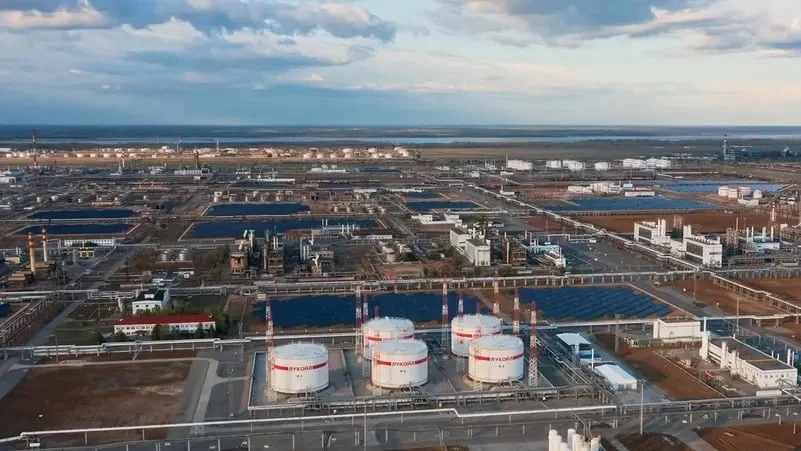
Russian oil refineries have noticeably increased their production of diesel fuel throughout October, a shift driven by newly established export quotas designed to fulfill a major energy supply agreement brokered with the United States and other key international markets. Despite this short-term recovery in output and the formal relaxation of certain Western sanctions, industry analysts and energy experts remain deeply skeptical regarding Russia’s long-term capacity to sustain these promised export volumes. Ongoing geopolitical tensions, logistical bottlenecks, and persistent drone strikes launched by Ukraine against strategic Russian refining infrastructure continue to disrupt the nation’s core oil processing capabilities.
The revival of Russian diesel on the global stage marks a fascinating chapter in international energy trade, characterized by pragmatic diplomacy, shifting regulatory frameworks, and the delicate balance of global energy security. As the first maritime shipments navigate toward waiting international buyers, market watchers are closely scrutinizing whether Moscow can maintain this momentum in the face of mounting domestic and external pressures.
Production Dynamics and Output Fluctuations
To understand the current trajectory of Russia’s fuel sector, one must examine the volatile production figures recorded over the past several weeks. According to insider reports from two separate industry sources speaking to international news agencies, Russian diesel production experienced a noticeable dip during the early part of October. Output fell to approximately 160,000 tons per day during the first half of the month, dropping significantly from the 175,000 tons per day recorded throughout September.
This initial slump was primarily attributed to unscheduled maintenance at several key refineries, compounded by the lingering physical damage inflicted by persistent drone incursions. However, the production landscape shifted rapidly following the implementation of new government-mandated export quotas in mid-October. Refineries across the country ramped up operations, pushing daily production rates back toward 180,000 tons.
Concurrently, domestic demand inside Russia has followed a predictable seasonal curve. Typically, internal consumption of diesel contracts significantly in October as the agricultural sector wraps up its intensive autumn harvest and the peak summer driving season comes to a close. Domestic demand traditionally settles at roughly 140,000 tons per day during this period. This contraction in local consumption leaves a surplus of at least 40,000 tons per day—translating to more than 1 million tons per month—available exclusively for international export.
Chronology of the U.S.-Russia Energy Arrangement
The diplomatic framework enabling this sudden resurgence of Russian diesel into Western-aligned and global markets developed rapidly over a concise period in late autumn.
The turning point occurred on October 9, when former and prospective U.S. political leadership made significant announcements regarding energy exemptions. U.S. President Donald Trump publicly stated that Moscow was poised to begin immediate shipments of more than 300,000 tons of diesel fuel. This initial volume is scheduled to be followed by an additional 500,000 tons in November, with baseline deliveries scaling up to 1 million tons in subsequent months. Trump further indicated that, depending entirely on the operational stability and recovery speed of Russian refineries, supplemental supplies reaching up to 3 million tons could eventually be authorized.
Parallel to these public statements, the regulatory machinery in Washington moved swiftly. On the exact same day, October 9, the U.S. Department of Treasury’s Office of Foreign Assets Control (OFAC) issued General License 135. This critical legal instrument formally authorized specific transactions involving Russian diesel, creating a sanctioned carved-out pathway that permitted the importation of the fuel into the United States and other allied jurisdictions through April 7, 2027.
Responding directly to these developments and the newly opened export channels, the Russian government initiated a partial rollback of its previously stringent export bans on October 10. Moscow authorized an immediate initial shipment of 500,000 tons of diesel to enter the global market. Despite this relaxation, industry insiders emphasize that the Kremlin does not intend to abandon market controls entirely. Instead, the Russian government is expected to maintain its underlying export ban framework, utilizing a centralized system of quotas to closely manage outbound volumes, stabilize domestic pricing, and prioritize strategic geopolitical allies.
Official Statements and International Reactions
The resumption of exports has triggered varied reactions across the international diplomatic and energy communities, reflecting the complex interplay between economic necessity and ongoing geopolitical conflict.
Kremlin spokesperson Dmitry Peskov addressed the rollout of the agreement during a press briefing, confirming the successful departure of the initial maritime shipments. "The first oil tanker has already set sail toward customers, and regular supplies will continue," Peskov told reporters, signaling Moscow’s commitment to honoring the supply pact despite external hurdles.
The inclusion of Russian diesel into markets like Turkey and Brazil—and potentially the United States under specific licensing—has highlighted the pragmatic reality that global energy networks remain deeply interconnected, even amid sweeping geopolitical sanctions. For months following the escalation of the conflict in Ukraine, Western sanctions heavily restricted the flow of Russian refined products, forcing a dramatic rerouting of global trade flows toward Asia and the Middle East. The issuance of General License 135 represents a notable calibration of economic policy, illustrating how energy security imperatives can occasionally override broader diplomatic freezes.
Nevertheless, Western allies remain cautious. The decision to permit limited Russian diesel imports has drawn scrutiny from critics who argue it undermines the broader international sanctions regime designed to starve the Russian federal budget of hydrocarbon revenues. U.S. and European officials have defended the move as a necessary measure to prevent acute price spikes in global diesel benchmarks, which could otherwise cascade through international supply chains and stoke inflationary pressures worldwide.
Infrastructure Vulnerabilities and Operational Challenges
Despite the upbeat assessments from government officials and the physical departure of initial tanker cargoes, significant doubts persist regarding the long-term viability of Russia’s export commitments. These concerns are rooted in the physical reality of Russia’s industrial landscape, which has become a primary target in the ongoing military conflict.
Over the past year, Ukrainian long-range unmanned aerial vehicles have systematically targeted critical nodes within Russia’s energy infrastructure. Refineries located hundreds of kilometers from the border—ranging from facilities in the European part of Russia down to key processing plants near the Black Sea—have suffered structural damage, temporary shutdowns, and prolonged repair timelines.
Refining crude oil into specialized products like automotive diesel requires advanced technology, specialized catalysts, and continuous power supplies. Repeated drone attacks have forced many facilities to operate at reduced capacities or halt specific cracking units entirely. While Russian state energy companies have demonstrated considerable resilience in repairing damaged infrastructure, the cumulative wear and tear on the nation’s refining sector cannot be easily dismissed.
Energy analysts point out that maintaining a steady output of 180,000 tons per day requires flawless logistical execution and uninterrupted supplies of domestic crude oil. Any new wave of successful infrastructural attacks could instantly reverse the production gains achieved in October, plunging export volumes back into a deficit and forcing Moscow to prioritize domestic heating and industrial needs over international commitments.
Broader Market Implications and Global Economic Impact
The re-entry of substantial volumes of Russian diesel into the global supply chain carries profound implications for international commodity markets, pricing structures, and geopolitical alliances.
Historically, diesel is the lifeblood of the global economy, powering heavy freight transport, agriculture, manufacturing, and industrial machinery. Tightness in the diesel market directly translates to higher shipping costs, elevated food prices, and broader inflationary pressures for consumers worldwide. By easing regulatory restrictions and allowing Russian product back into Western-adjacent markets, policymakers have effectively sought to cushion the global economy against severe supply shocks.
Furthermore, the shifting trade routes reveal a fluid geopolitical landscape. Countries such as Turkey and Brazil have emerged as major hubs for receiving discounted Russian fuels, subsequently refining their own export strategies or satisfying domestic industrial demand with heavily discounted barrels. This dynamic allows developing economies to maintain economic growth without bearing the full brunt of elevated global energy prices.
However, the reliance on a supply chain vulnerable to active warfare introduces a high degree of structural volatility. Market participants must continuously price in the risk of sudden supply disruptions caused by military escalations. If Ukrainian strikes intensify or if Russian domestic demand surges unexpectedly during the upcoming winter months, the fragile equilibrium established by the October export quotas could quickly fracture.
As the first wave of tankers makes its way across international waters toward waiting terminals, the global energy market watches with cautious anticipation. The current arrangement demonstrates that economic pragmatism can temporarily pierce the armor of geopolitical isolation, yet the ultimate success of this energy pact remains inextricably tied to the uncertain outcomes of the battlefield and the physical endurance of Russia’s battered refining sector.