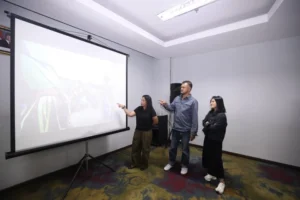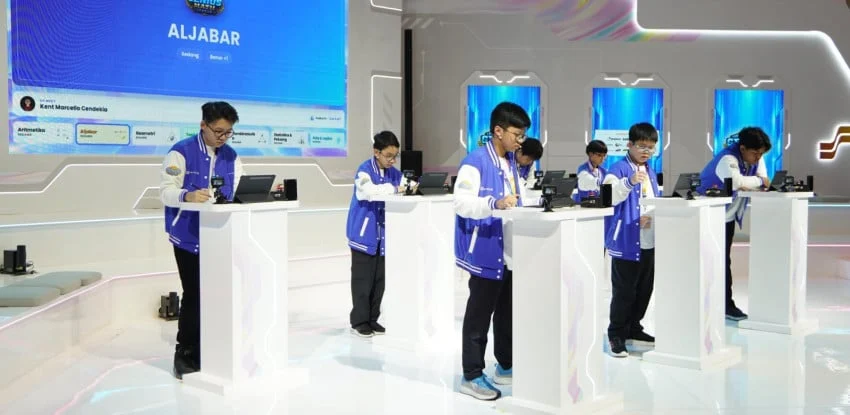
The Genius Math League 2026 reached its exhilarating conclusion on Friday, October 23, 2026, as hundreds of the nation’s brightest young minds gathered at the Indonesia Convention Exhibition (ICE) in BSD, Tangerang. Organized by TechConnect, the competition has solidified its reputation as a premier platform for cultivating logical, analytical, and problem-solving skills among Indonesian students. With a total prize pool of Rp1 billion, the event served not merely as a test of arithmetic prowess, but as a rigorous simulation of high-pressure decision-making and collaborative strategy, drawing participants from diverse educational backgrounds across the archipelago.
A Rigorous Path to the Grand Final
The journey to the grand finale was a grueling process that spanned several months. Initiated in early 2026, the competition structure was designed to filter candidates through multiple regional qualifiers before culminating in the national championship in Tangerang. According to TechConnect representatives, the competition saw a 30% increase in participation compared to the 2025 edition, signaling a growing interest in STEM (Science, Technology, Engineering, and Mathematics) education among Indonesia’s youth.
The curriculum of the competition was intentionally designed to move beyond traditional textbook mathematics. Instead, it focused on "applied intelligence"—the ability to synthesize information under strict time constraints. The preliminary rounds required participants to demonstrate proficiency in rapid mental calculation, while the final stages introduced elements of game theory and strategic resource management.
The Mechanics of the Competition
The competition was divided into two distinct tracks: individual and team categories, each featuring specialized rounds designed to challenge different cognitive faculties.
In the individual category, finalists faced three high-intensity segments:
- The Immortal Seven: A series of complex arithmetic and logic puzzles that required near-instantaneous processing speeds.
- The Genius Grid: A spatial reasoning and pattern recognition challenge that tested the participants’ ability to identify sequences and logical outliers.
- The Final Countdown: The culminating phase, which demanded total composure as contestants were forced to solve multi-step equations while the clock ticked down in real-time.
The team category was equally demanding, focusing on collective intelligence and communication. The rounds—Trinity Rush, The Codebreakers, and The Crown Clash—required participants to delegate roles, verify each other’s calculations, and execute complex strategies. The emphasis on teamwork mirrors modern professional environments, where technical expertise is only as effective as the team’s ability to coordinate under pressure.
The Podium: Celebrating Excellence
The individual category witnessed a display of exceptional talent, with Kent Marcello Cendekia, a student from SMP Kesatuan Bangsa in Yogyakarta, securing the championship title. His performance was noted for its consistency across all three rounds. Reflecting on his victory in a press conference held on Monday, October 26, 2026, Cendekia remarked, "The Genius Math League 2026 was uniquely challenging because it forced us to balance speed with extreme accuracy. Winning this is not just an individual achievement; it is a motivation to continue refining my analytical capabilities for future academic challenges."
Lim Jovan Valencio from SMA Karangturi, Semarang, claimed the second-place position, while Harrison Matthew Tanuwijaya from SMAK 3 Penabur Jakarta took home the third-place honors.
In the team category, the Regional Semarang team—comprised of Steven Endrajaya, Lim Jovan Valencio, and Nada Jenna Sasmaya—demonstrated superior synergy to secure the top spot. The Regional Tangerang team, featuring Harrison Matthew Tanuwijaya, Michael Magica Ang, and Mikhael Francis Wisanggeni, earned second place, while the Regional Yogyakarta team, represented by Radam Gumelar, Kent Marcello Cendekia, and Alvaro Allinson Kristanto, rounded out the top three.
The Growing Significance of STEM Competitions in Indonesia
The success of The Genius Math League 2026 highlights a broader national trend: the increasing investment in extracurricular intellectual development. Educational policy analysts suggest that competitions like these fill a critical gap in the formal school curriculum. While traditional classrooms provide foundational knowledge, the "competition environment" fosters the soft skills—such as grit, emotional regulation, and rapid synthesis—that are increasingly valued in the global labor market.
Data from the Ministry of Education and Culture indicates that student participation in national and international mathematics olympiads has reached an all-time high in the last three years. This surge is attributed to the integration of digital platforms that allow students from remote areas to access high-quality practice materials and connect with peers nationwide. TechConnect’s role in this ecosystem has been pivotal, providing the necessary infrastructure to host such large-scale events that standardize the testing of advanced logic.
Institutional Support and Future Implications
The involvement of major entities in supporting these competitions is also on the rise. Initiatives such as those offered by the State University of Malang (UM), which provides "Golden Tickets" and tuition waivers for high-performing students, demonstrate that top-tier universities are eager to recruit the talent identified through these leagues. By aligning private competitions with higher education incentives, the pipeline from middle school to university for high-achieving students is becoming increasingly formalized.
For participants, the benefits extend beyond the prize money. The "The Genius Math League" branding serves as a prestigious credential on a student’s academic portfolio. For university admissions officers, success in such a public and rigorous competition serves as a reliable proxy for a student’s intellectual stamina and dedication to self-improvement.
Analytical Perspective: The Future of Cognitive Development
Critics and educators alike have weighed in on the impact of such events. Dr. Aris Wahyudi, an educational psychologist, noted that while the intensity of these competitions can be daunting, the cognitive development benefits are significant. "When a student is forced to solve a problem under ‘The Final Countdown’ conditions, they are engaging in a form of neuroplastic training. They are not just learning math; they are training their brains to remain functional in high-stress environments," Dr. Wahyudi explained.
However, the challenge for the future lies in inclusivity. While The Genius Math League has expanded its reach, there remains a need to ensure that students from under-resourced schools have the same access to preparatory training as those in major metropolitan hubs. TechConnect has indicated that for the 2027 season, they plan to implement a mentorship program specifically aimed at leveling the playing field for participants from rural regions.
Looking Ahead to 2027
As the dust settles on the 2026 competition, the focus shifts toward the next iteration. TechConnect has confirmed that preliminary discussions for the 2027 league are already underway, with plans to introduce new categories that incorporate data science and algorithmic thinking. This evolution reflects the changing nature of mathematics in the digital age, where traditional calculus is increasingly being supplemented by computational logic.
For winners like Kent Marcello Cendekia and the Regional Semarang team, the victory is a starting point. Many of these participants go on to represent Indonesia in international mathematics olympiads, carrying the momentum gained from the national stage onto the global platform. As Indonesia continues to position itself as a growing economy in Southeast Asia, the cultivation of this talent pool is not merely a matter of academic pride—it is a strategic investment in the nation’s future technological and intellectual infrastructure.
In summary, the 2026 edition of The Genius Math League has set a new benchmark for excellence. By successfully merging rigorous academic challenge with a high-stakes, professional event format, it has underscored the vital role that competitive learning plays in shaping the next generation of Indonesian leaders, innovators, and thinkers. As these students transition from the stage at ICE BSD back into their classrooms, they do so with a heightened capacity for logical reasoning and a proven track record of excellence that will serve them well in the years to come.