Jakarta — The landscape of human resource management within the Indonesian National Police (Polri) has undergone a significant transformation following the official implementation of Undang-Undang Nomor 5 Tahun 2026, marking the Third Amendment to Undang-Undang Nomor 2 Tahun 2002 concerning the Indonesian National Police. Officially enacted on June 17, 2026, this landmark legislative adjustment systematically redefines the maximum retirement age for police personnel across various ranks, moving away from the generalized retirement threshold that had been in place for over two decades. The structural shift has immediately impacted thousands of active-duty officers, triggering adjustments in workforce planning, institutional readiness, and operational continuity while simultaneously drawing intense scrutiny from legal watchdogs and drawing a formal challenge before the Constitutional Court.
Under the previous legislative framework dictated by the 2002 statute, the baseline retirement age for the vast majority of Indonesian police officers was uniformly capped at 58 years old. While this standard served the organization for many years, demographic shifts, increased life expectancy, and the growing complexity of modern law enforcement—ranging from transnational cybercrimes to complex counter-terrorism operations—prompted lawmakers and executive stakeholders to re-evaluate institutional longevity. The newly minted 2026 legislation addresses these contemporary demands by tailoring retirement thresholds to specific rank groupings, ensuring that highly experienced personnel can continue to contribute their strategic and tactical expertise to national security operations.
Detailed Breakdown of Retirement Thresholds by Rank
The cornerstone of the revised legislation is articulated within Article 30, paragraph (5) of UU No. 5/2026, which establishes a tiered retirement age based strictly on an officer’s hierarchical standing within the organization. Rather than applying a single blanket rule, the statute creates distinct categories for enlisted personnel, non-commissioned officers, and various tiers of commissioned officers.
According to the statutory provisions, enlisted personnel (Tamtama) and non-commissioned officers (Bintara)—who form the foundational backbone of daily operational policing, community outreach, and frontline security—now face a maximum retirement age of 59 years. This represents a one-year increase from the historical threshold, allowing veteran field officers to impart critical ground-level experience to younger generations of recruits.
Meanwhile, the retirement threshold for commissioned officers, encompassing First-Class Officers (Perwira Pertama), Mid-Ranking Officers (Perwira Menengah), and High-Ranking Officers (Perwira Tinggi), has been extended to a maximum of 60 years. This adjustment bridges a historical gap that often saw high-performing strategic planners and regional commanders forced into retirement just as they reached the zenith of their administrative and leadership capabilities.
A specialized caveat within the legislation applies to four-star general officers, or high-ranking officials holding the highest operational responsibilities. While their baseline retirement ceiling remains 60 years, the statute permits an extension of up to a maximum of one additional year. However, this extension is strictly conditional, requiring a formal Presidential Decree (Keputusan Presiden) based on urgent institutional needs. Crucially, lawmakers emphasized that this provision does not translate to an automatic tenure extension for every four-star general reaching the age threshold; rather, it remains an exceptional instrument designed for critical national security imperatives.
Provisions for Functional Roles and Special Expertise
Beyond standard rank-based categorizations, UU No. 5/2026 introduces nuanced mechanisms to retain specialized talent within the police force. Modern policing increasingly relies on specialized competencies, including forensic sciences, cyber defense, financial intelligence, legal expertise, and advanced crisis negotiation.
Article 30, paragraph (7) of the new law empowers the Chief of the Indonesian National Police (Kapolri) to propose service extensions for active-duty personnel possessing rare or critically needed professional skills. Much like the provisions for four-star generals, these extensions are capped at a maximum of one additional year and must be officially sanctioned via a Presidential Decree in alignment with prevailing statutory regulations.
Furthermore, the legislation introduces a distinct regulatory pathway for police personnel occupying functional positions (jabatan fungsional). These specialists—who operate outside the traditional structural chain of command—are explicitly exempted from the general retirement ages outlined in paragraph (5). Instead, their retirement timelines are synchronized with the overarching regulatory frameworks governing functional civil and state officials across the broader Indonesian bureaucratic ecosystem.
Transitional Arrangements for Near-Retirement Officers
The sudden introduction of a revised retirement framework naturally raised logistical questions regarding personnel who were already on the cusp of retirement when the law took effect on June 17, 2026. To prevent administrative chaos and ensure fair treatment for veteran officers, the legislation incorporates explicit transitional provisions (aturan peralihan) designed to manage the glide path toward full implementation.
Under these transitional rules, active-duty members who had already attained 56 years of age at the precise moment the statute came into force are seamlessly integrated into the new retirement age structure. For officers who were 57 years old on the effective date, the framework grants a specific service extension, allowing them to continue their active duties up to the age of 59.
Similarly, personnel slated to reach their 58th birthday within the turbulent transition window of 2026 are eligible for service extensions permitting them to remain on active duty until age 59, depending on their rank and institutional evaluation. This safety valve was deliberately engineered by legislators to mitigate sudden workforce disruptions and honor the career trajectories of officers who had dedicated decades of service under the older, pre-amendment regime.
Legislative Defense and Institutional Context
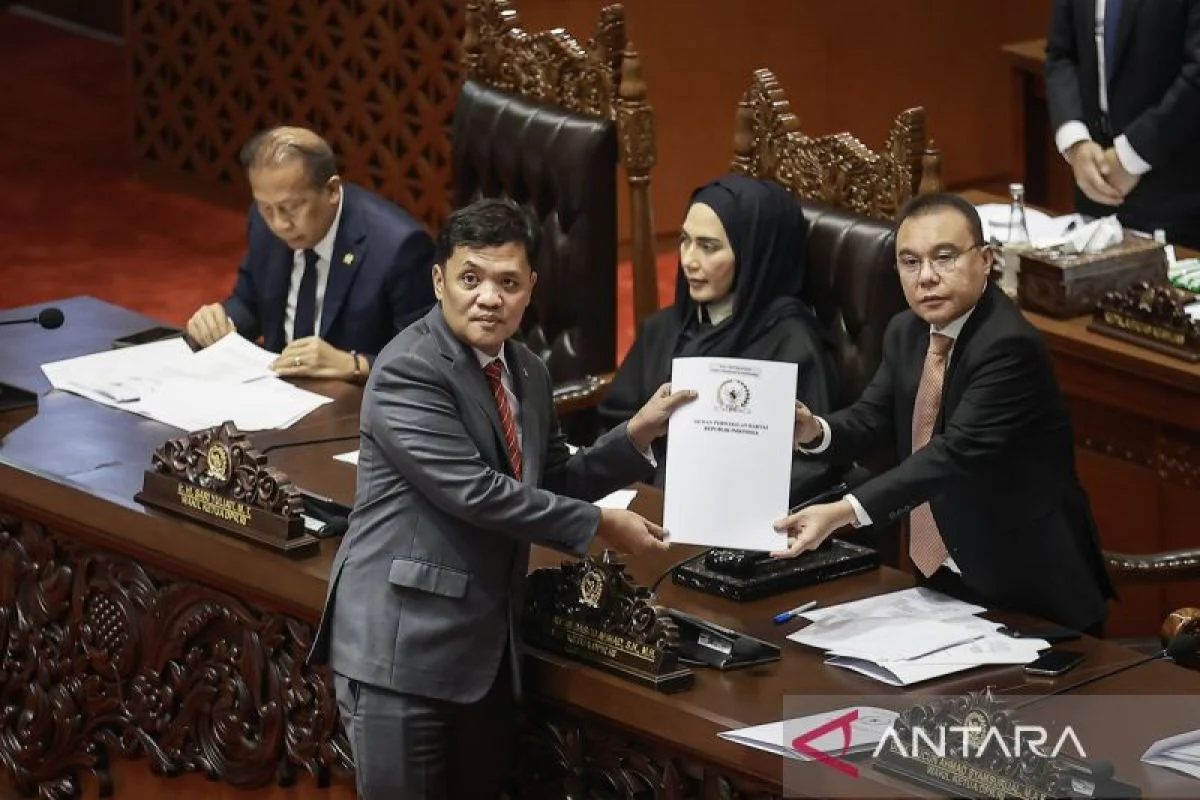
The pathway to enacting UU No. 5/2026 was marked by rigorous parliamentary debates, intense inter-agency consultations, and public scrutiny regarding the expansion of state apparatus tenures. Proponents of the bill within the House of Representatives (DPR RI) and executive branches consistently argued that modernizing the police retirement age is both a practical necessity and a logical alignment with similar adjustments made across other state institutions, including the Indonesian National Armed Forces (TNI) and the state civil apparatus (ASN).
During legislative deliberations, government representatives—including statements issued by the Ministry of Law and Human Rights—vigorously defended the constitutionality and procedural integrity of the law’s formation. Officials maintained that the statutory changes fully respect constitutional principles, asserting that extending active service thresholds directly enhances institutional memory, optimizes leadership continuity, and ensures that extensive investments in specialized police training yield maximum returns for the public good.
Constitutional Challenge at the Mahkamah Konstitusi
Despite formal legislative backing and executive promulgation, the new retirement framework has faced immediate legal pushback from civil society elements and legal analysts who view the differentiated thresholds with skepticism. On October 7, 2026, the Constitutional Court (Mahkamah Konstitusi / MK) formally convened its inaugural hearing regarding Case Number 362/PUU-XXIV/2026, a judicial review petition challenging Article 30, paragraph (5) alongside the transitional provisions of UU No. 5/2026.
The legal challenge centers on the fundamental argument that differentiating retirement ages based on hierarchical rank creates systemic inequality within the state apparatus. Petitioners before the court have urged the justices to strike down the tiered system, demanding instead a uniform maximum retirement age of 58 years for all police personnel, irrespective of whether they serve as enlisted members or high-ranking commissioners.
During the introductory court session, the panel of constitutional justices evaluated the initial arguments and provided constructive feedback to the legal counsel representing the petitioners. In accordance with standard procedural rules, the court granted the applicants a strict window of 14 working days to revise, refine, and substantiate their legal standing and substantive arguments.
Legal observers note that because the judicial review remains in the preliminary examination phase, the constitutional petition has not yet altered the legal reality on the ground. Consequently, the provisions stipulated within UU No. 5/2026 remain fully operational and legally binding across all police divisions nationwide. The ultimate fate of the police retirement age now rests heavily on the future deliberations and eventual verdict of the Constitutional Court, making it one of the most closely watched legal proceedings affecting the nation’s security apparatus in recent years.