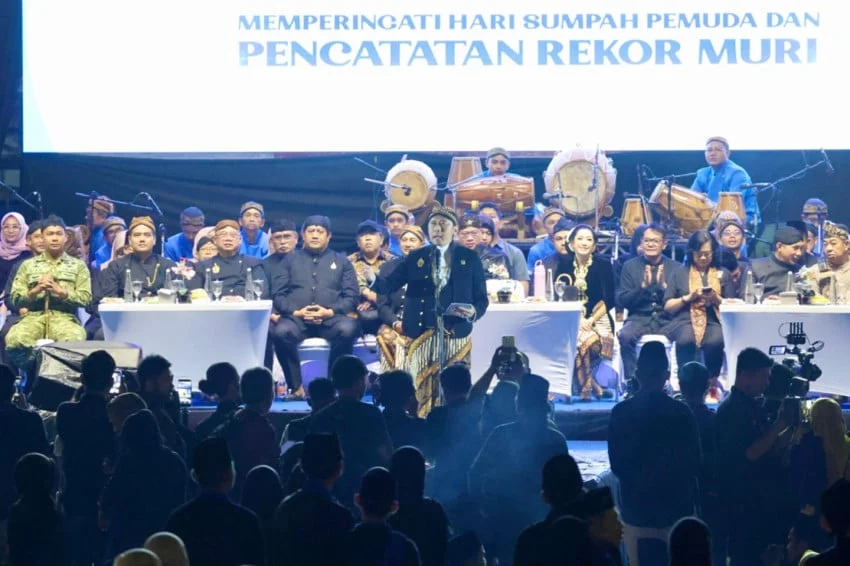
In a vibrant celebration of heritage, unity, and national pride, Deputy Speaker of the People’s Consultative Assembly (MPR) Edhie Baskoro Yudhoyono, widely known as Ibas, delivered a passionate call to action regarding the safeguarding of Indonesia’s traditional arts. Speaking at the grand Gebyar Langen Tayub Pacitan 2026, held at the Wijaya Krida Stadium in Pacitan Regency, East Java, Ibas emphasized that indigenous cultural practices form the bedrock of the nation’s collective identity. The landmark cultural festival took place on Wednesday, October 28, 2026, coinciding purposefully with the historic commemoration of Youth Pledge Day (Hari Sumpah Pemuda).
The event transcended a typical regional festival, morphing into a monumental historic achievement as it officially secured a prestigious record from the Indonesian World Records Museum (MURI) for the largest mass performance of the traditional Langen Tayub dance. The breathtaking spectacle featured an astounding 5,288 dancers representing 12 sub-districts and 172 villages across Pacitan Regency. This massive turnout was the culmination of intensive community engagement and rigorous rehearsals spanning approximately two months, reflecting deep grassroots enthusiasm for cultural preservation.
A Grand Showcase of Javanese Heritage and Community Solidarity
Adorned in traditional Javanese attire alongside his spouse, Aliya Rajasa Baskoro Yudhoyono, Ibas graced the occasion with a palpable sense of cultural pride. The high-profile presence of national and local figures underscored the significance of the festival, which quickly became a profound source of civic pride for the residents of Pacitan. Beyond the visual splendor of thousands of dancers moving in synchronized harmony, the festival served as a dynamic platform for reinforcing social cohesion and intergenerational knowledge transfer.
Addressing the sea of performers and spectators packing the stadium, Ibas articulated the deeper philosophical and sociological value of the Langen Tayub tradition. He noted that the gathering was designed to achieve far more than mere entertainment.
"We are gathered here not merely to witness a dance, but to celebrate our heritage, to nurture our collective memory, and to ignite our national pride. I love Indonesia, I love Pacitan, I love the people of Pacitan," Ibas stated, drawing enthusiastic applause from the assembled thousands.
The choice of Youth Pledge Day for the event was deliberate. By linking the preservation of ancestral arts with the historic youth movement of 1928, organizers and leaders sought to instill a sense of cultural nationalism among the younger generation, countering the homogenizing pressures of globalization through localized pride.
Chronology and Preparation of the Record-Breaking Feat
The road to the MURI record was neither short nor accidental. Planning for the Gebyar Langen Tayub Pacitan 2026 began months prior, driven by local cultural councils, regional government stakeholders, and community leaders aiming to put Pacitan on the national cultural map.
Approximately two months before the grand performance, local dance instructors and cultural preservationists fanned out across the 12 sub-districts and 172 villages of Pacitan Regency. They conducted decentralized training sessions, teaching the intricate steps, rhythmic nuances, and historical context of the Langen Tayub dance to participants of varying ages and backgrounds. This decentralized preparation model ensured that the event was truly inclusive, drawing farmers, students, local merchants, and civil servants into a unified cultural enterprise.
In the final weeks leading up to October 28, regional rehearsals intensified, culminating in dress rehearsals at the Wijaya Krida Stadium. On the morning of the event, logistical orchestration proved critical as 5,288 dancers, dressed in traditional Javanese regalia, converged on the stadium grounds. MURI adjudicators meticulously verified the headcount and observed the performance to ensure compliance with stringent record-keeping standards before officially certifying the feat and presenting the record plaque to local organizers and dignitaries.
Historical and Cultural Context of Langen Tayub
Langen Tayub holds a revered position within the tapestry of traditional Javanese performing arts. Historically associated with communal gratitude, agricultural cycles, and social bonding, the dance form combines graceful choreography, intricate hand and foot movements, and traditional gamelan accompaniment. Traditionally performed during harvest festivals, weddings, and significant community milestones, Tayub acts as a social equalizer, breaking down hierarchical barriers as community members and leaders partake in the dance together.
In contemporary Indonesia, however, classical art forms like Langen Tayub face continuous pressure from modern entertainment and digital distractions. Cultural observers have frequently warned of the erosion of indigenous traditions among younger demographics. Events like the Pacitan gathering represent a vital counter-strategy: scaling up traditional performances to create mass appeal, generate media visibility, and leverage institutional backing to revitalize endangered art forms.
By mobilizing thousands of practitioners, the Pacitan Regency government and national figures like Ibas demonstrated that traditional arts retain immense vitality when communities are adequately supported, organized, and inspired. The integration of official record-keeping bodies like MURI further elevates the status of regional arts, transforming local practices into matters of national prestige.
Official Reactions and Institutional Perspectives
Local government officials, cultural figures, and community representatives lauded the successful execution of the festival. Regional leaders in Pacitan emphasized that the event acted as a catalyst for local economic revitalization, drawing domestic tourists, boosting micro, small, and medium enterprises (MSMEs), and showcasing the regency’s capacity to host large-scale national events.
Cultural analysts observing the event noted that the involvement of high-ranking national figures such as the Deputy Speaker of the MPR sends a strong signal regarding the state’s commitment to cultural diplomacy from the bottom up. While national cultural policies often focus on major international showcases, grassroots initiatives like the Gebyar Langen Tayub reinforce the concept of cultural resilience rooted in local communities.
Furthermore, lawmakers and regional representatives pointed out that cultural preservation is intrinsically tied to economic development through the burgeoning creative economy. When traditional arts are celebrated on such a grand scale, they generate renewed interest in traditional textiles, culinary arts, craftsmanship, and domestic tourism.
Socio-Economic Implications and Broader Impact
The implications of the Gebyar Langen Tayub Pacitan 2026 extend far beyond the temporary elation of setting a national record. Economically, the influx of participants, families, and spectators into Pacitan created a localized economic boom. Hotels, homestays, traditional food vendors, and batik artisans reported significant surges in activity leading up to and during the event.
Sociologically, the two-month preparation period served as an effective community-building exercise. By engaging 172 villages, the initiative fostered unprecedented intra-regional cooperation, bridging geographical divides within Pacitan Regency. Participants shared that rehearsing together built a renewed sense of shared identity and mutual respect among residents from diverse backgrounds.
From a policy perspective, the event provides a replicable model for cultural preservation across other regions in Indonesia. It demonstrates that combining grassroots mobilization with high-profile political endorsement can successfully capture public imagination and media attention. As Indonesia continues to navigate the complexities of modernization, the preservation of indigenous arts remains a critical pillar for maintaining social cohesion and national character.
The success of the gathering at Wijaya Krida Stadium stands as a testament to the enduring appeal of Indonesia’s intangible cultural heritage. Through synchronized motion, shared rhythms, and visionary leadership, the thousands of dancers in Pacitan did not merely set a record; they successfully wrote a vibrant new chapter in the ongoing preservation of the nation’s soul.