Jakarta, CNN Indonesia — In a decisive push to accelerate equitable regional development and elevate the socio-economic status of coastal communities, Minister of Marine Affairs and Fisheries Sakti Wahyu Trenggono conducted a comprehensive on-site inspection of the Red and White Fishermen Village (Kampung Nelayan Merah Putih – KNMP) development projects. The working visit, which took place on Friday, October 30, spanned three distinct coastal locations within Jember Regency, East Java. This strategic intervention represents a cornerstone of the Ministry of Marine Affairs and Fisheries (KMP) initiative to modernize traditional fishing infrastructure, streamline the supply chain, and foster sustainable economic growth at the grassroots level.
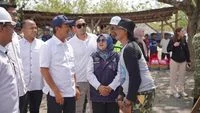
The high-profile inspection underscores the ministry’s commitment to rigorous oversight, ensuring that heavy capital investments in public infrastructure translate directly into tangible, long-term benefits for local fishers. Accompanied by local government officials and technical directors from the ministry, Minister Trenggono meticulously evaluated construction progress, assessed the integration of supporting facilities, and engaged in direct dialogues with the local fishing community to calibrate the program’s execution against actual operational realities.
Strategic Locations and Phase III Development Framework
The three sites selected for the Minister’s itinerary—KNMP Paseban in Kencong Subdistrict, KNMP Pugerkulon in Puger Subdistrict, and KNMP Sumberejo in Ambulu Subdistrict—each possess unique geographical and logistical characteristics. Rather than implementing a uniform blueprint across all coastal regions, the ministry has tailored the architectural and infrastructural scope of each village to align with the specific demands and topographies of the local fisheries sector.
These projects form an integral component of the broader KNMP Phase III development agenda slated for 2026. This phase builds upon the operational lessons learned from earlier iterations of the program, which sought to address systemic vulnerabilities in Indonesia’s vast archipelagic coastal network. By targeting Jember Regency—a strategically significant coastline facing the turbulent waters of the Indian Ocean—the ministry aims to establish regional hubs that can withstand environmental challenges while significantly boosting regional productivity.
During his inspection of the three sites, Minister Trenggono emphasized that the overarching vision of the KNMP program extends far beyond mere construction metrics or physical asset accumulation. While modern docks, administrative buildings, and processing units are vital, the ultimate metric of success lies in how effectively these facilities address the daily operational bottlenecks faced by traditional fishers.
"I want to know precisely whether the program we have prepared, the construction of the fishermen village named Merah Putih, is truly targeted accurately," Minister Trenggono stated during his dialogue with local stakeholders. He reiterated that institutional oversight and continuous feedback loops involving direct consultations with fishers are paramount to keeping government interventions relevant and impactful.
Addressing Operational Bottlenecks: Ice, Logistics, and Cold Chain Infrastructure
A recurring challenge for traditional fishers in Jember Regency has been the prohibitive cost and logistical difficulty of securing essential operational supplies, particularly block ice and basic mechanical repairs. Prior to the development of the KNMP facilities, fishers in areas such as Paseban and Sumberejo frequently faced arduous journeys of two to three kilometers just to procure adequate ice supplies to preserve their catch. In tropical climates, this logistical delay often compromises the freshness and economic value of the harvested fish before it even reaches local markets.
To resolve these systemic inefficiencies, the KNMP master plan integrates critical midstream and downstream infrastructure directly into the village layout. These include localized cold storage units, ice-making plants, dedicated boat repair workshops (bengkel kapal), and fuel distribution posts. By decentralizing these services and bringing them directly to the coastal neighborhoods, the ministry aims to drastically reduce operational overheads and post-harvest losses.
Local stakeholders have welcomed these structural changes with considerable optimism. Muhammad, a prominent local fisherman representing the community in Puger, voiced the collective sentiment of his peers regarding the transformative potential of the new facilities. He noted that the availability of on-site ice and dedicated equipment repair centers will alleviate daily burdens that have historically constrained fishing yields.
"With the existence of this KNMP, the community can more easily obtain what we need, such as ice and fishermen’s tools," Muhammad explained. He emphasized that access to reliable cold storage and ice production facilities will not only streamline daily operations but also ensure that the quality of the catch is preserved, thereby strengthening the bargaining power of fishers when selling to commercial buyers.
Upgrading the Fishing Sector: The Vision of "Naik Kelas"
Beyond infrastructure delivery, Minister Trenggono outlined a broader economic philosophy centered on the concept of naik kelas—elevating traditional fishers from subsistence-level operations to commercially viable, scalable enterprises. The modernization of Indonesian fisheries requires a transition from fragmented, undercapitalized operations to structured, cooperative-driven business models capable of leveraging modern technology and tapping into broader supply chains.
The government’s strategy involves a phased, holistic support mechanism. Initially, the ministry focuses on rectifying basic infrastructure deficits and ensuring safe, reliable access to fishing grounds. Subsequently, successive phases of intervention introduce financial literacy programs, cooperative management training, and digital market linkages. By supporting fishers’ operational requirements progressively, the state aims to build resilience within coastal economies that are often exposed to climate volatility and fluctuating market prices.
"We are thinking about how to realize this so that these fishermen can truly level up later. We are improving our fishermen, they go out to sea, and we will support all their needs and requirements step by step," Trenggono affirmed.
This multi-layered approach requires robust synergy between central governance, regional authorities, and community leadership. During his visit, Minister Trenggono issued a direct call to action for local village heads (kepala desa) and community leaders to actively participate in the stewardship of the newly established assets. Sustainable community ownership is viewed as a prerequisite for preventing infrastructural decay and ensuring that the facilities are managed transparently for the collective benefit of all local residents.
Socio-Economic Implications and Broader Context
The rollout of the Red and White Fishermen Village initiative aligns with national priorities aimed at poverty alleviation in coastal regions, food security enhancement, and the sustainable utilization of marine resources. Despite Indonesia’s status as a global maritime powerhouse, coastal communities—particularly small-scale fishers—have historically experienced disproportionate vulnerability to economic shocks, infrastructure deficits, and the adverse impacts of climate change.
Data from national development agencies consistently highlight that post-harvest losses remain a persistent drag on the fisheries sector’s overall contribution to the national Gross Domestic Product (GDP). By investing in localized cold chains and processing facilities through targeted interventions like the KNMP, the government aims to capture higher economic value domestically, improve nutritional intake in rural areas, and generate secondary employment opportunities in fish processing, packaging, and logistics.
Furthermore, the integration of boat repair facilities and safety equipment depots directly addresses maritime safety concerns. Operating in challenging waters along the southern coast of Java demands well-maintained vessels and reliable communication infrastructure. The presence of local workshops minimizes the risk of fishers utilizing unseaworthy vessels due to a lack of maintenance infrastructure, thereby safeguarding human lives at sea.
Looking Forward: Implementation Timeline and Monitoring
As the construction phases across Paseban, Pugerkulon, and Sumberejo approach their scheduled operational milestones, the Ministry of Marine Affairs and Fisheries has instituted a rigorous monitoring framework. Technical teams are tasked with tracking not only construction completion rates but also the subsequent operational readiness of the facilities, including utility hookups, waste management systems, and the establishment of local management cooperatives.
The success of the Jember projects will serve as an important benchmark for future phases of the KNMP program nationwide. By combining infrastructure development with grassroots engagement and progressive economic empowerment policies, the ministry hopes to create a resilient, modernized coastal economy capable of sustaining future generations of Indonesian fishers. As local communities begin to utilize these new assets, the true test of the initiative will lie in its ability to sustainably elevate income levels, secure food supply chains, and foster enduring prosperity across the nation’s vital coastal corridors.