Jakarta, Indonesia – Her Majesty Queen Máxima of the Netherlands has successfully concluded a significant working visit to Indonesia, spanning from Monday, November 24, to Thursday, November 27, 2025. Her presence in the archipelago was not in her capacity as the Dutch monarch, but rather as the United Nations Secretary-General’s Special Advocate (UNSGSA) for Inclusive Finance for Development, a role she has passionately championed for over a decade. This strategic engagement underscored the critical importance of financial inclusion and financial health for fostering sustainable economic growth and societal well-being across the diverse Indonesian landscape. The four-day itinerary, meticulously designed to encompass a broad spectrum of stakeholders and initiatives, highlighted both the progress Indonesia has made in expanding access to financial services and the persistent challenges that require innovative, collaborative solutions.
Understanding the UNSGSA Mandate and Global Context
Queen Máxima’s role as UNSGSA, appointed in 2009, positions her as a global advocate for universal access to affordable, effective, and safe financial services. Her mandate focuses on encouraging governments, regulators, and the private sector to work together to expand financial inclusion, recognizing its foundational role in achieving many of the United Nations Sustainable Development Goals (SDGs), including poverty alleviation (SDG 1), gender equality (SDG 5), and decent work and economic growth (SDG 8). Globally, despite significant strides, billions of people remain excluded from formal financial systems, lacking access to basic tools like savings accounts, credit, insurance, and digital payment methods that can enhance their resilience and create opportunities. The UNSGSA office facilitates partnerships, provides technical assistance, and promotes best practices, with Queen Máxima personally engaging with leaders and communities to drive progress. Her visits typically involve a combination of high-level policy dialogues with central banks, finance ministries, and regulatory bodies, alongside grassroots interactions with individuals and small businesses benefiting from or in need of financial services. This dual approach ensures that policy recommendations are informed by real-world experiences and that implemented solutions are practical and impactful.
Indonesia’s Journey Towards Financial Inclusion
Indonesia, as the world’s fourth most populous nation and a vast archipelago, presents both immense opportunities and complex challenges for financial inclusion. Over the past decade, the country has made remarkable progress, significantly reducing its unbanked population. According to various reports from the World Bank and Otoritas Jasa Keuangan (OJK), the financial services authority, the percentage of adults with access to financial services has risen substantially, driven by a burgeoning digital economy, mobile penetration, and supportive government policies. However, disparities persist, particularly in rural areas, among women, and within the informal sector. Millions still lack adequate financial literacy, robust savings mechanisms, or access to affordable credit for productive investments. The Indonesian government, through OJK, Bank Indonesia (BI), and the Ministry of Finance (Kemenkeu), has articulated ambitious national strategies for financial inclusion, aiming to reach an even higher percentage of the adult population with formal financial services. These strategies often prioritize digital finance, micro, small, and medium-sized enterprises (MSMEs), and financial literacy campaigns. The focus is not merely on access but on meaningful inclusion, ensuring that services are appropriate, affordable, and used effectively to improve financial health and resilience. Queen Máxima’s repeated visits to Indonesia — this being her fifth, following previous UNSGSA trips in 2012, 2016, and 2018, and a state visit with King Willem-Alexander in 2020 — underscore the nation’s pivotal role in the global financial inclusion agenda and its commitment to advancing its own progress.
A Detailed Chronology of the 2025 Visit
Day 1: Tuesday, November 25, 2025 – Empowering Communities in Central Java
Queen Máxima commenced her intensive itinerary in Central Java, a region vital for Indonesia’s economic and cultural fabric. Her first stop was a garment factory in Sragen Regency. This visit was strategically chosen to highlight the financial challenges and opportunities faced by factory workers, a significant segment of Indonesia’s labor force often reliant on informal financial mechanisms or vulnerable to predatory lending. Discussions likely revolved around access to formal banking services, digital wage payments, micro-savings schemes, and financial literacy programs designed to help workers manage their income, plan for the future, and build resilience against economic shocks. The UNSGSA’s engagement sought to understand how employers can play a more proactive role in fostering the financial health of their workforce, potentially through partnerships with financial service providers.
Following Sragen, Queen Máxima traveled to Solo (Surakarta), a city renowned for its rich cultural heritage and thriving creative industries. Here, she visited Kampung Batik Laweyan, a historic batik village. This stop provided a direct engagement with micro-entrepreneurs and artisans, predominantly women, who form the backbone of the local economy. The discussions focused on their experiences with financial services, challenges in accessing capital for business expansion, and the potential of digital payment solutions to streamline their operations and reach wider markets. The visit underscored the importance of tailoring financial products to the specific needs of small businesses and traditional industries, ensuring they are not left behind in the digital transformation.
The day concluded with a significant event at Pura Mangkunegaran, a historical palace in Solo, where Queen Máxima attended a gathering organized by Women’s World Banking. This session brought together a diverse group of young people, university students, and local entrepreneurs. The interactive dialogue centered on their personal experiences in utilizing various financial products and services, ranging from mobile banking applications to micro-loans. The focus was particularly on women’s economic empowerment, recognizing that providing women with greater control over their finances leads to stronger families and communities. Queen Máxima engaged with participants, listening to their stories and insights, which often highlight the need for user-friendly, affordable, and accessible financial tools that cater to the unique circumstances of different demographic groups. The event served as a powerful platform for advocating for financial solutions that resonate with the aspirations of the younger generation and aspiring entrepreneurs.
Day 2: Wednesday, November 26, 2025 – Policy Dialogue and Innovative Housing Solutions
The second day saw Queen Máxima shift her focus to Jakarta, the nation’s capital, and then to the burgeoning industrial area of Bekasi in West Java, engaging with international development partners and local communities.
The morning began with a visit to the local United Nations office in Jakarta, where she participated in a roundtable discussion with various development organizations. This high-level dialogue provided an opportunity to align strategies and foster greater collaboration among UN agencies, non-governmental organizations, and other international bodies working on financial inclusion and sustainable development in Indonesia. Topics likely included progress on the SDGs, challenges in reaching vulnerable populations, and the role of innovative technologies in accelerating financial access.
Subsequently, Queen Máxima met with representatives from the International Finance Corporation (IFC), a member of the World Bank Group. The IFC is a leading global development institution focused on the private sector in emerging markets. Their discussion centered on the development of loans and investment vehicles that contribute directly to economic growth and improved financial health for individuals and businesses. The emphasis would have been on how private sector capital can be mobilized to support financial inclusion initiatives, particularly those targeting MSMEs and climate-smart investments, and how to create a conducive regulatory environment for such investments.
A highlight of the day was the visit to the Gran Harmoni Cibitung subsidized housing complex in Bekasi Regency, West Java. This complex is a pioneering initiative that provides low-emission homes for low and middle-income communities. Queen Máxima’s visit included a personal tour of a resident’s home, offering her a firsthand understanding of the living conditions and aspirations of first-time homeowners. She also interacted with representatives of other prospective homeowners, learning about their journey to homeownership. A particularly innovative aspect of this visit was her review of a "waste bank" (Bank Sampah), an initiative that allows residents to pay their mortgage installments by depositing recyclable waste. This unique model addresses multiple SDGs simultaneously: affordable housing, poverty reduction, and environmental sustainability. The Queen observed the process of waste collection, valuation, and its application towards housing payments, underscoring the potential for creative financial mechanisms that leverage community resources. Her presence during the signing of property purchase agreements for dozens of future homeowners further emphasized the tangible impact of such programs on people’s lives. This initiative, championed by BTN (Bank Tabungan Negara), showcases how financial innovation can integrate social and environmental benefits.
In the afternoon, Queen Máxima visited Deloitte Indonesia, where she engaged with employers from various sectors. The discussion focused on how corporations can contribute effectively to the financial health of their employees and clients. This included exploring best practices in financial literacy programs for staff, employee benefits that support financial well-being, and corporate social responsibility initiatives aimed at broadening financial inclusion within their client bases and supply chains. The conversation highlighted the increasing recognition among businesses that financially healthy employees are more productive and resilient, and that fostering client financial health contributes to stronger economic ecosystems.
Day 3: Thursday, November 27, 2025 – High-Level Policy Engagement and Presidential Meeting
The final day of Queen Máxima’s visit was dedicated to high-level policy discussions and a pivotal meeting with Indonesia’s head of state, reinforcing the strategic importance of her mission.
The morning agenda involved her participation in a crucial financial literacy agenda with key Indonesian financial authorities: OJK (Otoritas Jasa Keuangan), Bank Indonesia (BI), and the Ministry of Finance (Kemenkeu). This meeting served as a forum for in-depth discussions on Indonesia’s financial inclusion roadmap, regulatory frameworks, and strategies for enhancing financial literacy across the population. Topics would have included the acceleration of digital financial services, consumer protection, the role of fintech, and national programs aimed at increasing access to credit for MSMEs and marginalized groups. The UNSGSA likely shared international best practices and offered recommendations based on her global insights, fostering a collaborative environment for policy refinement and implementation.
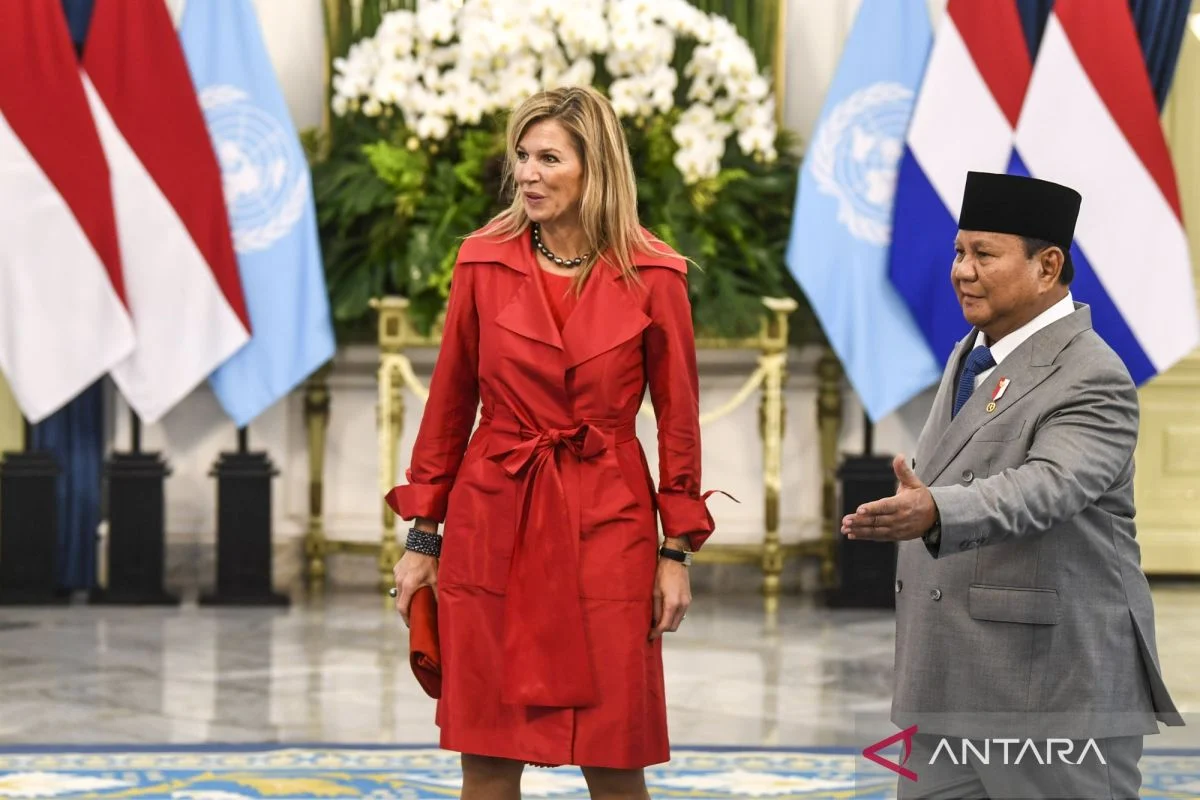
The culmination of her visit was a meeting with President Prabowo Subianto at the Istana Merdeka (Merdeka Palace) in Jakarta. This high-level encounter provided Queen Máxima with the opportunity to convey the key findings, observations, and impressions gathered throughout her extensive tour. The meeting, which included a private conversation and a luncheon, was expected to cover the broad spectrum of financial inclusion challenges and successes in Indonesia. She likely presented concrete examples of innovative solutions she witnessed, such as the waste bank mortgage payment system, and discussed potential avenues for further collaboration between Indonesia and international partners, including the Netherlands, in advancing inclusive development. President Subianto, in turn, would have reaffirmed Indonesia’s commitment to its financial inclusion goals and expressed appreciation for the UNSGSA’s sustained advocacy and support. Such a presidential meeting not only elevates the profile of financial inclusion as a national priority but also strengthens bilateral ties and facilitates the exchange of expertise on critical development issues.
Key Themes and Broader Implications
Queen Máxima’s 2025 visit to Indonesia served as a powerful reminder of several overarching themes crucial for achieving comprehensive financial inclusion:
- Innovation and Adaptability: The "waste bank" initiative in Bekasi stands out as a prime example of how financial solutions can be creatively adapted to local contexts, addressing environmental concerns while simultaneously expanding access to essential services like housing.
- Focus on Vulnerable Populations: Her engagements consistently highlighted the needs of women, low-income communities, and those in the informal sector, emphasizing that financial inclusion must be equitable and reach those who need it most.
- Digital Transformation: The discussions across various venues underscored the transformative potential of digital financial services, mobile banking, and fintech in bridging geographical divides and making financial tools more accessible and efficient.
- Financial Literacy as a Cornerstone: Repeated emphasis on financial education and literacy demonstrated its critical role in empowering individuals to make informed financial decisions and effectively utilize available services.
- Multi-Stakeholder Partnerships: The breadth of her meetings – from local communities and entrepreneurs to international organizations, private companies, and government bodies – illustrated the necessity of collaborative efforts involving all sectors to drive sustainable change.
The implications of this visit are far-reaching. By bringing global attention and expert insights to Indonesia’s financial inclusion agenda, Queen Máxima’s advocacy can galvanize further domestic commitment and international support. Her observations and recommendations, particularly those shared with President Prabowo and the financial authorities, are likely to influence future policy directions, regulatory frameworks, and national strategies. The spotlight on innovative models like the waste bank could encourage replication and scaling across other regions. Ultimately, the visit reinforces Indonesia’s position as a dynamic laboratory for financial inclusion, offering valuable lessons and demonstrating a strong commitment to ensuring that all its citizens have the tools to build a more secure and prosperous future. The sustained engagement of the UNSGSA reaffirms a shared global vision for a world where financial health is a reality for everyone, underpinning broader efforts towards sustainable development and economic equity.