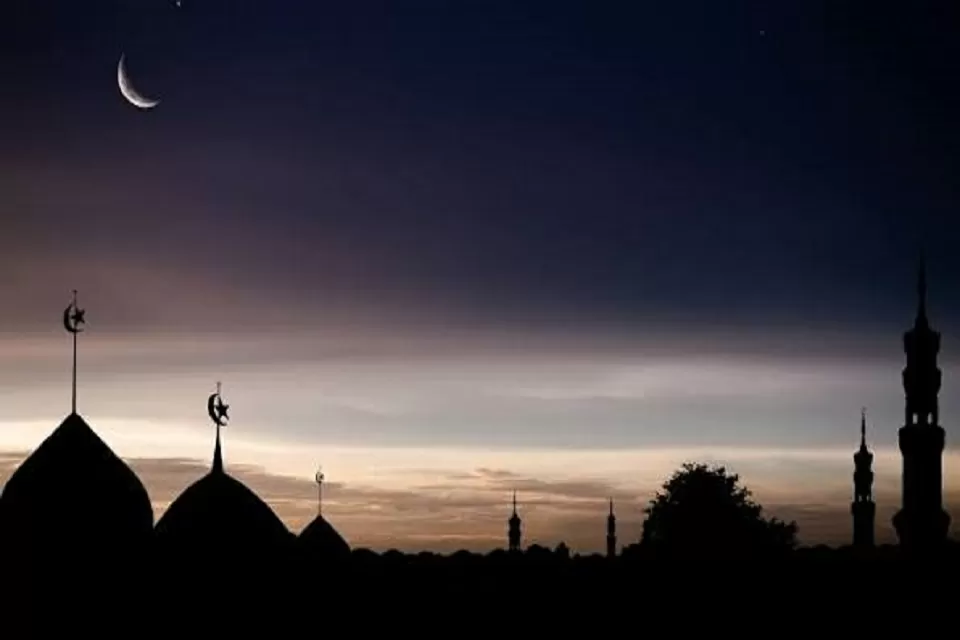
The sixth month of the Islamic lunar calendar, Jumadil Akhir 1448 Hijriah, is officially projected to span from Wednesday, November 11, 2026, to Wednesday, December 9, 2026, according to preliminary astronomical estimations released by religious authorities. As the global Muslim community looks ahead to the transition between months, the alignment between the Hijri lunar cycle and the Gregorian calendar becomes a focal point for individuals planning spiritual observances, voluntary fasting, and communal events. Positioned strategically between Jumadil Awal and the sacred month of Rajab, Jumadil Akhir carries both historical depth and practical significance for millions of believers worldwide. While calendar projections provide a reliable framework for advance scheduling, the ultimate confirmation of Islamic months continues to rely on traditional sighting methodologies and official governmental announcements.
Chronological Placement and Gregorian Alignment for 2026
To understand the operational scope of Jumadil Akhir 1448 Hijriah, one must examine its exact placement within the broader framework of timekeeping systems. The Islamic calendar, or Hijri calendar, is strictly lunar, meaning it is governed by the phases of the moon rather than the solar cycle that dictates the Gregorian calendar. Because a lunar year consists of approximately 354 or 355 days—roughly 10 to 11 days shorter than a standard solar year—Islamic months continuously shift backward through the Gregorian seasons over a roughly 33-year solar cycle.
For the year 2026, the convergence of astronomical calculations points to November 11 as the prospective commencement of Jumadil Akhir 1448 Hijriah. The month will run its course over a 29- or 30-day period, concluding on or around December 9, 2026. This positioning means that the entirety of Jumadil Akhir 1448 AH will be experienced during the late autumn and early winter months in the Northern Hemisphere, bringing the lunar month into alignment with cooler weather patterns in various parts of the world, echoing the historical climatic conditions from which the month derives its name.
Methodologies in Islamic Calendar Determination: Hisab and Rukyatul Hilal
The exact dates for the beginning and end of any Hijri month are subject to rigorous verification processes overseen by religious authorities and astronomical councils. Globally, and specifically within regions with substantial Muslim populations such as Southeast Asia, the determination of a new lunar month relies on two primary methodologies: Hisab (astronomical calculation) and Rukyatul Hilal (visual sighting of the new crescent moon).
Hisab involves mathematical and astronomical computations to predict the precise position of the moon, sun, and earth. It allows institutions, including ministries of religious affairs, to publish advanced calendars years in advance for administrative and planning purposes. However, traditional jurisprudence often emphasizes Rukyatul Hilal—the physical observation of the hilal (crescent moon) just after sunset on the 29th day of the preceding month—as the definitive validation step.
When weather conditions obstruct visibility or when calculations yield borderline elongation and altitude parameters for the crescent, discrepancies can occasionally arise between different countries or calculation methods. Consequently, religious authorities consistently advise the public to await official pronouncements from recognized bodies before finalizing dates for time-sensitive religious practices, such as designated days of voluntary fasting (Ayyamul Bidh).
Etymological Origins and Historical Context of Jumadil Akhir
To fully appreciate the significance of Jumadil Akhir, historians and religious scholars often examine its etymology and historical context within the pre-Islamic and early Islamic Arabian peninsula. The name of the month originates from the Arabic root word "Jumada," which translates literally to "freeze," "solidify," or "arid."
In ancient times, the nomadic and settled tribes of Arabia utilized a lunisolar system before the formal establishment of the pure lunar calendar during the era of Caliph Umar ibn al-Khattab. The names of the months were often codified based on prevailing weather patterns, seasonal events, or tribal activities associated with specific times of the year. Jumadil Awal (the first Jumada) and Jumadil Akhir (the second or last Jumada) were named during a period when these months coincided with the bitter winter season of the region, characterized by temperatures low enough for water to freeze or for vegetation to experience frost.
Over centuries, due to the aforementioned seasonal drift of the lunar calendar, Jumadil Akhir has cycled through all four seasons of the Gregorian year. Despite this detachment from modern meteorological winter in regions far from the Arabian Peninsula, the traditional nomenclature remains preserved, serving as a linguistic and historical link to the heritage of early Arab societies and the preservation of the Islamic chronological framework.
Spiritual Preparation and Observances During Jumadil Akhir
While Jumadil Akhir is not classified among the four sacred months (Al-Ashhur al-Hurum) namely Muharram, Rajab, Dul-Qa’dah, and Dul-Hijjah—it holds a respected position as a month of continuous devotion, self-reflection, and preparation. Positioned immediately before Rajab, which serves as the traditional spiritual gateway to the holy month of Ramadan, Jumadil Akhir is frequently utilized by devout Muslims to recalibrate their spiritual routines.
During this period, believers often engage in various forms of voluntary worship. These include:
- Ayyamul Bidh Fasting: Observing voluntary fasts on the 13th, 14th, and 15th days of the lunar month, a practice highly recommended in prophetic traditions.
- Night Vigils (Tahajjud): Increasing midnight prayers and supplications to seek spiritual fortitude.
- Quranic Engagement: Dedicating consistent daily time to reading, reciting, and reflecting upon the meanings of the Quran.
- Charitable Giving (Sadaqah): Engaging in community outreach, feeding the poor, and supporting educational or religious institutions.
The transition from Jumadil Akhir into Rajab marks the intensification of spiritual readiness, prompting many community leaders and scholars to deliver sermons and educational lectures focusing on repentance, moral integrity, and personal accountability.
Socio-Economic and Administrative Implications of Calendar Projections
Beyond individual spiritual practices, the accurate projection of Islamic calendar months carries broad socio-economic and administrative implications. Governments, educational institutions, financial markets, and travel agencies within nations that officially recognize or incorporate Hijri dates rely heavily on these preliminary schedules.
For government ministries and administrative bodies, knowing that Jumadil Akhir 1448 AH will run from mid-November to early December 2026 allows for the smooth coordination of national Islamic holidays, administrative leave schedules, and the synchronization of academic terms with religious observances. For instance, the month of Rajab and the subsequent month of Sha’ban will follow closely behind, leading directly into the holy month of Ramadan, which requires extensive logistical planning across food supply chains, public services, and working hours.
Furthermore, businesses operating in Muslim-majority regions must factor in the shifting lunar calendar when planning corporate milestones, marketing campaigns tailored to religious seasons, and operational adjustments during fasting periods. The predictability provided by ministries of religious affairs through advance algorithmic modeling and astronomical tables minimizes commercial disruption and ensures seamless societal synchronization.
Conclusion and Official Recommendations
As the arrival of Jumadil Akhir 1448 Hijriah approaches in late 2026, the convergence of ancient lunar traditions and modern astronomical science continues to provide clarity for the global Muslim community. Scheduled provisionally from November 11 to December 9, 2026, the month offers an essential bridge in the Islamic calendar, connecting the reflective period of Jumadil Awal with the sacred approach of Rajab.
Religious authorities and astronomical institutions urge the public to maintain awareness of official announcements as the targeted start date draws closer. By balancing traditional sighting practices with modern scientific calculations, communities can ensure accurate alignment for both individual worship and administrative planning, reinforcing the enduring harmony between faith, timekeeping, and daily life in the modern era.