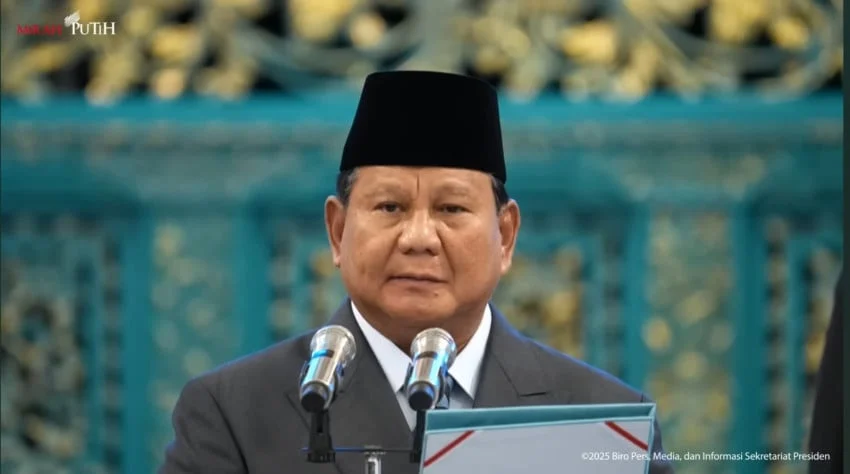
President Prabowo Subianto has officially signed into law the Law Number 27 of 2026 concerning Employment Protection, marking a monumental shift in Indonesia’s labor landscape. The comprehensive legislative document, encompassing 23 chapters and a staggering 313 articles, was formally endorsed by the head of state on October 28, 2026. Published in the State Gazette of the Republic of Indonesia Year 2026 Number 179 on the exact same day, this sweeping regulatory reform aims to overhaul workers’ rights, modernize labor standards, and balance the interests of the workforce with the demands of a growing national economy.
The promulgation of this law follows months of intense nationwide advocacy, rigorous legislative debates, and high-stakes negotiations between labor unions, industry leaders, and government officials. For years, the Indonesian labor sector operated under a framework heavily shaped by the 2003 Manpower Law and the controversial Job Creation Law of 2023. With the introduction of Law Number 27 of 2026, the government seeks to address long-standing grievances regarding worker security, outsourcing regulations, severance formulas, and employment contract stability, signaling a new chapter in industrial relations for Southeast Asia’s largest economy.
Chronology of the Legislative Process and Labor Advocacy
The journey toward the enactment of the Employment Protection Law was far from instantaneous. It represents the culmination of a protracted legislative process that intensified significantly throughout 2025 and 2026. Labor organizations, increasingly vocal about precarious employment conditions and perceived inadequacies in existing safety nets, ramped up pressure on the central government.
Just weeks prior to the signing of the bill, representatives from various labor federations and communication boards held high-profile meetings with state officials, vehemently urging President Prabowo to expedite the ratification and signing of the Employment Protection Law. These labor leaders argued that structural economic pressures, inflation, and the rapid evolution of the modern workforce—driven by gig economy platforms and digital transformation—rendered legacy labor regulations obsolete.
Following these intense consultations, the House of Representatives (DPR) finalized the exhaustive draft, compressing complex labor dynamics into 23 distinct chapters. On October 28, 2026, President Prabowo affixed his signature to the document, turning years of union lobbying and legislative drafting into the supreme law of the land concerning employment protection. The administration has allotted a transition window, dictating that all necessary implementing regulations must be fully formulated and enacted within a maximum period of one year from the date of the law’s promulgation.
Transition of Legal Framework: What Stays and What Goes
One of the most critical aspects of the newly signed Law Number 27 of 2026 lies in its transitional provisions, specifically outlined in Articles 310 and 311. These articles provide legal clarity and prevent a regulatory vacuum while administrative bodies draft the mandated implementing regulations over the next twelve months.
According to Article 310, all existing statutory regulations that serve as implementing rules for older legislative pillars—specifically Law Number 13 of 2003 regarding Manpower and Law Number 6 of 2023 concerning the Stipulation of Government Regulation in Lieu of Law Number 2 of 2022 on Job Creation into Law—shall remain legally binding. However, this continuity is conditional: these older regulations remain valid only to the extent that they do not conflict with the explicit provisions of the new Employment Protection Law.
Conversely, Article 311 delivers a definitive legal repeal of several legacy statutes. Upon the commencement of the new law, Law Number 13 of 2003 concerning Manpower is formally revoked and declared invalid. In addition, specific sections of the 2023 Job Creation Law—namely Chapter IV, Part One, Article 80 letter a, and Part Two, Article 81 contained within the law’s appendix—are struck down. This targeted dismantling of previous frameworks reflects the government’s intent to eradicate legislative redundancies and establish a unified, robust standard for labor protection.
Key Stakeholder Responses and Expectations
The formal enactment of the law has elicited a wave of diverse reactions from key stakeholders across the Indonesian economic spectrum. Labor unions, which spearheaded the movement for the legislation’s realization, have cautiously welcomed the signing, viewing it as a vital victory for worker welfare. Union representatives have emphasized that the inclusion of 313 detailed articles demonstrates a granular approach to safeguarding employees against arbitrary termination, ensuring fair compensation, and enforcing occupational health and safety standards.
At the same time, employer associations and business chambers have expressed a mixture of cautious optimism and operational vigilance. While industrial leaders acknowledge the necessity of modernizing labor laws to maintain social harmony, they have voiced concerns regarding compliance costs and potential rigidity in hiring and firing practices. Representatives from manufacturing, retail, and service sectors have stressed the importance of ensuring that the forthcoming implementing regulations—scheduled to be completed within the one-year timeframe—strike a pragmatic balance between protecting workers and preserving corporate competitiveness in an unpredictable global market.
Economic Implications and Future Outlook
The implementation of Law Number 27 of 2026 carries profound implications for Indonesia’s macroeconomic stability and investment climate. By systematically replacing fragments of the 2003 Manpower Law and the 2023 Job Creation Law, the government has signaled a pivot toward a more structured, rights-centric labor ecosystem.
Economists and labor policy analysts note that the success of this monumental legislation will hinge heavily on the quality and clarity of the implementing regulations that executive agencies must draft over the next year. If formulated effectively, these secondary rules can eliminate legal ambiguities that have historically plagued industrial relations courts, thereby reducing labor disputes and fostering a more predictable environment for both domestic and foreign investors.
Furthermore, as Indonesia strives to achieve its long-term economic development goals, ensuring a secure, well-protected, and productive workforce is paramount. The 313 articles of the Employment Protection Law are designed not merely as punitive measures for non-compliant employers, but as a foundational framework to elevate national productivity, encourage skills development, and guarantee social security coverage for millions of Indonesian laborers. As the one-year countdown for the implementing regulations begins, all eyes remain fixed on the executive branch to ensure that the promise of comprehensive labor protection translates seamlessly into equitable daily realities for the nation’s workforce.