The People’s Consultative Assembly of the Republic of Indonesia faces mounting pressure from constitutional law experts and political analysts to revise its operational calendar regarding the upcoming election and inauguration of a new vice president. Originally scheduled for December 9, 2026, the high-stakes parliamentary session is designed to select a successor to former Vice President Gibran Rakabuming Raka. However, a brewing controversy centered on the statutory definition of election timelines—specifically whether deadlines apply to calendar days or working days—has triggered an intensive legal debate. Consequently, scholars and legal authorities are urging the legislative leadership to recalibrate their schedule to prevent potential constitutional vulnerabilities and legal invalidity.
The core of the dispute lies in the interpretation of procedural parameters stipulated in prevailing legislation governing the legislative branch. Under the current schedule established by the parliamentary leadership, President Prabowo Subianto has been instructed to submit two candidate names for the vice presidency no later than November 25, 2026. This deadline was established by the People’s Consultative Assembly, commonly known as Majelis Permusyawaratan Rakyat Republik Indonesia (MPR RI), under the presumption of a 14-day window preceding the scheduled December 9 plenary session. Yet, this timeline has been heavily scrutinized by prominent legal scholars, including former Coordinating Minister for Political, Legal, and Security Affairs Mahfud MD and electoral reform advocate Titi Anggraini, who argue that the assembly’s timeline misinterprets statutory law.
Statutory Interpretation and the Definition of Parliamentary Days
The legal friction stems from explicit definitions codified within national legislation and internal parliamentary regulations. According to academic evaluations of the Law on the People’s Consultative Assembly, House of Representatives, Regional Representative Council, and Regional Legislative Councils—widely known as the MD3 Law—specific provisions govern the vacancy and replacement of executive offices.
Titi Anggraini, a leading expert on election law, drew public attention to the precise legal wording found in Article 46, paragraph (2) of Law No. 17 of 2014 concerning the MD3 Law and its subsequent amendments. The statute explicitly dictates that the presidential nomination of candidates for the vice presidency must be submitted no later than fourteen days before the plenary session dedicated to the election. Crucially, proponents of this legal critique point to Article 1, point 9 of the same statute, which explicitly defines a "day" as a working day, excluding weekends and official national holidays.
This strict definition is further reinforced by internal parliamentary guidelines, specifically Article 1, point 22 of the MPR Rules of Procedure (Tata Tertib MPR) Number 1 of 2024. When calculating backwards from December 9, 2026, utilizing exclusively business days rather than a straight calendar count, the deadline for executive submissions falls significantly earlier than November 25. Proceeding with the November 25 deadline based on calendar days, legal experts argue, would violate the procedural mandates embedded in the foundational laws governing the legislative institution.
Proposed Solutions and Procedural Mechanisms
In response to the mounting legal challenges, constitutional law expert Prof. Juanda has publicly outlined a clear, legally sound mechanism to rectify the scheduling error. Speaking during a broadcast on national media platforms, Prof. Juanda asserted that the assembly retains full institutional authority to amend the election date by convening a subsequent Joint Meeting (Rapat Gabungan).
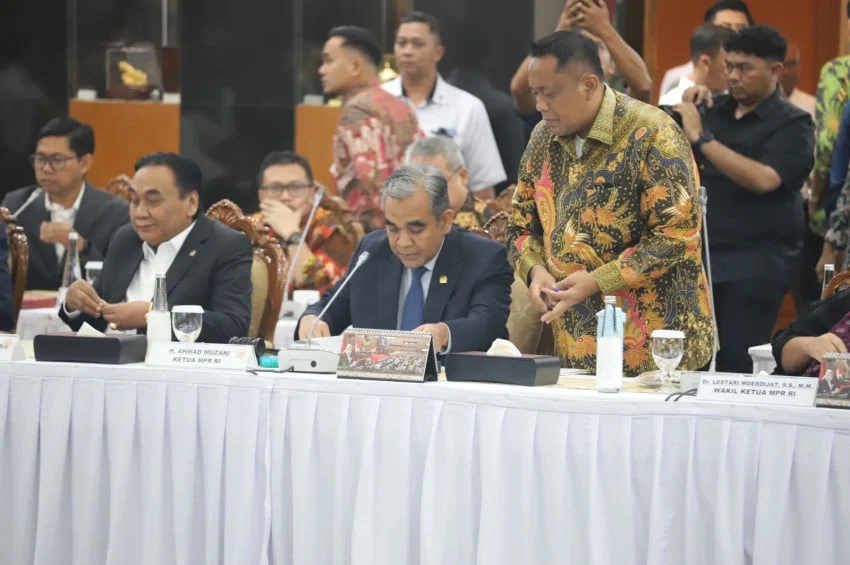
The leadership of the MPR,
under the direction of Chairman Ahmad Muzani, previously convened a Joint Meeting at the Parliamentary Complex in Senayan, Jakarta, to set the initial parameters. Prof. Juanda emphasized that correcting the calendar does not present an insurmountable bureaucratic obstacle. "It is not actually difficult to change that," Prof. Juanda remarked. "Hold another Joint Meeting, and establish a new consensus regarding the postponement."
According to the legal framework governing the assembly, the leadership possesses the administrative capacity to adjust internal schedules through consensus-building among faction leaders and representatives of regional groups. However, failure to utilize this administrative flexibility carries severe systemic risks. Prof. Juanda explicitly warned that if the MPR insists on forcing the vice presidential election to proceed on December 9 under a procedurally flawed timeline, the resulting decision could be deemed legally non-binding and void. Such an outcome would generate an unprecedented constitutional crisis, casting doubt over the legitimacy of the incoming vice president and potentially paralyzing executive-legislative relations during a critical period of national governance.
Political Context and Executive Dynamics
The impending vacancy in the nation’s second-highest office follows the departure of Gibran Rakabuming Raka, whose tenure concluded amid a shifting political landscape under the administration of President Prabowo Subianto. The process of selecting a successor has naturally attracted intense maneuvering among political parties represented in the national legislature.
As parties position themselves for influence within the ruling coalition and broader legislative ecosystem, political commentary has intensified regarding the desired profile and political alignment of the prospective vice president. Official representatives from major political organizations, including the Indonesian Democratic Party of Struggle (PDI-P), have publicly articulated expectations for the incoming official. In recent statements, party spokespersons emphasized the necessity of executive stability, warning against political friction within the executive branch. Key stakeholder warnings have highlighted principles such as avoiding structural dualism in executive authority—metaphorically referred to in Indonesian political discourse as the avoidance of "twin suns"—and ensuring total loyalty to the national development agenda free from hidden internal rivalries.
These political considerations heighten the stakes of the ongoing procedural dispute. With multiple parliamentary factions holding divergent strategic interests in the selection process, any perceived procedural shortcut or legal vulnerability in how the election is conducted risks being weaponized by political opponents, further complicating the stabilization of the national government.
Chronology of Events and Procedural Timeline
To understand the trajectory of the current political and legal impasse, a review of key dates and administrative milestones provides essential context:
- October to Early November 2026: Discussions commence within the legislative leadership regarding the formal protocol for filling the vice presidential vacancy following the departure of Gibran Rakabuming Raka.
- November 16, 2026: MPR Chairman Ahmad Muzani leads a formal Joint Meeting of the MPR at the Parliamentary Complex in Senayan, Jakarta, culminating in the official scheduling of the Plenary Session for December 9, 2026, and setting the executive submission deadline for November 25, 2026.
- Mid-November 2026: Constitutional law scholars and electoral integrity advocates, including Mahfud MD and Titi Anggraini, publicly critique the assembly’s timeline, pointing out the statutory discrepancy between calendar days and working days under the MD3 Law and the MPR Rules of Procedure.
- November 21, 2026: Academic experts, such as Prof. Juanda, analyze the systemic risks of proceeding with a flawed procedural timeline and publicly advise the assembly leadership to utilize a subsequent Joint Meeting to adjust the operational calendar.
- Present: The legislative leadership faces mounting pressure to formally address the statutory discrepancies before the executive submission deadline arrives, balancing the urgency of filling the executive vacancy with the absolute necessity of maintaining strict constitutional compliance.
Broader Implications and Outlook for Legislative Compliance
The controversy surrounding the December 9 election date extends beyond mere scheduling logistics; it serves as a litmus test for institutional adherence to the rule of law within Indonesia’s supreme legislative body. In constitutional democracies, procedural integrity is paramount. When foundational rules governing the transition of executive power are interpreted loosely or misapplied, the democratic legitimacy of the resulting administration is invariably compromised.
As the leadership of the MPR weighs its options, the primary imperative remains the avoidance of legal challenges that could invalidate the entire succession process. Observers note that revising the schedule to account for precise working days—thereby pushing the election date further into December—would temporarily delay the inauguration but would ultimately fortify the legal foundation of the new vice president’s mandate.
Whether Chairman Ahmad Muzani and the assembly leadership will heed the warnings of constitutional scholars and convene a new Joint Meeting remains to be seen. However, the intensity of the current legal debate ensures that every procedural step taken by the legislature in the coming days will be subjected to rigorous public and judicial scrutiny.