JAKARTA — In a milestone moment for international trade diplomacy, Indonesia and the European Union have officially signed the Indonesia-European Union Comprehensive Economic Partnership Agreement, widely known as the IEU-CEPA. The formal signing ceremony, held on Saturday, November 21, 2026, marks the culmination of nearly a decade of intensive, complex negotiations and sets a new benchmark for economic cooperation between Southeast Asia’s largest economy and the European bloc.
Under the newly minted framework, Indonesian exporters are poised to reap immediate rewards. Most notably, approximately 90.4 percent of tariff lines for Indonesian products entering the European market will enjoy a zero percent tariff rate starting on the very first day the agreement officially takes effect. This sweeping reduction is expected to dismantle longstanding structural barriers, significantly lower transaction costs for domestic producers, and radically enhance the competitiveness of Indonesian goods across European member states.
The comprehensive agreement extends far beyond traditional tariff eliminations. It addresses modern economic demands by incorporating robust provisions on market liberalization, e-commerce and the digital economy, enhanced cross-border investment protections, and the systematic facilitation of trade in services. By establishing predictable and transparent regulatory frameworks, the pact aims to attract high-value European capital into strategic domestic sectors, including electric vehicles, renewable energy infrastructure, and advanced electronics manufacturing.
Gradual Tariff Reductions and Quota Mechanisms
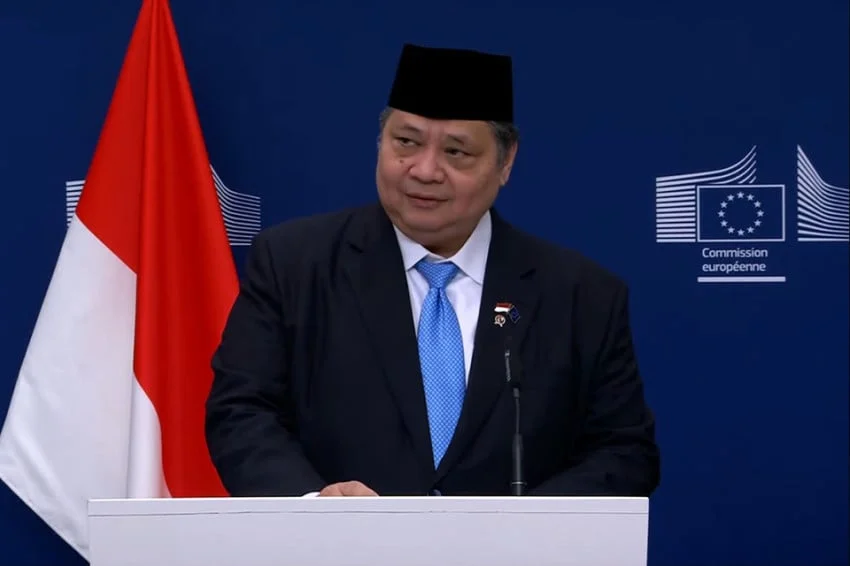
While the immediate zero-tariff policy covers the vast majority of Indonesian goods, the agreement has also structured a transitional mechanism for sensitive product categories. According to Coordinating Minister for Economic Affairs Airlangga Hartarto, an additional 8.37 percent of tariff lines will see their duties eliminated progressively over a timeline ranging from 3 to 15 years. Alternatively, some of these sensitive products will be managed through specific tariff-rate quota schemes to protect delicate domestic industries while ensuring eventual full market integration.
Minister Hartarto emphasized that the agreement has been meticulously calibrated to deliver tangible, concrete benefits to Indonesia’s most vital economic engines, particularly labor-intensive industries and national flagship commodities. The immediate implementation of zero tariffs provides a critical lifeline to sectors that employ millions of workers nationwide, shielding them from regional cost pressures and positioning them favorably against competing exporting nations in the Global South.
"Sectors characterized by high labor intensity and our primary competitive commodities will secure the advantages right from the outset," Minister Hartarto stated during the official briefing following the signing. He specifically highlighted that commodities such as palm oil and its derivative products, readymade garments, woven fabrics, apparel accessories, leather goods, sneakers, athletic footwear, and sandals will enjoy complete tariff exemptions from day one of the agreement’s enforcement.
The Long and Tortuous Road to Ratification: A Chronology of IEU-CEPA
The realization of the IEU-CEPA has been a protracted journey defined by persistent diplomatic engagement, shifting global trade dynamics, and complex regulatory harmonization processes. The conceptual groundwork for closer economic ties between Jakarta and Brussels began to take formal shape in the mid-2010s, reflecting a shared strategic interest in diversifying trade portfolios and hedging against rising global protectionism.
The formal negotiations were officially launched in July 2016. At the outset, both negotiating teams expressed optimism that an agreement could be reached within a standard window of three to four years. However, the complexity of the European Union’s regulatory standards—encompassing stringent environmental directives, labor rights benchmarks, and technical product specifications—frequently collided with Indonesia’s national development priorities and domestic industrial policies.
As the years progressed, the negotiation rounds experienced numerous technical bottlenecks. Issues surrounding the sustainability of palm oil production, raw material export bans on nickel and other critical minerals, and European deforestation regulations introduced recurring friction points. Despite these diplomatic headwinds, technical working groups and high-level ministerial delegations sustained a continuous dialogue, recognizing the immense macroeconomic value of a finalized pact.
The turning point arrived between 2024 and 2025, as both sides intensified political will to finalize outstanding chapters. Negotiators worked systematically to bridge gaps on public procurement, intellectual property rights, and sustainable development chapters. By late 2026, all legal scrubbing and translation protocols were successfully concluded, paving the way for the historic signing ceremony on November 21, 2026. The agreement now awaits domestic ratification procedures within the Indonesian parliament and the European Parliament before it enters into active legal force.
Sectoral Impacts and Strategic Opportunities for Exporters
The signing of the IEU-CEPA opens up unprecedented avenues for Indonesian manufacturers and agricultural producers seeking to expand their footprint in a lucrative market of over 440 million affluent consumers. For the labor-intensive textile and footwear sectors, the elimination of historical tariffs removes a significant cost disadvantage that previously favored competitors in neighboring nations holding pre-existing trade pacts with the EU.
Similarly, the inclusion of palm oil and its downstream derivative products—historically a subject of intense regulatory scrutiny and trade friction between Jakarta and Brussels—marks a pragmatic step forward. By securing guaranteed market access alongside frameworks that align with international sustainability standards, Indonesian producers can stabilize export volumes while committing to transparent, traceable supply chains.
Beyond traditional manufacturing and agriculture, the agreement places a heavy strategic emphasis on the future economy. Policymakers in Jakarta have consistently highlighted the necessity of moving up the global value chain. The investment facilitation provisions within the IEU-CEPA are explicitly designed to catalyze foreign direct investment from European firms possessing cutting-edge technological capabilities.
Sectors such as electric vehicle manufacturing, battery technology, and green energy generation stand to gain immensely. Indonesia holds vast reserves of critical transition minerals, such as nickel, cobalt, and bauxite. By pairing Indonesia’s raw material wealth and manufacturing ambitions with European green technology, engineering expertise, and sustainable capital, the partnership creates a powerful synergy aimed at accelerating the global green transition. Furthermore, the digital trade chapter establishes predictable rules for cross-border data flows, cybersecurity, and electronic transactions, providing a secure environment for tech-enabled enterprises and startups to scale internationally.
Broader Economic Implications and Analytical Outlook
Economic analysts and trade experts have largely lauded the completion of the IEU-CEPA, viewing it as a vital strategic counterweight to regional fragmentation and a testament to Indonesia’s open-market orientation. By securing preferential access to the European Union—one of the world’s most affluent and highly regulated economic blocs—Indonesia diversifies its export destinations, reducing its historical reliance on traditional trading partners in Asia.
From a macroeconomic perspective, the long-term implementation of the agreement is projected to generate sustained boosts to national gross domestic product, stimulate employment creation across vulnerable manufacturing subsectors, and elevate domestic productivity standards. The alignment with European regulatory norms, while initially challenging for small and medium-sized enterprises, ultimately acts as a catalyst for industrial modernization, encouraging higher standards in quality control, environmental stewardship, and corporate governance.
Nevertheless, experts caution that the true test of the IEU-CEPA lies in its domestic implementation and the agility of Indonesian institutions in preparing local industries to meet stringent European compliance mandates. Regulatory readiness, infrastructure efficiency, and logistical optimization will be critical determinants in ensuring that Indonesian businesses can fully capitalize on the zero-tariff quotas from day one.
As the text moves toward formal legislative ratification in both Jakarta and Brussels, the international business community will be closely watching the execution phase. For Indonesia, the IEU-CEPA represents far more than a conventional trade treaty; it stands as a defining geopolitical and economic milestone that firmly cements the nation’s position as a forward-looking, reliable, and indispensable partner in the architecture of modern global commerce.