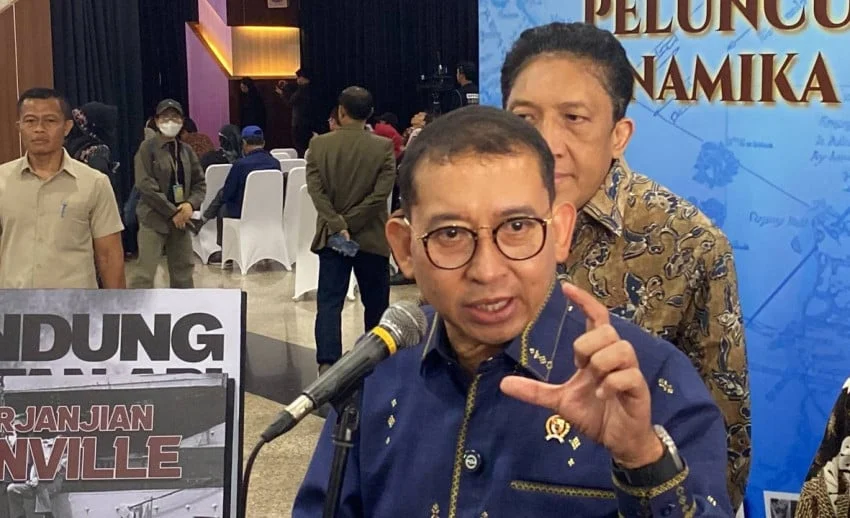
The landscape of national security and political privacy in Indonesia has been profoundly shaken following a high-profile revelation involving high-ranking government officials, law enforcement agencies, and systemic breaches of digital communication. Minister of Culture and senior Gerindra Party politician Fadli Zon publicly disclosed that he was among the victims of an extensive, illegal wiretapping operation that is currently the subject of an intensive criminal investigation by the Indonesian National Police. The admission brings a startling new dimension to a widening scandal that has already seen several top-tier law enforcement figures designated as criminal suspects.
The controversy underscores critical vulnerabilities within the nation’s telecommunications infrastructure and raises profound constitutional questions regarding executive privilege, state security, and the protection of high-ranking officials against unauthorized surveillance. As investigators from the Criminal Investigation Agency (Bareskrim Polri) peel back the layers of this sophisticated espionage operation, the political ramifications continue to reverberate across Jakarta, signaling potential institutional overreach and deep-seated internal conflicts within the nation’s security apparatus.
The Revelation and Initial Police Clarification
The public became aware of the depth of the surveillance operation when Fadli Zon took to his official account on the social media platform X, formerly known as Twitter, to share details regarding his involvement in the ongoing police inquiry. According to the Minister, law enforcement officials summoned him on multiple occasions to provide formal clarification and witness testimony regarding the unlawful interception of his private communications.
In his published statement, Fadli revealed the staggering duration of the breach, noting that his primary mobile telephone number had been compromised for half a decade. The unauthorized surveillance reportedly began in 2021 and was scheduled to continue through 2026, making his case one of the longest-running and most systemic breaches uncovered in the current investigation. Investigators informed him that his communication lines were targeted specifically due to his prominent political roles, notably as the Vice Chairman of the Board of Patrons and the Vice Chairman of the Central Executive Board of the Gerindra Party.
The inclusion of a sitting cabinet minister among the targets of this clandestine operation elevates the scandal from a localized data privacy violation to a matter of national security of the highest order. The systematic interception of communications belonging to key figures within the ruling political apparatus suggests a targeted effort to gather sensitive intelligence on the internal deliberations of the nation’s political leadership.
Chronology and Escalation of the Bareskrim Investigation
The investigation into the illegal wiretapping network reached a dramatic crescendo when Bareskrim Polri officially announced the designation of several high-profile suspects. The case centers not only on the unauthorized interception of telecommunications—commonly known as illegal wiretapping—but also encompasses severe charges of electronic data destruction and unauthorized access to protected computer systems under Indonesia’s Electronic Information and Transactions (ITE) Law.
The scope of the investigation expanded exponentially when authorities implicated several high-ranking active and former law enforcement officials. Among those named as suspects by Bareskrim Polri are prominent figures within the police hierarchy: former high-ranking officials including high-profile generals whose alleged involvement points to a severe abuse of institutional authority. The active participation or oversight of senior police personnel in an operation capable of circumventing national telecommunications safeguards highlights deep systemic vulnerabilities within state-sanctioned surveillance frameworks.
Following their formal designation as suspects, the legal process moved swiftly. Several key individuals, including high-profile police figures, were immediately placed under detention at the Mobile Brigade (Mako Brimob) detention center in Kelapa Dua, Depok, to facilitate the ongoing investigation and prevent potential interference with witnesses or evidence. Meanwhile, other suspects have been granted localized detention conditions, such as house arrest, citing specific health considerations and medical necessities that preclude incarceration in standard detention facilities.
Context of the National Security Threat: The Targeting of the Presidency
The wiretapping scandal surrounding Fadli Zon does not exist in a vacuum; it is intricately linked to a broader, highly sensitive security probe concerning the unlawful interception of communications directed at the highest office in the land. Earlier statements from senior government officials and legal experts, such as Coordinating Minister for Legal, Human Rights, Immigration, and Corrections Yusril Ihza Mahendra, have categorized the scope of the surveillance far beyond routine intelligence-gathering or standard interception protocols.
According to preliminary findings and official assessments, the unauthorized monitoring extended directly to President Prabowo Subianto. Legal authorities have characterized these actions as going far beyond ordinary technical breaches, suggesting that the systematic targeting of the head of state carries implications that border on treason or subversion (makar). The deliberate interception of executive communications threatens the constitutional stability of the republic, creating an unprecedented crisis of trust between the civilian government and the institutions tasked with enforcing the law and protecting national security.
The convergence of surveillance targets—spanning from the Vice Chairman of the Gerindra Party to the President of the Republic—implies a coordinated intelligence-gathering effort aimed at mapping the strategic, political, and administrative moves of the executive branch. This realization has prompted an immediate, comprehensive audit of secure communication channels utilized by cabinet ministers, senior advisors, and executive leadership.
Institutional Responses and Legal Implications
The unfolding scandal presents a severe test for the leadership of the Indonesian National Police and the administration of President Prabowo Subianto. As an institution, the police force is currently tasked with the uncomfortable mandate of investigating its own high-ranking officers, a process that demands absolute transparency to restore public confidence in the rule of law.
Legal analysts and civil society organizations have emphasized that the unauthorized wiretapping of civilian politicians and state officials represents a direct assault on democratic norms. Under Indonesian law, telecommunications interception is strictly regulated and requires explicit legal authorization, typically reserved for counter-terrorism, major narcotics trafficking, or severe national security threats, and must be sanctioned through formal judicial or prosecutorial channels. The execution of wiretaps outside these stringent legal parameters constitutes a severe criminal offense, punishable by significant prison terms under both criminal statutes and specific electronic transaction regulations.
Furthermore, the involvement of senior law enforcement personnel in unauthorized surveillance raises pressing questions regarding internal oversight mechanisms. Observers note that the ability of rogue elements within the security apparatus to conduct multi-year surveillance operations against high-level political figures points to a dangerous concentration of intelligence capabilities without adequate institutional checks and balances.
Broader Impact on Political Stability and Digital Governance
The long-term implications of this security breach extend across multiple facets of Indonesian governance, political stability, and technological infrastructure:
-
Erosion of Institutional Trust: The revelation that a sitting minister and the head of state were subjected to illegal wiretapping by individuals within the security apparatus severely damages trust between civilian authorities and law enforcement agencies. Restoring this trust will require exhaustive judicial proceedings and comprehensive institutional reforms.
-
Overhaul of Secure Communications: The incident has exposed severe vulnerabilities in government telecommunications security. Ministries and state agencies are now compelled to conduct rigorous security audits, adopt end-to-end encryption standards, and reduce reliance on commercial or easily compromised communication networks.
-
Legislative and Regulatory Scrutiny: Lawmakers are expected to revisit existing frameworks governing intelligence operations, data privacy, and electronic surveillance. Calls for stricter parliamentary oversight over state intelligence and law enforcement surveillance capabilities are likely to gain momentum in the House of Representatives (DPR).
-
Political Dynamics: Within the ruling coalition and the Gerindra Party, the breach has heightened security awareness and internal vigilance. Political actors are acutely conscious that their private discussions have been subject to external exploitation, potentially altering strategic decision-making processes as the administration navigates its legislative and governance agenda.
As the Bareskrim Polri investigation continues to uncover further details regarding the scope, origin, and ultimate objectives of the wiretapping network, the nation awaits the formal indictment and trial of the accused officials. The outcome of this landmark case will set a critical precedent for how Indonesia addresses institutional corruption, safeguards the privacy and security of its highest leaders, and defends the integrity of its democratic institutions against unlawful electronic espionage.