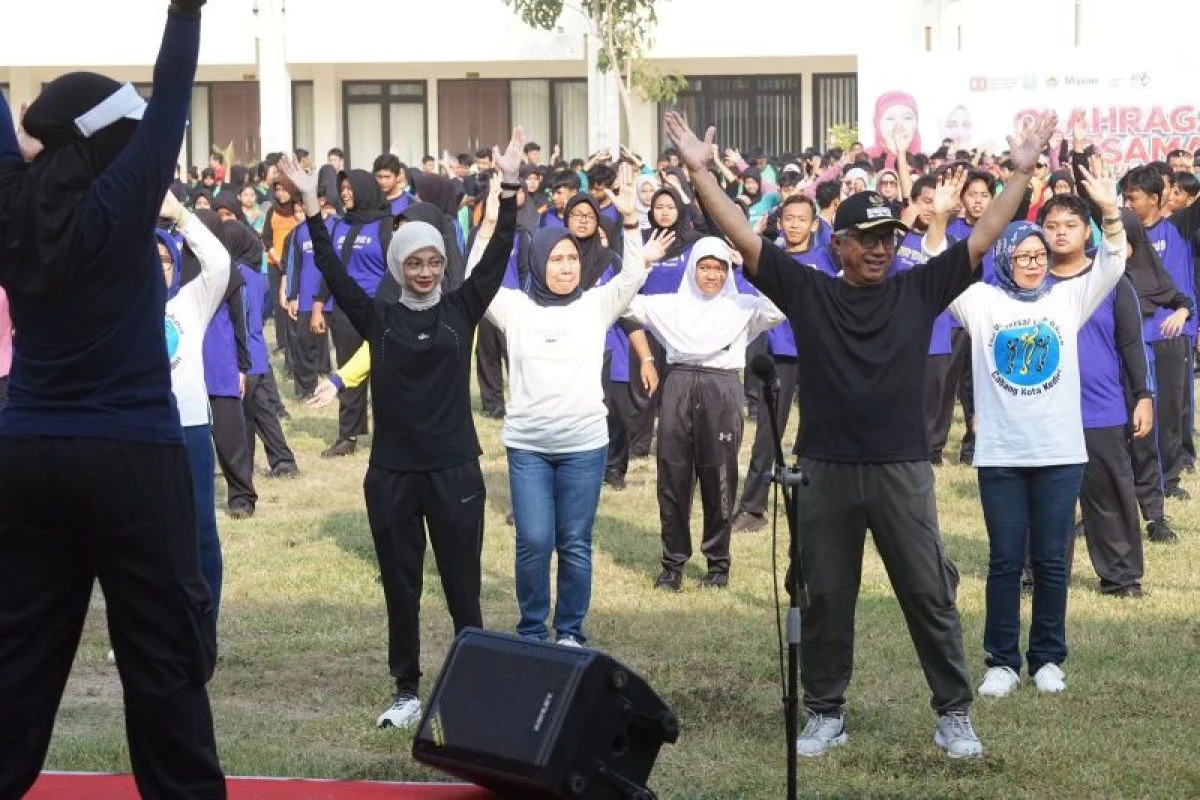
September 9th serves as a monumental date in the Indonesian calendar, marking the Hari Olahraga Nasional (Haornas), or National Sports Day. Beyond a mere ceremonial occasion, this date encapsulates the resilience, identity, and aspirations of a nation that has utilized athletics as a tool for international diplomacy and internal cohesion. Since its inception, Haornas has evolved from a commemorative event honoring the birth of the Pekan Olahraga Nasional (PON) to a strategic platform aimed at fostering a healthier, more active, and competitive Indonesian society. As the nation celebrates the 43rd anniversary of this designation in 2026, it is imperative to analyze the historical foundations, the legislative evolution, and the future trajectory of sports in Indonesia.
The Historical Genesis: From Diplomacy to the Podium
The origins of Haornas are inextricably linked to the post-independence struggle of the Republic of Indonesia. In 1948, the fledgling nation was navigating the complexities of international recognition while simultaneously building a national identity. The decision to host the first Pekan Olahraga Nasional (PON) in Solo, Central Java, from September 9 to 12, 1948, was a calculated political and cultural statement.
At the time, the international community was looking toward the 1948 London XIV Olympiad. Indonesian athletes were eager to compete; however, the lack of full international recognition of Indonesia’s sovereignty meant that the young nation faced significant administrative hurdles in participating under its own flag. Rather than conceding to these barriers, the Indonesian government, led by visionary leaders and sporting pioneers, decided to host its own domestic games.
The success of the Solo games was profound. It proved that despite the challenges of a post-colonial environment, the Indonesian people possessed the organizational capacity and the spirit to unify under a common banner. The opening date of those inaugural games, September 9, was thus etched into the national consciousness as the foundational bedrock of Indonesian sports.
Legislative Formalization and the 1983 Milestone
While the spirit of September 9 had been celebrated informally for decades, it was not until the early 1980s that the government moved to formalize the date as a national institution. On September 9, 1983, President Soeharto inaugurated the renovation of the historic Sriwedari Stadium in Surakarta. It was during this event that the President officially declared September 9 as Hari Olahraga Nasional.
This declaration was not merely symbolic; it was a policy shift aimed at transforming sports from a hobby into a pillar of national development. By 1985, the government solidified this vision through Presidential Decree (Keppres) Number 67 of 1985. This legal instrument provided the framework for a systematic approach to sports development, emphasizing the need for structured training, infrastructure investment, and, most importantly, the democratization of physical activity among the general populace.
Over the subsequent decades, the interpretation of Haornas expanded. It transitioned from an elite-athlete-focused celebration to a public movement. Successive administrations have utilized this date to launch national health campaigns, emphasizing that a robust sporting culture directly contributes to a more productive workforce, lower healthcare costs, and enhanced mental well-being.
Economic and Health Implications of a Sporting Nation
Modern sports in Indonesia have transcended the field of play, becoming a significant economic engine. The Ministry of Youth and Sports (Kemenpora) has increasingly highlighted the intersection between athletic excellence and the "Sport Industry." From the construction of massive training academies to the hosting of regional events like the upcoming beach games in Ancol, the sports sector is becoming a vital contributor to the national GDP.
Current data suggests that the integration of sports into the tourism sector, often termed "Sport Tourism," has revitalized regional economies. For instance, the planning for PON 2028, which aims to position Sumba Timur as a hub for extreme and coastal sports, demonstrates how geographic assets can be monetized through athletic events. The government’s recent proposal to allocate significant funds—up to Rp1.5 trillion—toward the establishment of elite academies and advanced training centers highlights a shift from grassroots participation to high-performance infrastructure.
From a public health perspective, the data remains a primary driver for Kemenpora. As Indonesia faces the dual burden of communicable and non-communicable diseases, physical inactivity is increasingly recognized as a public health crisis. Haornas serves as an annual audit of the nation’s fitness. Campaigns launched on this day encourage schools, corporate entities, and government institutions to prioritize physical education and regular exercise, aiming to reverse the sedentary trends associated with rapid urbanization.
The 2026 Perspective: Challenges and Aspirations
As we mark the 43rd anniversary in 2026, the focus has shifted toward sustainability and inclusivity. The challenge lies in ensuring that the spirit of PON—the unity of a nation—is not diluted by the professionalization of sports. There is a growing demand for better governance within national sports federations to ensure that budget allocations, such as the proposed Rp1.5 trillion for training centers, are utilized transparently and effectively.
Furthermore, the democratization of sports remains a work in progress. While elite athletes gain global recognition, access to quality sporting facilities in rural and underserved regions remains inconsistent. Officials from the Ministry of Youth and Sports have acknowledged these disparities, noting that the goal for the coming years is to build "micro-infrastructure"—small-scale courts and fields in neighborhoods—to complement the major stadiums.
The sentiment among the sporting community is clear: sports must be accessible to every citizen, regardless of their background. As Kemenpora noted in their 2025 guidelines, the essence of Haornas is to make sport a "part of the national identity." This involves moving beyond the medal count and viewing physical education as a fundamental human right that builds discipline, fosters community, and maintains the nation’s competitive edge in an increasingly globalized world.
Chronology of Indonesian Sports Milestones
- 1948: The inaugural PON is held in Solo, marking the birth of independent Indonesian sports.
- 1983: President Soeharto officially designates September 9 as Hari Olahraga Nasional during the inauguration of Sriwedari Stadium.
- 1985: Presidential Decree (Keppres) No. 67 is issued, legally binding the observance of Haornas on the national calendar.
- 2000s–2010s: Increased focus on regional infrastructure, with major cities hosting multi-sport events to boost local economies.
- 2020s: A strategic pivot toward "Sport Tourism" and the professionalization of youth development through elite academies.
- 2026: The 43rd celebration of Haornas, focusing on the intersection of national health, economic growth, and elite performance.
Analysis: The Path Forward
The future of Indonesian athletics depends on a three-pronged approach: investment in human capital, sustainable infrastructure, and the maintenance of a sporting culture. The reliance on legacy events like PON is being supplemented by a more nuanced understanding of sports as a lifestyle.
As the nation looks toward the next decade, the impact of Haornas will be measured by its ability to engage the younger generation. In an era dominated by digital distractions, the government’s challenge is to make traditional physical activity as compelling as modern entertainment. The planned investments in academic training centers signify a long-term commitment to the "science of sport," moving away from ad-hoc training methods toward data-driven athlete management.
In conclusion, the significance of September 9 remains as relevant today as it was in 1948. While the context has shifted from the struggle for political survival to the struggle for global competitiveness and public health, the core message remains constant: sports are the heartbeat of the Indonesian nation. Whether it is a gold medal at an international tournament or a simple morning jog in a local park, the spirit of Haornas is the driving force behind a more resilient and healthier Indonesia. As the country moves forward, the integration of sports into the daily lives of its citizens will remain a testament to the enduring legacy of that first, historic week in Solo.