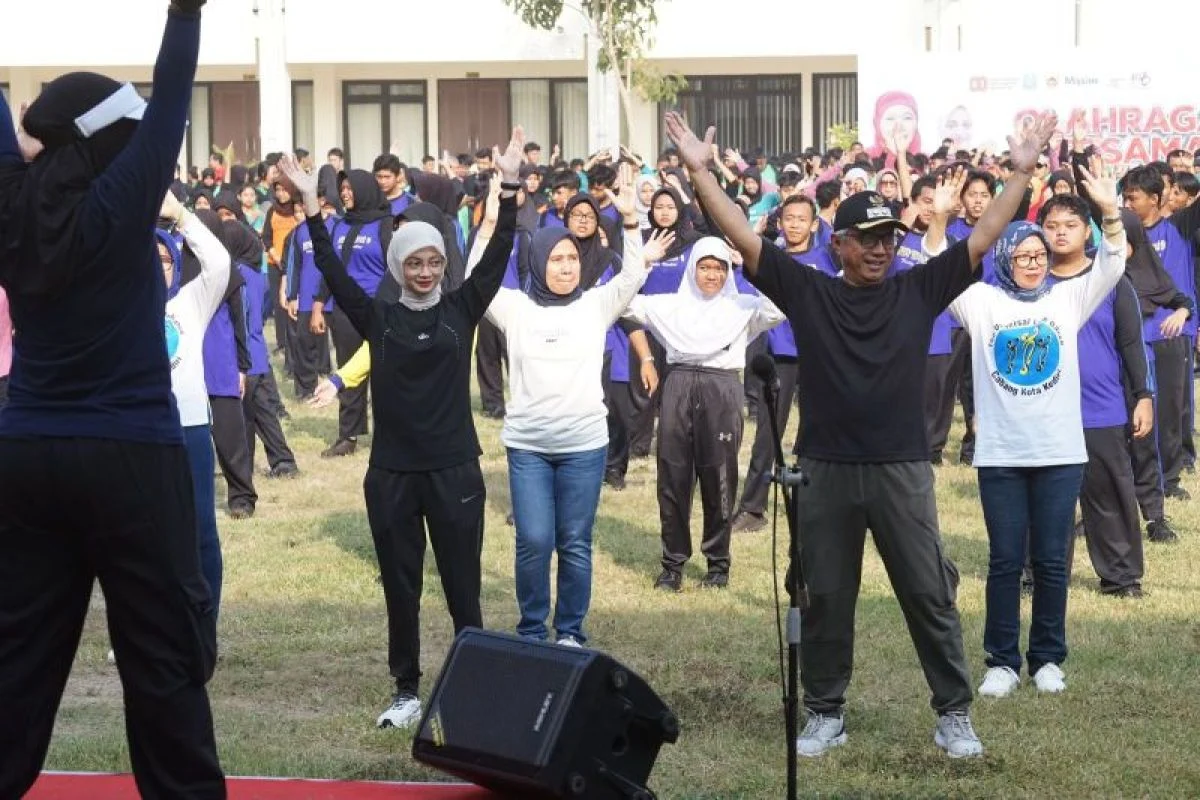
September 9 marks a pivotal date in the Indonesian national calendar, observed annually as Hari Olahraga Nasional (National Sports Day). This commemorative day is far more than a ceremonial nod to athletic achievement; it serves as a historical touchstone that links the early struggles of a newly independent nation to the contemporary pursuit of a physically active and healthy society. By tracing its origins to the inaugural Pekan Olahraga Nasional (PON) held in 1948, the nation celebrates the enduring spirit of resilience, unity, and the fundamental role of physical fitness in national identity.
The Genesis of National Pride: The 1948 PON in Solo
The roots of National Sports Day are deeply embedded in the tumultuous period following Indonesia’s declaration of independence. In 1948, the young Republic of Indonesia was still navigating the complexities of post-colonial sovereignty. Amidst these challenges, the leadership recognized that sports could serve as a powerful vehicle for asserting the nation’s existence on the global stage.
The primary motivation for the inaugural PON, held in Solo, Central Java, from September 9 to 12, 1948, was a direct consequence of international exclusion. Indonesia aspired to participate in the 1948 Summer Olympics (Olympiad XIV) in London. However, as a newly sovereign nation that had not yet secured widespread international recognition, the Indonesian contingent faced insurmountable administrative hurdles. Undeterred, the government and athletic leaders chose to host their own domestic multisport event, the Pekan Olahraga Nasional.
The successful execution of the first PON was not merely a sports tournament; it was a defiant statement of autonomy. By organizing the event at the Stadion Sriwedari in Solo, Indonesia demonstrated that it possessed the infrastructure, discipline, and national spirit to host a high-level competition, even while under the constant threat of colonial subversion. The opening date of this landmark event, September 9, was eventually etched into the national consciousness as the foundation for what would later become the official National Sports Day.
Institutionalizing the Spirit: From 1983 to the Present
While the spirit of the 1948 games laid the groundwork, the official institutionalization of National Sports Day did not occur until decades later. It was on September 9, 1983, that President Soeharto, while presiding over the inauguration of the renovated Stadion Sriwedari, formally proclaimed the date as Hari Olahraga Nasional.
This declaration was intended to institutionalize the culture of sports within the broader framework of national development. The government recognized that a robust sports culture was essential for fostering a disciplined, productive, and healthy citizenry. Following the 1983 proclamation, the government formalized the observance through Presidential Decree (Keppres) Number 67 of 1985. This legal foundation ensured that the significance of sports would be integrated into the annual governmental agenda, emphasizing the continuous development of athletic talent and the widespread promotion of physical activity across the archipelago.
Chronology of the Indonesian Sports Movement
The evolution of Indonesian sports can be categorized into several critical milestones:
- 1948: The first PON is held in Solo, establishing the fundamental link between national independence and athletic competition.
- 1983: President Soeharto declares September 9 as Hari Olahraga Nasional at the newly renovated Stadion Sriwedari.
- 1985: Presidential Decree Number 67 is issued, providing the legal basis for the annual national observance.
- 2000s–2020s: A shift in focus occurs, transitioning from elite-level competition toward the broader "sport-for-all" movement, emphasizing public health and economic development through sports tourism.
- 2026: The nation observes the 43rd anniversary of the official declaration, reflecting on four decades of institutionalized sporting growth.
The Broader Impact: Beyond Medals and Podium Finishes
In the modern context, the Ministry of Youth and Sports (Kemenpora) emphasizes that the significance of National Sports Day has evolved beyond the pursuit of medals. While elite performance remains a source of national pride, the focus has broadened to include "sport-for-all," a movement aimed at increasing the participation rate of the general population in regular physical exercise.
Data suggests that a sedentary lifestyle is a significant contributor to the rise of non-communicable diseases (NCDs) in Indonesia. By promoting National Sports Day, the government aims to encourage daily physical activity as a preventative health measure. Beyond health, sports are recognized as a tool for character building, instilling values such as integrity, perseverance, and teamwork among the younger generation.
Furthermore, there is a growing realization of the economic potential embedded in the sports ecosystem. Initiatives such as the development of "sport tourism" reflect a strategic pivot to leverage sporting events for local economic growth. For instance, the selection of regions like Sumba Timur as potential venues for future PON events illustrates an effort to distribute the economic benefits of sports across the nation, turning regional infrastructure into hubs for tourism and development.
Official Perspectives and Future Challenges
The Ministry of Youth and Sports has been vocal about the financial and structural requirements needed to elevate Indonesia’s standing in global sports. Recent projections indicate that significant investment—often estimated in the trillions of rupiah—is required to establish modern, centralized training academies and specialized sports facilities.
Ministerial statements have consistently highlighted that the development of a world-class sports system requires a dual approach: high-performance training for elite athletes and community-based programs that start at the grassroots level. Challenges remain, including the need for better integration between school sports programs and professional athletic pathways, as well as the equitable distribution of sports facilities in remote areas.
The 2026 commemoration serves as a critical juncture for evaluating these challenges. As the nation celebrates its 43rd year of formal observance, stakeholders are increasingly looking at how technology and international partnerships can further modernize the national sports landscape. The focus is shifting toward data-driven athlete selection, advanced nutritional science, and the implementation of digital platforms to track public health progress through exercise.
Societal Implications: Cultivating a Sports Culture
The true measure of success for National Sports Day lies in its ability to permeate the daily lives of the Indonesian people. The "budaya olahraga" or "culture of sports" is an ambitious goal that requires the active participation of schools, corporate sectors, and community leaders.
Sociologists point out that the historical significance of the 1948 PON provides a narrative of unity that remains relevant today. At a time when national cohesion is paramount, sports offer a platform where regional boundaries are blurred by a shared commitment to excellence and national representation.
As the nation moves forward, the annual September 9 celebration acts as a reminder that the health of the republic is inextricably linked to the health of its citizens. The legacy of the athletes who competed in the inaugural 1948 games—facing immense adversity with nothing more than their resolve—continues to inspire current generations.
Conclusion: A Legacy to Uphold
The journey from the improvised stadiums of 1948 to the modern, multifaceted sports industry of 2026 is a testament to Indonesia’s progress. National Sports Day remains a vital instrument for social and physical transformation. It is a day to honor the pioneers of the past, celebrate the achievements of present-day athletes, and mobilize the public toward a healthier, more disciplined future.
As the government continues to invest in infrastructure—such as the recent focus on sports academies and the diversification of hosting venues for the PON—the expectation is that the impact of sports will be felt in every household. By embedding the habit of exercise into the daily routine, Indonesia aims to create a stronger, more resilient society capable of facing the challenges of the 21st century. The history that began in the heart of Solo nearly eight decades ago is still being written, and each year, on the 9th of September, the nation pauses to acknowledge that its sporting journey is far from over.