The political landscape of Israel is undergoing a profound seismic shift as final preliminary election results indicate a historic surge in voter turnout among Palestinian citizens of Israel, commonly referred to inside the country as Arab Israelis. According to exit polls and initial vote-counting data released following Tuesday’s general election, political factions representing the Arab minority are projected to capture an unprecedented 19 seats in the 120-member Knesset. This dramatic mobilization has upended traditional political calculations, injecting high drama into a parliamentary system long deadlocked by polarization, and placing unprecedented leverage in the hands of Arab lawmakers as major political blocs vie for a path to a governing majority.
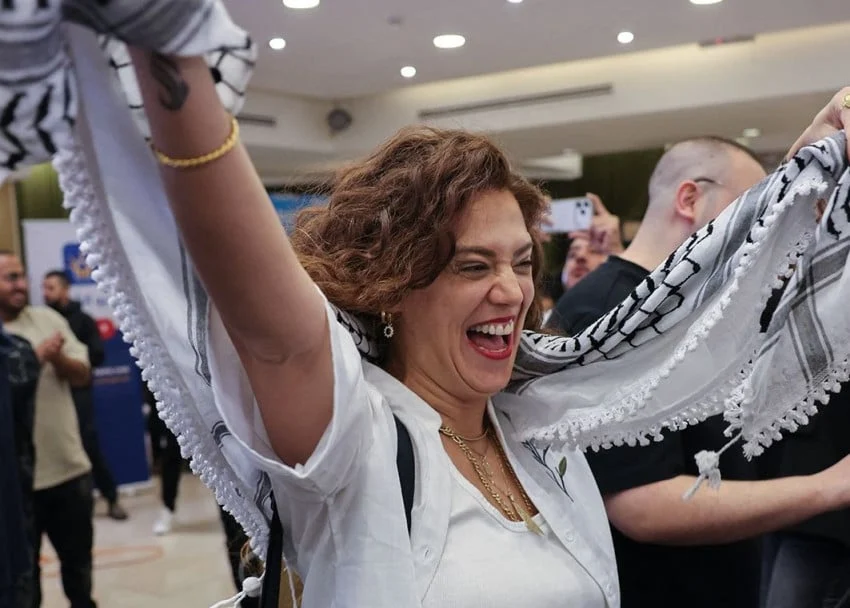
The electoral breakthrough is underscored by a monumental participation rate within the Arab sector, which local election monitors and Israeli media outlets estimate reached approximately 80 percent. This figure shatters previous modern records, comfortably eclipsing the previous watermark set in 1999, and highlights a galvanized electorate determined to translate demographic presence into concrete legislative power.
Main Facts of the Electoral Landscape
At the center of this legislative surge are the primary political entities representing the Arab citizenry: the Joint List—an alliance traditionally comprising several left-wing and nationalist factions—and Ra’am, the United Arab List, an Islamist party that has previously broken historical taboos by participating directly in government coalitions. With over a third of the national ballots tabulated, the Joint List alone has secured more than 9 percent of the total vote share, pacing the broader Arab sector toward the projected 19-seat milestone.
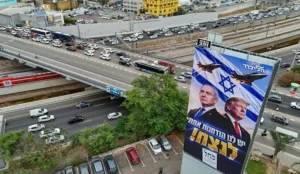
Concurrently, the broader national race remains intensely competitive. The right-wing Likud party, led by incumbent Prime Minister Benjamin Netanyahu, has maintained a formidable showing, outperforming the emerging opposition bloc spearheaded by the Yashar party—a political vehicle recently launched by former military chief of staff Gadi Eisenkot. However, because the Israeli political system requires a governing coalition of at least 61 seats to form a stable administration, the surge in Arab representation acts as a critical swing factor.
Mansour Abbas, the leader of Ra’am, addressed the implications of the high voter turnout in interviews with domestic media, emphasizing that the distribution of power makes a purely non-Arab coalition mathematically improbable. "With the current vote tallies, no single government can be formed without factoring in the broader parliamentary dynamics," Abbas told Israel’s Channel 12. Abbas, whose party previously held five seats and participated in the short-lived "change coalition" government led by Naftali Bennett and Yair Lapid from 2021 to 2022, noted that informal channels of communication remain open between his party and major political figures from both sides of the aisle.
Chronology and Background of Arab Political Participation in Israel
To fully comprehend the significance of this electoral milestone, it is necessary to examine the historical trajectory of Palestinian citizens of Israel within the nation’s democratic framework. Comprising roughly 20 percent of Israel’s total population, Palestinian citizens hold voting rights, possess Israeli citizenship, and have maintained representation in the Knesset since its inception in 1949. However, for decades, Arab parties were largely treated as permanent outsiders, systematically excluded from the executive branches of government and relegated to the opposition benches due to ideological friction surrounding Zionism, the Israeli-Palestinian conflict, and the constitutional definition of Israel as a Jewish and democratic state.
Throughout the late 20th and early 21st centuries, voter turnout among Arab Israelis experienced wide fluctuations, often dipping due to feelings of alienation, disillusionment with state policies, and the perceived futility of participating in a legislature that many felt did not adequately represent their socioeconomic or national aspirations. Participation plummeted to historic lows in the late 2010s, particularly following the passage of the controversial 2018 Nation-State Law, which critics argued downgraded the status of Arabic and institutionalized systemic inequality.
A turning point arrived in the legislative elections of 2020, when the major Arab factions united under the Joint List banner, capturing a then-record 15 seats and briefly positioning themselves as potential kingmakers in the effort to unseat Prime Minister Netanyahu. While that unified front fractured prior to subsequent snap elections, it permanently altered the political consciousness of the electorate. The subsequent pragmatic turn by Mansour Abbas and Ra’am in 2021—shifting away from pure opposition toward direct parliamentary negotiation and coalition participation—further shattered long-standing taboos, proving that Arab votes could directly influence state budgets, infrastructure development, and community policing in Arab towns.
The run-up to the current election cycle was defined by intense regional and domestic pressure. Societal polarization reached unprecedented levels following years of domestic judicial overhaul controversies and regional military escalations. Despite—or perhaps because of—these pressures, community leaders, civil society organizations, and grassroots activists launched aggressive, sustained get-out-the-vote campaigns across the Galilee, the Triangle, and the Negev, urging citizens to leverage the ballot box as a mechanism of self-defense and political empowerment.
Supporting Data and Demographic Shifts
Statistical aggregates compiled by electoral watchdogs illustrate the sheer magnitude of Tuesday’s mobilization. While overall national turnout hovered around historical averages, the spike in Arab-majority municipalities was described by pollsters as a statistical outlier. Polling stations in cities such as Nazareth, Umm al-Fahm, Rahat, and Taibe reported lines stretching for hours, with youth and women turning out in numbers that caught traditional political analysts entirely off guard.
In comparison to the 2022 elections, where fragmentation and voter apathy led to a dip in Arab representation down to 10 seats, the leap to a projected 19 seats represents nearly a 90 percent increase in legislative strength. This growth is bolstered not merely by higher raw numbers, but by strategic cross-voting and a reduction in the number of wasted ballots cast for smaller lists that failed to cross the stringent 3.25 percent electoral threshold.
Official Responses and Expert Analysis
The immediate aftermath of the exit polls triggered starkly contrasting reactions across the Israeli political spectrum. Left-wing and moderate figures hailed the high turnout as a triumph of democratic engagement. Aida Touma-Suleiman, a prominent former Knesset member from the Arab-Jewish leftist party Hadash, offered a nuanced assessment of the broader political climate while emphasizing the agency of the electorate.
Speaking to international media, Touma-Suleiman pointed to the deep ideological divisions plaguing the country. "The preliminary results reflect a profound crisis within Israeli society, demonstrating just how deeply entrenched the extreme right wing has become," she stated. She noted the paradox of a political system weathering years of intense internal turmoil and regional conflict yet seemingly reinforcing established political camps. "However, the far more significant narrative here is how the Palestinian citizens of Israel have fundamentally recognized and harnessed the raw political power resting in their hands."
Political analysts suggest that this newfound realization of political leverage creates a complex dilemma for Israeli party leaders. On one hand, Zionist right-wing parties have historically campaigned on platforms that delegitimize Arab political parties as coalition partners, occasionally utilizing anti-Arab rhetoric to galvanize their own base. On the other hand, the mathematical reality of a fractured parliament makes complete sidelining of Arab representatives increasingly difficult for any bloc seeking a stable, long-term governing majority.
Broader Impact and Implications for Israeli Governance
The implications of a robust, 19-seat Arab parliamentary bloc extend far beyond the immediate arithmetic of forming a ruling coalition. Domestically, a stronger, more coordinated Arab faction in the Knesset possesses enhanced leverage to address chronic socioeconomic challenges facing Arab communities, including high rates of violent crime, systemic underfunding of municipal infrastructure, severe housing shortages, and disparities in educational funding.
Furthermore, the assertive participation of Palestinian citizens of Israel challenges the traditional binaries of Israeli politics. It forces both Jewish-majority parties and the electorate at large to confront the reality that no stable, representative democracy in Israel can permanently govern without reckoning with the political aspirations and demographic weight of its non-Jewish citizens.
As official votes continue to be tallied and certified by the Central Election Commission over the coming days, the focus will inevitably shift from preliminary exit projections to intense, backroom coalition negotiations. Whether the projected 19 seats will translate into tangible executive influence or serve as a formidable opposition bloc capable of shifting national policy remains to be seen. What is indisputable, however, is that the Palestinian citizens of Israel have permanently rewritten the rules of engagement in the nation’s democratic process, ensuring their voices can no longer be marginalized in the halls of power.