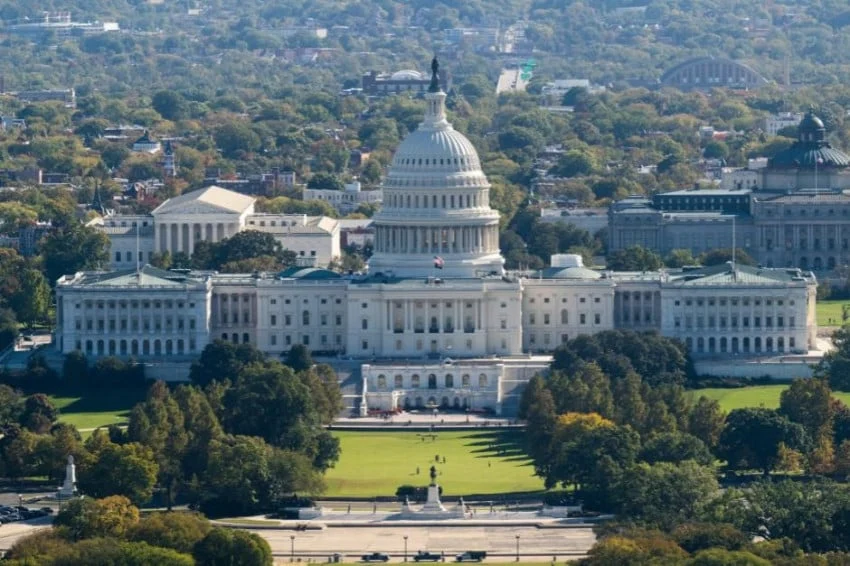
The United States is bracing for what is projected to be the most financially exorbitant midterm election cycle in the nation’s history, with political advertising expenditures expected to eclipse a staggering $11.6 billion, approximately equivalent to Rp210 trillion. According to comprehensive data released by prominent media tracking firm AdImpact, this astronomical financial projection outpaces any preceding electoral cycle in American history, remarkably surpassing even the fiercely contested 2024 presidential election. This unprecedented influx of capital underscores the escalating stakes of American democracy, where legislative control of Capitol Hill hangs in a precarious balance, driving deep-pocketed stakeholders to pour historic fortunes into shaping public opinion.
The mechanics of modern American political financing dictate that the vast majority of this unprecedented monetary wave does not materialize from small-dollar grassroots contributions. Instead, the staggering $11.6 billion projection is largely fueled by an elite echelon of ultra-wealthy donors, powerful political non-profit organizations, and massive corporate entities fiercely determined to steer legislative and regulatory priorities in Washington, D.C. A significant portion of these funds flows through intricate networks of intermediary organizations, shell non-profits, and politically active dark-money groups before ultimately being funneled into television broadcasts, digital banner ads, streaming service commercials, and targeted social media campaigns across pivotal swing states.
Understanding the Scale of the 2026 Midterm Financial Deluge
To contextualize the sheer volume of capital flooding the 2026 midterm elections, market analysts and campaign finance watchdogs emphasize that midterm cycles—which historically suffer from lower voter turnout compared to presidential election years—are traditionally less expensive than presidential races. However, the 2026 cycle is shattering this historical precedent. The polarization of the American electorate, coupled with narrow majorities in both the United States Senate and the House of Representatives, has transformed every localized congressional race into a national referendum.
Advertising firms like AdImpact monitor real-time broadcast and digital ad space purchases, tracking the monetization of political discourse. Their projections account for escalating media costs, hyper-targeted digital micro-targeting campaigns, and the proliferation of artificial intelligence-generated political content that has expanded the avenues for campaign expenditures. As media consumption fragments across traditional cable, broadcast television, connected streaming devices, and social media platforms, campaigns and their deep-pocketed allies must diversify their advertising portfolios, driving costs to historic heights.
The Landscape of the Top 50 Donors: Republican Dominance and Bipartisan Interests
A granular examination of the funding sources driving this $210 trillion advertising tsunami reveals stark disparities in political alignment and financial mobilization. Recent disclosures and tracking data indicate that the top 50 individual donors and mega-donor organizations have collectively contributed an astonishing $2.77 billion thus far during the 2026 midterm election cycle. This elite group of financial heavyweights sets the macro-level agenda for the entire electoral landscape, dictating which legislative issues receive national prominence and which candidates receive life-or-saving financial lifelines.
A partisan breakdown of these top contributions highlights a pronounced financial advantage for conservative causes. Contributors and institutional entities formally affiliated with the Republican Party have poured a combined $1.67 billion into the electoral ecosystem. This figure accounts for approximately 60 percent of the total contributions made by the top 50 donor bloc. In stark contrast, entities and high-net-worth individuals affiliated with the Democratic Party have contributed roughly $832 million, capturing approximately 30 percent of the total elite donor pool.
The remaining $264 million—representing roughly 10 percent of the total contributions from the top tier—originates from donors categorized as bipartisan, independent, or single-issue special interest groups. Notably, this 10 percent includes heavily capitalized modern interest lobbies, such as political action committees representing the burgeoning cryptocurrency industry, online sports betting conglomerates, and emerging technology sectors seeking favorable regulatory frameworks in the post-election congressional sessions.
The Mechanics of Mega-Donations: Legal Frameworks and Super PACs
For the average citizen, the disparity between individual contribution limits and the hundreds of millions of dollars funneled by mega-donors remains a source of persistent public scrutiny. Under current federal election laws established by the Federal Election Commission (FEC) for the 2025–2026 election cycle, an individual human donor is legally permitted to contribute a maximum of $3,500 per election directly to the official campaign committee of a federal candidate. When factoring in primary and general elections, a single supporter can legally give a candidate a total of $7,000.
However, many of the billionaire donors dominating the 2026 midterms routinely bypass these individual candidate caps by contributing sums reaching hundreds of millions of dollars. This multi-million-dollar political spending is entirely legal under contemporary American jurisprudence, primarily because the funds are not directed into the coffers of official candidate campaigns. Instead, the money is funneled into Independent Expenditure-Only Committees, universally recognized in American politics as Super Political Action Committees (Super PACs).
Super PACs represent a modern evolution of campaign finance that emerged directly from landmark judicial rulings. Specifically, the legal landscape transformed dramatically in 2010 following the historic United States Supreme Court ruling in Citizens United v. Federal Election Commission, alongside a critical federal appeals court decision in SpeechNow.org v. FEC. These judicial milestones determined that corporate and union funding of independent political broadcasts in candidate elections cannot be limited, establishing that political spending is a form of constitutionally protected free speech under the First Amendment. Consequently, Super PACs were born, granting corporations, labor unions, and ultra-wealthy individuals the legal apparatus to raise and spend unlimited sums of money to expressly advocate for the election or defeat of federal candidates.
The Core Restriction and Realities of Super PAC Operations
While Super PACs operate with virtually unlimited financial ceilings, the Federal Election Commission mandates one foundational legal restriction: these groups are strictly prohibited from coordinating their financial expenditures directly with official candidate campaigns or their respective campaign managers. In theory, a Super PAC must operate as an independent entity, determining its own media buys, message strategies, and targeting criteria without direct communication with the politician it aims to support.
In practice, however, political strategists have developed sophisticated methods to navigate these boundaries. While direct coordination is illegal, campaigns routinely signal their strategic needs and messaging priorities publicly through media interviews and strategic memos. Super PAC leaders, often former staffers or close ideological allies of the candidates, interpret these public signals and deploy tens of millions of dollars in television and digital ads that align seamlessly with the official campaign’s narrative. This dynamic has resulted in an electoral ecosystem where multi-million-dollar dark-money groups often outspend the official candidate campaigns themselves, effectively seizing control of the primary narrative during the final weeks of an election.
Chronology of Campaign Finance Evolution in the United States
To fully comprehend how the 2026 midterm elections reached this historic financial milestone, it is essential to review the chronological progression of American campaign finance law and the accelerating trajectory of election spending over the past two decades.
The foundation of modern federal campaign finance regulation was laid in the wake of the Watergate scandal through the passage of the Federal Election Campaign Act (FECA) of 1971, which was subsequently amended in 1974 to establish contribution limits and create the Federal Election Commission. For decades, these regulations restricted the influx of corporate and union treasury funds into federal elections, preserving a system heavily reliant on individual small-dollar donations and regulated Political Action Committees (PACs).
The turn of the 21st century witnessed the first major legislative overhaul with the Bipartisan Campaign Reform Act (BCRA) of 2002, commonly known as the McCain-Feingold Act. This legislation sought to ban national political parties from raising unregulated "soft money"—unlimited donations from corporations, unions, and wealthy individuals meant for party-building activities. While McCain-Feingold successfully restricted soft money at the party level, it inadvertently catalyzed the growth of outside advocacy groups known as 527 organizations, which quickly stepped into the financial void to air hard-hitting political advertisements.
The definitive paradigm shift occurred in January 2010 with the Supreme Court’s Citizens United decision. By striking down prohibitions on independent corporate expenditures, the court dismantled decades of legal precedent and opened the floodgates to unlimited corporate and wealthy donor spending. Later that same year, the D.C. Circuit Court of Court ruling in SpeechNow.org paved the way explicitly for the creation of Super PACs, determining that groups relying solely on independent expenditures could not be subjected to contribution limits.
Throughout the 2012, 2014, and 2016 election cycles, Super PACs rapidly integrated into the mainstream of American politics, transforming from experimental entities into dominant financial powerhouses. By the 2020 presidential election cycle, total federal election spending surpassed $14 billion, cementing a new normal of astronomical campaign costs. The 2024 presidential election shattered previous presidential records, but the projection that the 2026 midterm election will reach $11.6 billion in advertising alone demonstrates that the appetite for high-stakes political expenditure has metastasized across all levels of federal governance.
Expert Perspectives, Statements, and Reactions
The revelation that the 2026 midterm advertising expenditures are projected to eclipse $11.6 billion has elicited sharp reactions from political scientists, campaign finance reformers, and elected officials across the political spectrum. Government watchdog groups have voiced profound apprehension regarding the pervasive influence of corporate capital and ultra-wealthy donors on the democratic process.
Good-government organizations, such as Public Citizen and the Campaign Legal Center, have issued statements criticizing the continued dominance of Super PACs and dark-money networks. Representatives from these reform advocacy groups argue that the disproportionate financial power concentrated within the hands of the top 50 donors effectively drowns out the voices of average working-class Americans. According to these watchdogs, when a handful of billionaires and corporate entities can single-handedly fund multi-million-dollar media blitzes, elected officials are inevitably incentivized to prioritize the narrow interests of their mega-donors over the broader needs of their everyday constituents.
Conversely, defenders of current campaign finance laws, including legal scholars aligned with free-market organizations and conservative judicial institutes, maintain that robust political spending is an indispensable exercise of First Amendment liberties. Proponents of independent political expenditures argue that money functions as the modern currency of speech, enabling individuals and organizations to disseminate political ideas, critique incumbent politicians, and engage the electorate on critical policy matters. From this perspective, restricting political advertising expenditures or capping the financial contributions of advocacy groups would unconstitutionally infringe upon the fundamental right of citizens to participate robustly in the democratic public square.
Furthermore, political strategists from both major parties privately acknowledge that while the public often expresses fatigue over the relentless barrage of negative political advertising, these historic financial outlays are viewed as absolute operational necessities. In an era marked by intense media saturation and deep partisan division, campaigns and their allied Super PACs operate under the guiding principle that failure to secure adequate advertising real estate guarantees electoral defeat. Consequently, political professionals continue to design ever-more sophisticated fundraising apparatuses to capture every available dollar from the nation’s wealthiest benefactors.
Broader Implications and Impact on the 2026 Midterm Outcomes
The ramifications of a $210 trillion (USD 11.6 billion) advertising market extend far beyond campaign balance sheets, profoundly impacting the trajectory of the 2026 midterm elections, the legislative agenda of the United States Congress, and the broader health of American democratic institutions.
First, the concentration of advertising capital in competitive congressional districts will likely dictate the strategic map for both political parties. Rather than pursuing a nationalized campaign strategy aimed at broad voter engagement, campaigns and Super PACs will hyper-focus their financial resources on a narrow band of toss-up districts in states like Pennsylvania, Arizona, Georgia, Wisconsin, and Michigan. Voters residing outside these highly competitive battlegrounds may experience a vastly different electoral environment, while citizens living within swing districts will face an unprecedented saturation of television commercials, digital alerts, and persuasive media messaging designed to mobilize base voters and persuade undecided independents.
Second, the pervasive reliance on mega-donor funding introduces severe structural implications for post-election governance. When victorious lawmakers arrive in Washington to assume their seats in the House or Senate, the legislative priorities that commanded attention during the campaign trail often reflect the policy objectives of the industries and billionaires that financed their electoral victories. Issues such as cryptocurrency regulation, tax policy, energy independence, healthcare reform, and technological oversight are frequently shaped by the heavy hand of well-financed special interest lobbies. This dynamic risks exacerbating public cynicism regarding governmental responsiveness, reinforcing the perception that the American political system functions primarily to serve economic elites rather than the general populace.
Finally, the staggering cost of modern campaigns creates an formidable barrier to entry for aspiring political candidates who lack access to affluent donor networks. Grassroots candidates who rely exclusively on small-dollar donations often find themselves severely outmatched by opponents backed by deep-pocketed Super PACs capable of saturating the airwaves at a moment’s notice. This financial filtering mechanism can discourage diverse, non-traditional candidates from seeking public office, ultimately narrowing the ideological and socioeconomic representation within the halls of the United States Congress.
As the 2026 midterm election cycle progresses toward its ultimate conclusion, the historic infusion of $11.6 billion in political advertising stands as a definitive testament to the evolving nature of American democracy. In a system where financial capital and free speech remain inextricably linked through judicial precedent, the race for control of Capitol Hill will be fought not only on the ground by volunteers and candidates, but increasingly through the airwaves, driven by the historic fortunes of the nation’s most powerful political stakeholders.