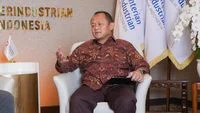
Jakarta – The Indonesian government is aggressively accelerating its downstream industrialization policy, targeting a wider array of strategic agricultural and marine commodities, ranging from crude palm oil and coconut to seaweed and sago. This comprehensive economic strategy is designed not only to maximize the domestic economic value of raw natural resources but also to significantly expand localized employment opportunities, advance technological capabilities, and catalyze robust industrial growth across regions outside Java.
The push for a more integrated industrial ecosystem was a focal point of discussion at the recent National Leadership Meeting (Rapimnas) of the Indonesian Chamber of Commerce and Industry (Kadin) held in Jakarta. During the high-profile economic forum, high-ranking government officials outlined a holistic vision for the nation’s manufacturing sector, emphasizing that the era of exporting unrefined, low-value raw materials must systematically draw to a close.
Moving Beyond Raw Material Exports
Ministry of Industry officials stressed that the nation’s industrialization trajectory must transcend the traditional model of merely extracting and exporting raw or semi-processed goods. Instead, the current policy framework demands total vertical integration—ensuring that production lines stretch seamlessly from foundational raw inputs all the way to high-value finished consumer and industrial goods.
This philosophy draws heavily from the notable successes observed in the mining sector, particularly the downstream processing of nickel ore. Over the past several years, Indonesia’s restrictions on raw nickel exports have successfully catalyzed domestic investments in smelting, intermediate processing, battery component manufacturing, and electric vehicle supply chains. Policymakers are now determined to replicate this blueprint across the agricultural, forestry, and maritime sectors, where Indonesia holds undeniable global comparative advantages.
According to government projections, true industrial success will no longer be evaluated solely by the sheer volume of incoming foreign or domestic capital investments. Rather, success will be measured by tangible increases in product value-added, the acquisition and mastery of advanced industrial technology, the creation of high-quality formal jobs, and the strengthening of deeply localized domestic supply chains.
Strategic Expansion into Palm Oil and Coconut Sectors
Among the primary focal points of the expanded downstream policy is the country’s dominant palm oil sector. As the world’s leading producer of palm oil, Indonesia possesses a massive structural advantage. The government is actively working to diversify downstream derivatives beyond conventional cooking oil, pushing into advanced oleochemicals, bioaviation fuel, and specialized industrial inputs that command higher margins in international markets.
Simultaneously, the domestic coconut industry is experiencing a notable resurgence, capturing the attention of economic planners. Processed coconut products, most notably coconut milk, cream, and specialized fiber derivatives, have demonstrated robust export performance and high demand in key global markets. The Ministry of Industry has signaled its formal commitment to providing targeted regulatory and infrastructural support to scale up the coconut processing sector, ensuring that smallholder farmers directly benefit from international trade trends.
Unlocking Marine Potential through Seaweed Processing
Beyond terrestrial agriculture, the government has turned its strategic focus toward Indonesia’s vast maritime potential, specifically highlighting seaweed cultivation as a major driver of inclusive coastal growth. Indonesia boasts one of the longest coastlines in the world, providing an ideal geographical foundation for large-scale seaweed farming.
Seaweed is a remarkably versatile commodity capable of yielding raw materials for a wide array of high-value industries, including cosmetics, pharmaceuticals, textiles, and processed food and beverages. By establishing localized processing facilities near coastal harvesting centers, the government aims to integrate remote fishing and coastal communities into the formal industrial economy. Policymakers noted that many coastal regions have historically lacked adequate infrastructure to access the broader manufacturing sector. Developing seaweed processing clusters directly in these areas is expected to bridge this economic gap, providing alternative and stable livelihoods for millions of coastal residents.
Establishing a Dedicated Sago Industrial Zone in Eastern Indonesia
In addition to marine resources, the government is looking inward to indigenous food staples that hold immense potential for industrial transformation. A prime example is the planned establishment of a dedicated sago industrial zone in East Seram Regency, located within Maluku province.
Eastern Indonesia possesses abundant, naturally occurring sago forests that have remained largely underutilized on an industrial scale. By designating East Seram as a specialized industrial zone, the state hopes to attract targeted investments for modern sago processing plants. This initiative aligns with broader national food security objectives while simultaneously serving as a catalyst for industrialization in the eastern archipelago, aligning with the administration’s core mandate of equitable national development.
Macroeconomic Implications and Regional Equity
Economists and industry analysts view the broadened downstream strategy as a critical step in mitigating Indonesia’s historical vulnerability to global commodity price volatility. By converting raw commodities into finished goods domestically, Indonesia protects its trade balance, retains capital within the domestic financial system, and builds resilience against external economic shocks.
Furthermore, the regional distribution of these industrial initiatives addresses a long-standing structural imbalance in the Indonesian economy, where economic activity has historically been heavily concentrated on the island of Java. By anchoring palm oil, coconut, seaweed, and sago processing facilities directly in the regions where these commodities are cultivated or harvested, the government aims to foster decentralized economic growth.
This regional approach is anticipated to generate a multiplier effect, stimulating local service economies, improving regional logistics and transport infrastructure, and elevating the purchasing power of populations outside major urban centers. As the government continues to refine its regulatory frameworks and incentivize private sector participation through Kadin and other business networks, the success of this ambitious industrial expansion will largely depend on seamless coordination between central authorities, regional administrations, and private investors.