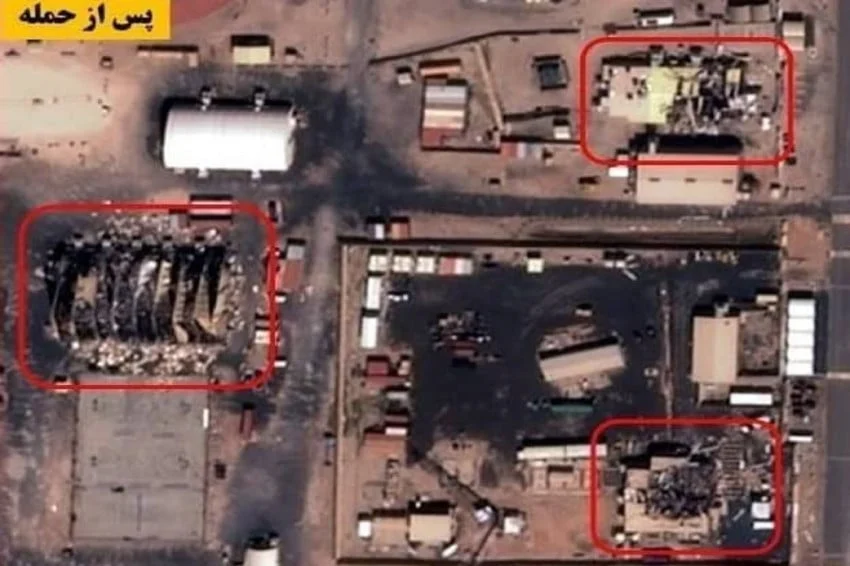
The ongoing geopolitical volatility in the Middle East has reached a critical juncture following a series of precision missile and drone strikes launched by Iran against United States military installations across the region. Recent intelligence and satellite imagery analysis, published by The Wall Street Journal, indicates that the physical damage to American military infrastructure has incurred costs exceeding $15 billion, or approximately IDR 271 trillion. This staggering financial toll, coupled with the rising human and strategic costs of the conflict, has forced the Pentagon to re-evaluate its long-term force posture, with internal discussions reportedly centering on the potential withdrawal or relocation of assets from key hubs in Kuwait and Saudi Arabia.
The Financial Magnitude of the Conflict
The fiscal impact of the conflict on the Department of Defense is substantial. Beyond the immediate $15 billion in structural damage, the broader scope of the war—which began in late February 2026—has seen total military expenditures by the United States climb to nearly $50 billion (exceeding IDR 906 trillion). This expenditure encompasses not only the repair of destroyed facilities but also the operational costs of maintaining a heightened defensive posture, the deployment of additional missile defense systems, and the logistics of constant naval and aerial patrols in high-risk zones.
Analysts note that the $15 billion estimate reflects a conservative assessment of replacement costs. Satellite imagery analysis has identified 274 individual buildings across 24 distinct military installations that have sustained varying degrees of damage. Of these, 119 buildings across 13 installations were rendered non-operational within the first two weeks of the conflict alone, highlighting the effectiveness of the saturation attacks employed by Iranian forces. The Udaylah Air Base in Kuwait, also known as Camp Buehring, and the headquarters of the U.S. Fifth Fleet in Bahrain have been cited as the most heavily impacted facilities, sustaining critical damage to command-and-control centers and support infrastructure.
Chronology of the Escalation
The current phase of hostilities was precipitated by a series of events starting on February 28, 2026. Following an unprovoked strike against Iranian interests, which Tehran characterized as a violation of its sovereignty by U.S. and Israeli forces, the Iranian government initiated a multi-layered retaliatory campaign.
- February 28, 2026: Initial hostilities break out, marking the transition from a "shadow war" to an overt kinetic conflict.
- March 2026: The first two weeks of the conflict see the highest intensity of drone and missile strikes. During this period, 13 U.S. installations suffer significant damage to critical infrastructure.
- April–September 2026: The conflict settles into a war of attrition, with sporadic strikes targeting logistical supply lines and regional hubs.
- October 30, 2026: The Wall Street Journal releases its comprehensive analysis of damage, confirming the $15 billion figure and bringing the debate regarding a strategic U.S. withdrawal to the forefront of American foreign policy discussions.
Strategic Implications for the Middle East
The United States has long utilized a network of bases in the Persian Gulf to project power and maintain regional stability. However, the sheer density and accuracy of Iran’s modern missile arsenal have fundamentally altered the strategic calculus. The realization that stationary, high-value targets are increasingly vulnerable to low-cost, mass-produced drones and cruise missiles has sparked a debate within the Pentagon regarding "distributed lethality."
Military strategists argue that the current model of housing large numbers of troops and equipment in centralized, static "super-bases" may be obsolete. The potential withdrawal from installations in Kuwait and Saudi Arabia is not merely a reaction to the financial burden of repairs, but a necessary pivot toward a more mobile, harder-to-target presence. By reducing its footprint in fixed locations, the U.S. hopes to mitigate the risk of catastrophic loss while maintaining its ability to respond to regional crises.
However, such a withdrawal carries significant geopolitical risks. A diminished U.S. presence could create a power vacuum, potentially emboldening regional actors and undermining the confidence of traditional allies who rely on the American security umbrella for their own defense.
The Burden of Reconstruction and Alliance Dynamics
A complicating factor in the aftermath of these attacks is the nature of the facilities themselves. Many of the damaged installations are "co-use" facilities, operated in partnership with host nations. This arrangement complicates the funding of reconstruction efforts. While the U.S. is legally responsible for the majority of the military equipment housed at these sites, the host nations—particularly Kuwait and Saudi Arabia—maintain ownership of the physical land and underlying infrastructure.
Internal reports suggest that the Pentagon is currently weighing the cost-benefit analysis of rebuilding. For many of the damaged structures, the Department of Defense may opt for permanent abandonment rather than reconstruction. This decision is driven by both the prohibitive cost of hardening these sites against future attacks and the strategic shift away from permanent, high-visibility basing in the region.
Official Responses and Internal Pentagon Estimates
While the $15 billion figure has gained traction in security circles, there remains a discrepancy in internal assessments. Some Pentagon officials, speaking on the condition of anonymity, have suggested that the total damage is closer to $5 billion. This lower estimate likely accounts for only the immediate replacement of essential hardware, excluding the long-term loss of infrastructure utility and the cost of upgrading regional missile defense systems.
Conversely, independent analysts and intelligence sources provided to the media maintain that the higher estimate is more accurate when factoring in the total loss of base capacity and the surge costs associated with emergency repairs. The discrepancy between these figures highlights the difficulty in quantifying the impact of modern, high-intensity conflict on fixed military assets.
The Technological Shift in Modern Warfare
The effectiveness of the Iranian strikes has served as a wake-up call regarding the proliferation of asymmetric warfare technologies. The use of low-cost drones to overwhelm high-cost air defense systems—such as the Patriot missile batteries deployed in the region—has become a central theme of post-conflict analysis. The ability of a nation to inflict $15 billion worth of damage with a fraction of that expenditure has forced Western military planners to rethink the economics of their own defense systems.
The focus is now shifting toward directed-energy weapons, electronic warfare, and a more robust, layered defense architecture that does not rely solely on expensive interceptor missiles. As the U.S. considers its next steps in the Middle East, the lessons learned from the damage at Camp Buehring and other sites will likely dictate the next decade of military procurement and basing strategy.
Broader Geopolitical Consequences
The ongoing conflict has implications that extend far beyond the borders of the Middle East. With the global economy sensitive to regional stability, particularly regarding energy flows, the protracted nature of this war has contributed to market uncertainty. The diplomatic fallout is equally significant; the ability of Iran to sustain a long-term campaign despite international sanctions and a blockade on missile materials—recently estimated at $41.7 billion in illicit imports—raises questions about the efficacy of current international pressure campaigns.
As of November 2026, the situation remains fluid. The U.S. administration is facing mounting pressure to balance its commitment to regional security with the necessity of fiscal responsibility and the safety of its personnel. Whether the Pentagon chooses to reinforce its current footprint, move to a more agile model, or initiate a gradual drawdown will be the defining decision for American influence in the Persian Gulf for years to come.
In summary, the damage to U.S. military infrastructure is not just a financial accounting issue; it is a catalyst for a fundamental change in how the United States approaches its global security responsibilities. The "post-war" reality in the Middle East will likely be defined by a more cautious, decentralized, and technologically adaptive American military presence, forced to innovate in the face of an increasingly capable and determined regional adversary.