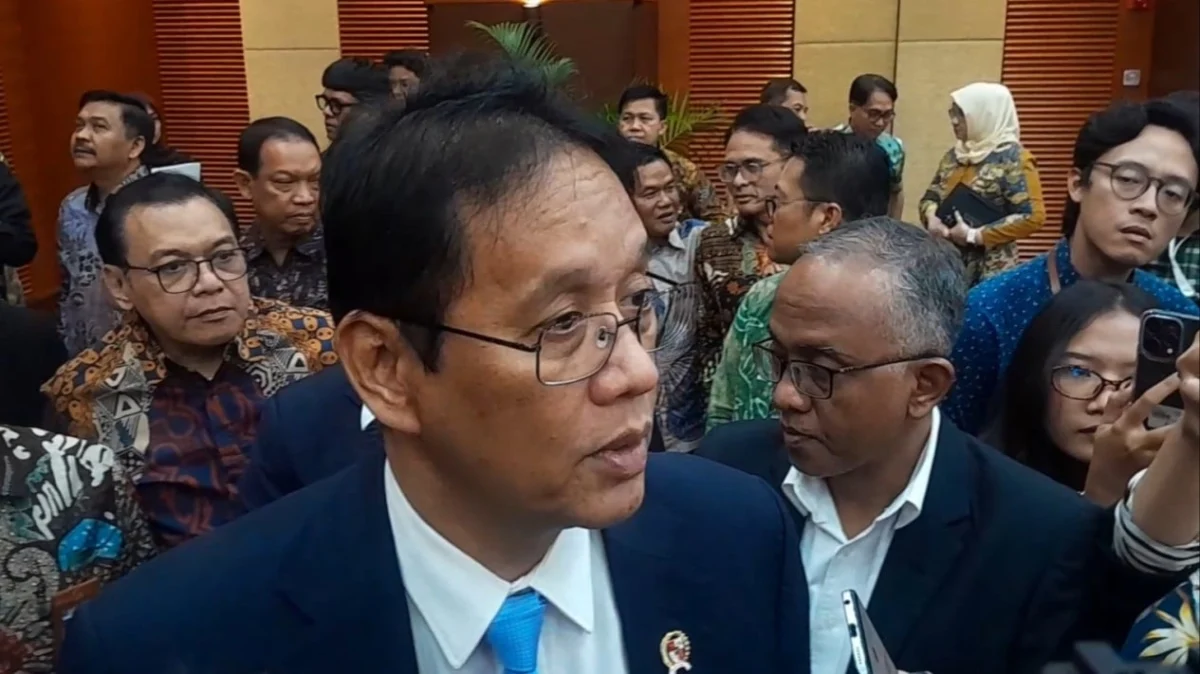
Jakarta, VIVA – The Indonesian government is accelerating its efforts to enhance the precision of subsidized fuel (BBM) and 3-kilogram (kg) Liquefied Petroleum Gas (LPG) distribution by leveraging advanced technological solutions. This critical initiative aims to ensure that these essential subsidies primarily benefit the low-income segments of society for whom they are intended, thereby mitigating fiscal leakage and promoting equitable resource allocation. On Friday, July 24, 2026, Minister of Finance Purbaya Yudhi Sadewa engaged in a significant discussion with Pertamina’s President Director, Simon Aloysius Mantiri, at the Ministry of Finance headquarters, focusing on the practical application of technology to achieve this long-standing objective.
During the meeting, Minister Purbaya emphasized the paramount importance of technology in refining the subsidy mechanism. "Primarily, I want to understand how the technology will be utilized to ensure that the subsidies are precisely targeted, not to restrict access universally, but to direct benefits to the rightful recipients," Purbaya stated, speaking to reporters at the Ministry of Finance building in Jakarta. He articulated the government’s pressing concern over the current system, where subsidized commodities like Pertalite fuel and 3 kg LPG are frequently consumed by middle to upper-income households, diverting resources from the vulnerable groups they are designed to support. This misallocation not only burdens the state budget but also undermines the social justice principles underpinning the subsidy programs.
The Minister highlighted the pervasive issue, noting, "Currently, everyone, even affluent individuals, can access Pertalite or 3 kg LPG. We need to explore the technology that can differentiate between eligible and ineligible consumers and how it can be implemented effectively." This statement underscores the core challenge: the current commodity-based subsidy system, which applies a blanket price reduction, fails to discriminate based on socio-economic status. The government’s vision involves transitioning to a more sophisticated, recipient-based model, where technology acts as the crucial enabler for verification and controlled distribution.
Responding to inquiries about a potential increase in subsidized fuel prices amidst rising global crude oil prices, Minister Purbaya firmly reiterated that such a discussion was not on the agenda. He assured the public that the government’s immediate focus remains on ensuring the accurate targeting of subsidies to maintain stable volumes and avoid price hikes for the time being. "No, there will be no price increase. Our priority is to ensure the subsidies are precisely targeted, allowing us to control the distributed volume. We will await Pertamina’s proposals on these and other related matters," Purbaya affirmed, signaling a commitment to fiscal prudence through efficiency rather than price adjustments.
The Persistent Challenge of Untargeted Subsidies
Indonesia’s fuel and LPG subsidy programs have historically been a cornerstone of its social welfare policy, designed to cushion the impact of market price fluctuations on household budgets, particularly for low-income populations. However, for decades, these programs have been plagued by the issue of leakage and misdirection. The commodity-based subsidy model, where the government pays the difference between the market price and a fixed retail price, has inadvertently created a system where anyone, regardless of income, can benefit. This has led to several critical problems:
- Fiscal Burden: The sheer volume of consumption across all income brackets results in a massive drain on the state budget. In recent years, Indonesia’s energy subsidy budget has frequently run into tens of billions of dollars annually, heavily influenced by global oil prices and the exchange rate. This substantial expenditure could otherwise be directed towards more productive sectors like infrastructure, education, or healthcare.
- Inequity: The primary beneficiaries of these untargeted subsidies are often not the poorest segments of society. Studies and observations consistently show that a significant portion of subsidized fuel and LPG is consumed by wealthier households and businesses that can afford market prices, thereby exacerbating income inequality rather than alleviating it.
- Environmental Impact: Artificially low fuel prices can disincentivize energy efficiency and encourage higher consumption, contributing to increased carbon emissions and environmental degradation.
- Smuggling and Black Market: The significant price disparity between subsidized and non-subsidized fuels creates incentives for illegal diversion and smuggling, further distorting the market and undermining the policy’s objectives.
Historical Context and Previous Attempts at Reform
The debate over fuel subsidies in Indonesia is not new. Successive governments have grappled with the challenge of reforming these programs, often facing significant public resistance due to the direct impact on daily living costs. Major subsidy reforms, including price adjustments, have historically been politically sensitive and have sometimes triggered social unrest.

Previous attempts to control subsidized fuel distribution have included:
- Volume Quotas: Imposing limits on the total volume of subsidized fuel distributed nationwide. While this caps the fiscal outlay, it doesn’t solve the targeting issue at the point of sale.
- Registration Systems: Early efforts involved vehicle registration or special cards, but these often faced implementation hurdles, data integrity issues, and widespread circumvention.
- Differentiated Pricing: Introducing different grades of fuel with varying price points, but even then, the cheapest subsidized option often remained accessible to all.
These experiences have underscored the need for a more robust and technologically advanced solution that can verify recipient eligibility in real-time and at scale. The current push for technology-driven solutions represents a renewed and more determined effort to overcome these historical challenges.
Government’s Proposed Solutions: Technology and Data Integration
The current strategy hinges on leveraging digital technology to create a closed-loop system for subsidy distribution. This involves several key components:
- Digital Registration and Verification: The government is moving towards a system where eligible beneficiaries (individuals and specific types of vehicles) must register and be verified against official poverty and social welfare databases. This will likely involve a digital platform accessible via smartphones or dedicated terminals at distribution points.
- QR Code/RFID Technology: At the point of sale (e.g., fuel stations, LPG agents), consumers could use unique identifiers such as QR codes, RFID cards, or even biometric data linked to their verified registration. This would allow for real-time validation of eligibility and tracking of consumption volumes.
- Data Analytics and Monitoring: The collected data on distribution and consumption patterns will be analyzed to monitor the effectiveness of the program, identify anomalies, and prevent fraud. This big data approach can provide valuable insights for policy adjustments and enforcement.
- Integration with National Databases: A crucial aspect is the seamless integration with national socio-economic databases. The Ministry of Finance and Pertamina are specifically looking at utilizing the data from the Pensasaran Percepatan Penghapusan Kemiskinan Ekstrem (P3KE), a database for accelerating the eradication of extreme poverty, and the Data Terpadu Kesejahteraan Sosial (DTKS), the Integrated Social Welfare Data. These databases contain detailed information on millions of households, making them indispensable for identifying eligible recipients.
The Role of Pertamina and Other Ministries
Pertamina, as the state-owned energy company responsible for the distribution of fuel and LPG across Indonesia’s vast archipelago, plays a pivotal role in this initiative. Its extensive network of fuel stations, LPG agents, and distribution infrastructure will be the frontline for implementing the new technological solutions. Simon Aloysius Mantiri, Pertamina’s President Director, is expected to lead the operationalization of these plans, which will involve significant investment in technology infrastructure, training for personnel, and public education campaigns. Pertamina’s expertise in logistics and supply chain management will be critical in ensuring that the new system does not disrupt the availability of these vital commodities.
Beyond the Ministry of Finance and Pertamina, the Ministry of Energy and Mineral Resources (ESDM) is also actively involved. The ESDM is currently revising Presidential Regulation (Perpres) Number 191 of 2014 concerning the Provision, Distribution, and Retail Price of Fuel. This revision is crucial for providing the legal framework for the new targeted distribution scheme. It is expected to define the criteria for eligibility, specify the types of vehicles and consumers entitled to subsidies, and outline the administrative and technological procedures for implementation. The revised regulation will likely include specific limitations on the purchase of Pertalite and subsidized Solar (Biosolar) based on vehicle type and engine capacity (cubic centimeter or CC), a measure previously announced as part of the government’s strategy.
Implications and Challenges of Implementation
While the move towards technology-driven targeted subsidies is widely supported for its potential benefits, its implementation is fraught with challenges:

- Data Accuracy and Completeness: The reliability of the P3KE and DTKS databases is paramount. Any inaccuracies or outdated information could lead to eligible individuals being excluded or ineligible individuals receiving benefits, undermining the entire program. Continuous data validation and updating mechanisms will be essential.
- Technological Infrastructure: Deploying and maintaining the necessary hardware (e.g., QR code scanners, card readers, reliable internet connectivity) at thousands of distribution points across urban, rural, and remote areas will be a monumental task. Robust IT systems, cybersecurity measures, and technical support will be critical.
- Public Acceptance and Education: Any significant change to a widely used subsidy system can face public skepticism or resistance. Extensive public awareness campaigns will be needed to explain the new system, its benefits, and how consumers can register and comply. Simplifying the registration process and providing accessible support channels will be vital.
- Enforcement and Monitoring: Preventing fraud, circumvention, and illegal activities within the new system will require stringent enforcement mechanisms and continuous monitoring. This includes deterring the use of false identities, multiple registrations, or the illegal resale of subsidized products.
- Logistical Complexity: Pertamina’s distribution network is vast. Integrating new technological requirements without causing supply disruptions, particularly in remote regions, will demand meticulous planning and execution.
- Privacy Concerns: Handling sensitive personal data for eligibility verification raises privacy concerns. The government must ensure robust data protection protocols and transparency in how data is collected, stored, and used.
Fiscal Impact and Economic Benefits
The successful implementation of targeted subsidies is expected to yield significant fiscal and economic benefits for Indonesia:
- Substantial Fiscal Savings: By ensuring that subsidies only reach the intended recipients, the government can drastically reduce the overall subsidy expenditure. These savings can then be reallocated to other priority development programs, such as social safety nets, infrastructure projects, or human capital development, which have a more direct and measurable impact on poverty reduction and economic growth.
- Improved Budget Allocation: The freed-up funds provide the government with greater fiscal space and flexibility, enabling it to respond more effectively to economic shocks and invest in long-term sustainable development.
- Enhanced Economic Efficiency: Removing market distortions caused by untargeted subsidies can lead to more efficient allocation of resources in the energy sector. It can encourage energy conservation and the adoption of more efficient technologies, moving Indonesia towards a greener economy.
- Fairer Distribution of Wealth: By redirecting benefits to the truly needy, the policy directly addresses income inequality and strengthens the social safety net, contributing to a more equitable society.
Broader Societal Impact and Public Reception
The transition to a targeted subsidy system will have a profound societal impact. For the millions of low-income families who genuinely rely on affordable fuel and LPG, the assurance of continued access will be a significant relief. For those who previously benefited from untargeted subsidies but are not truly eligible, the adjustment may require a shift in consumption patterns or an acceptance of market prices for their energy needs. This re-calibration is a necessary step towards a more just and sustainable economic model.
While the initial phase of implementation might present inconveniences, particularly for those adapting to new registration and verification processes, the long-term benefits of a more equitable and fiscally responsible subsidy system are expected to outweigh these challenges. Public acceptance will largely depend on the clarity of communication, the simplicity of the new system, and the government’s ability to demonstrate tangible improvements in the lives of the intended beneficiaries.
Future Outlook and Next Steps
The discussions between the Ministry of Finance and Pertamina on July 24, 2026, mark a crucial step in this ongoing reform process. The next phases will likely involve:
- Pilot Programs: Initiating pilot projects in selected regions to test the technological solutions and refine the implementation process before a nationwide rollout.
- Regulatory Finalization: Expediting the revision of Perpres 191/2014 to provide a robust legal foundation for the new system.
- Technology Procurement and Deployment: Investing in and deploying the necessary hardware and software across the Pertamina distribution network.
- Stakeholder Engagement: Continuous engagement with consumer groups, industry players, and local governments to ensure broad buy-in and address concerns.
- Public Information Campaigns: Launching comprehensive campaigns to educate the public about the new system and assist with the registration process.
The government’s determination, as articulated by Minister Purbaya, to harness technology for precise subsidy targeting reflects a strategic commitment to fiscal health, social equity, and sustainable development. As Indonesia navigates its economic future, the success of this initiative will be a critical indicator of its ability to implement complex reforms that deliver tangible benefits to its citizens and strengthen its national finances.