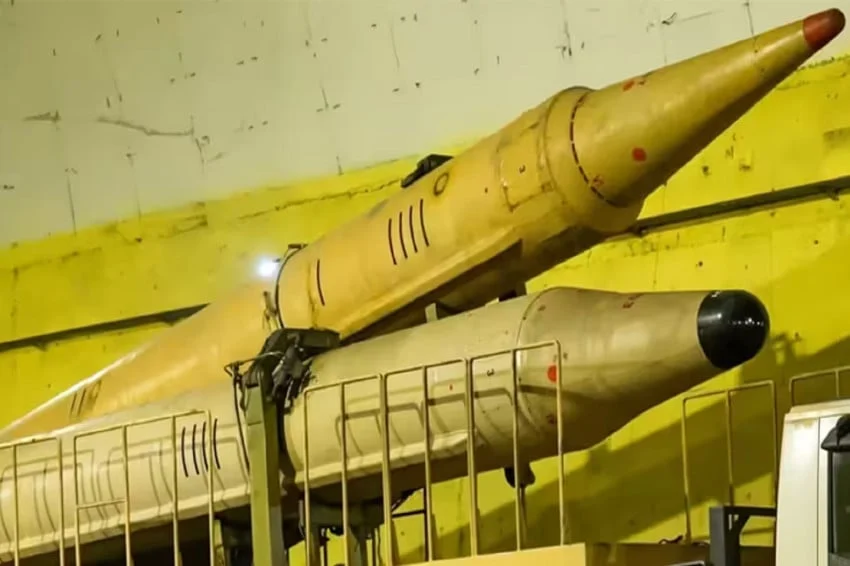
Tehran has officially unveiled a sophisticated new mobile missile launching system capable of deploying two liquid-fueled ballistic missiles simultaneously, a significant technological advancement that underscores the nation’s commitment to bolstering its domestic defense capabilities. The unveiling, broadcasted through state-run media, occurred as high-ranking officials from the Islamic Revolutionary Guard Corps (IRGC) provided a rare glimpse into the country’s secretive network of underground missile silos. This strategic display of military hardware serves as a pointed response to the heightened geopolitical friction between the Islamic Republic and the United States, particularly as both nations navigate a period of intense diplomatic and military posturing.
The introduction of this dual-launch capability represents an evolution in Iran’s missile doctrine, which has historically focused on the mass production of short- and medium-range ballistic systems. By enhancing the rate of fire from a single mobile platform, the IRGC seeks to improve its tactical flexibility, potentially overwhelming adversary air defense systems through synchronized saturation attacks.
A Visual Demonstration of Military Might
During the televised broadcast, Major General Ahmad Vahidi, a prominent figure in the Iranian military hierarchy, and Brigadier General Majid Mousavi, the commander of the IRGC Aerospace Force, were seen touring an extensive subterranean facility. The footage showcased a vast, reinforced tunnel network housing an array of ballistic missiles, specialized transport-erector-launchers (TELs), and technical support equipment.
The underground infrastructure, often referred to by Iranian officials as "missile cities," is designed to shield the nation’s strategic arsenal from aerial reconnaissance and preemptive strikes. The presence of these facilities reflects a defensive strategy rooted in the belief that Iran’s primary deterrent against foreign intervention is its ability to launch retaliatory strikes regardless of the initial damage sustained by conventional military bases.
During the site visit, Major General Vahidi issued a stern warning to international adversaries, stating that the damage Iran is capable of inflicting upon its enemies is merely the beginning. He projected that countries opposing Iran would face further setbacks, framing the technological upgrades as a direct answer to the external pressures and economic sanctions currently imposed on the regime.
Geopolitical Context and Chronology of Escalation
The unveiling of this hardware does not occur in a vacuum; it is the latest iteration of a long-standing cycle of provocations and counter-posturing between Tehran and Washington. To understand the gravity of the current situation, one must look at the recent timeline of regional volatility:
- Mid-2023 to Present: Tensions surged as the U.S. implemented more stringent maritime patrols in the Persian Gulf, aimed at preventing the seizure of commercial tankers by Iranian naval forces.
- Late 2023: Washington intensified its rhetoric regarding Iran’s regional influence and its alleged support for proxy groups across the Middle East.
- Early 2024: President-elect/Presidential warnings regarding potential military actions against Iranian infrastructure became a central topic of discourse, with the U.S. threatening to impose more rigorous blockades on Iranian oil exports.
- Current Development: The IRGC’s unveiling of the dual-launch system is a tactical signal to the U.S. that Iran remains capable of maintaining its "deterrence posture" despite threats of bombardment.
The rhetoric between Tehran and Washington has reached a fever pitch in recent months, with both sides utilizing military displays to signal resolve. The U.S. maintains that its presence in the region is essential for freedom of navigation and the stability of its regional partners, while Iran characterizes the American presence as an occupying force that threatens its national sovereignty.
Technical Analysis of the Dual-Launch System
Military analysts observing the footage note that the system represents a departure from single-rail launchers. The ability to launch two liquid-fueled missiles at once suggests significant improvements in the vehicle’s hydraulic and targeting software. Liquid-fueled missiles, while generally requiring more complex preparation time compared to solid-fueled variants, often offer greater payload capacity and range, making them essential for strategic deterrence.
The integration of these systems into mobile TELs ensures that the missiles are not tethered to fixed launch pads, which are easily targeted by satellite surveillance. By moving these systems through a subterranean network, the IRGC ensures that the launch platform can emerge, deploy, and fire within a narrow window of time, significantly complicating the "find-fix-target" cycle for any opposing air force.
International Reactions and Diplomatic Implications
While the Iranian government frames the development as a defensive triumph, the international community has expressed significant concern. Western officials, particularly those within the NATO alliance, have consistently argued that the expansion of Iran’s ballistic missile program is in direct violation of the spirit of international non-proliferation efforts.
The United States Department of Defense has traditionally responded to such unveilings by emphasizing its own military readiness in the region. Pentagon spokespeople have frequently reiterated that the U.S. remains committed to defending its assets and allies, suggesting that the development of new missile technologies by Iran only serves to justify further American defensive deployments.
Regional players, including Israel and various Gulf Cooperation Council (GCC) states, view these developments with profound apprehension. For these nations, the proximity of Iran’s missile arsenal—and its increasing sophistication—represents an existential threat. The potential for a dual-launch system to strike targets with greater density of fire reduces the reaction time for defensive interceptor systems, such as the Patriot or Iron Dome, to engage incoming threats.
Broader Impact on Regional Stability
The implications of this development extend far beyond the immediate technical capabilities of the hardware. By highlighting its underground capabilities, Iran is signaling to the international community that it is prepared for a long-term conflict. The "missile city" concept is designed to withstand a war of attrition, signaling to the U.S. that a simple aerial campaign would be insufficient to neutralize the Iranian deterrent.
Furthermore, the timing of this announcement suggests an attempt by Tehran to consolidate domestic support amidst internal economic struggles. By positioning the IRGC as the vanguard of national security and technological innovation, the leadership aims to project an image of strength and self-reliance.
However, this strategy carries inherent risks. Increased military posturing often triggers a "security dilemma," where each step taken by Iran to increase its security is perceived by the U.S. as an act of aggression, prompting a counter-response. This cycle of action and reaction limits the space for diplomatic engagement, making the prospect of a negotiated settlement regarding the nuclear program or regional security arrangements increasingly elusive.
Future Outlook: A Precarious Standoff
As the situation progresses, the international community will likely continue to monitor the deployment patterns of these new systems. Intelligence agencies will be tasked with identifying which specific missile variants are being utilized for the dual-launch configuration, as the range and payload capacity of these missiles will dictate the strategic reach of the platform.
The diplomatic path forward remains murky. With both sides entrenched in their respective positions—the U.S. demanding a cessation of missile proliferation and Iran demanding the removal of sanctions and the end of foreign interference—the risk of miscalculation remains high. A single tactical error or an unintended skirmish in the Persian Gulf could escalate into a wider regional conflict, regardless of the stated intentions of either side.
In conclusion, the unveiling of Iran’s dual-launch missile system is a significant development in the regional balance of power. It demonstrates a maturation of Iranian military engineering and serves as a visible marker of the deepening divide between Tehran and Washington. As the IRGC continues to refine its subterranean capabilities and mobile launch platforms, the strategic landscape of the Middle East becomes increasingly complex, necessitating a cautious and multifaceted approach from all global stakeholders to prevent a descent into open military confrontation. The coming months will likely see continued tests of this technology, serving as a constant reminder of the volatile state of current international relations.