JAKARTA — In a decisive move to address mounting congestion at critical railway bottlenecks, PT Kereta Commuter Indonesia (KAI Commuter) has officially announced plans to comprehensively revitalize two of its busiest transit hubs: Duri Station in West Jakarta and Cawang Station in East Jakarta. The large-scale infrastructure project is designed to fundamentally improve passenger comfort, streamline commuter flows, and accommodate the rapidly growing volume of daily rail users across the Greater Jakarta metropolitan area.
The announcement was made by KAI Commuter Vice President Corporate Secretary Karina Amanda during a media briefing in Central Jakarta. According to railway authorities, the steady, year-on-year surge in commuter rail adoption has pushed several key interchange stations beyond their optimal design capacities. By strategically reengineering pedestrian pathways, expanding platforms, and introducing new connectivity infrastructure, the rail operator aims to eliminate dangerous bottlenecks and modernize the overall transit experience.
Strategic Focus on Duri Station: Untangling a Major Transit Node
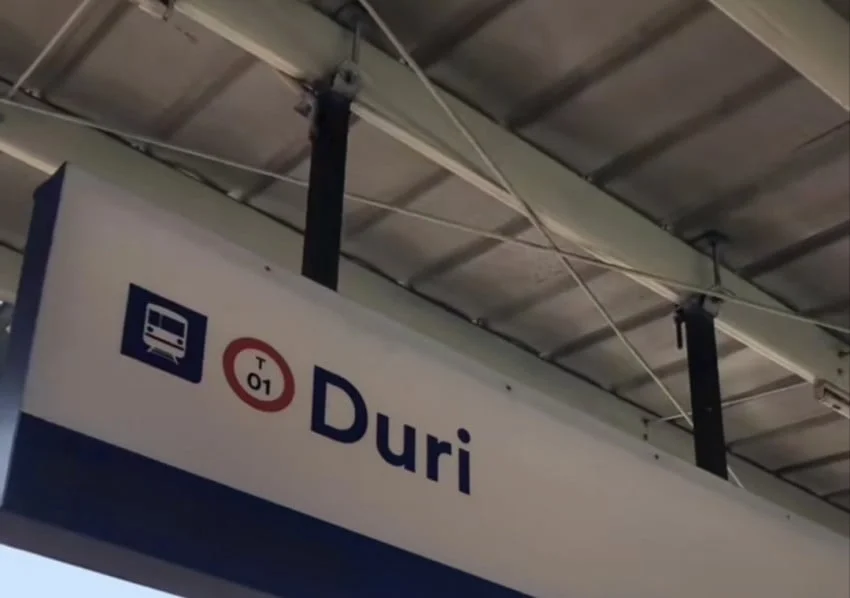
Duri Station has long served as one of the most vital multi-line interchange hubs in the KAI Commuter network. It acts as a critical convergence point for passengers transferring between urban commuter loops, regional lines, and airport rail services. However, this high level of interconnectivity has transformed the station into a daily focal point for severe passenger congestion, particularly during morning and evening rush hours.
To alleviate this strain, the initial phase of the revitalization project will focus on the construction of a dedicated pedestrian overpass, commonly known in Indonesia as a Jembatan Penyeberangan Orang (JPO). This new overpass is engineered to segregate passenger flows, separate boarding and alighting crowds, and drastically reduce travel times for transit commuters navigating the station grounds.
"For Stasiun Duri, the revitalization will be executed in distinct, carefully planned phases, and we will see the official groundbreaking take place in the very near future," Karina stated in Jakarta. She explained that the initial construction milestone will center on building an additional pedestrian overpass access point positioned near the outbound signaling area heading toward Tanah Abang.
This specific location was chosen because it represents one of the primary friction points where incoming trains from multiple directions discharge large numbers of passengers onto already crowded platforms. By creating an alternate vertical and horizontal dispersion route, KAI Commuter expects to prevent platform overcrowding and enhance safety compliance across the board.
High-Density Realities: Unpacking the Passenger Statistics
The urgency of the Duri Station upgrade is heavily underscored by official operational data released by KAI Commuter. Passenger volume metrics reveal a transit environment operating under near-constant high pressure.
According to statistical logs, the average daily volume of transit passengers passing through Duri Station alone reaches a staggering 87,066 individuals. A closer look at the temporal distribution of these numbers highlights the stark contrast between standard workdays and the weekend lull, while simultaneously demonstrating that weekend transit demand remains remarkably high.
On typical weekdays, when commuter rail systems absorb the brunt of the region’s workforce mobility, Duri Station processes an average of 93,412 transit passengers daily. Meanwhile, weekend metrics indicate that passenger traffic remains robust, with an average of 75,610 transit users navigating the station on Saturdays and Sundays. These figures illustrate that Duri is no longer merely a local community station, but a heavy-duty regional transit nexus requiring industrial-grade infrastructure.
Transportation analysts note that managing daily crowds exceeding 90,000 transit-only movements—excluding passengers who merely originate or terminate their journeys at the station—places immense wear and tear on platform facilities, ticketing gates, and vertical mobility assets such as stairs and elevators. Without structural intervention, safety risks multiply and dwell times for commuter trains increase, triggering ripple-effect delays across the entire Jabodetabek (Jakarta, Bogor, Depok, Tangerang, and Bekasi) rail network.
Broader Network Context: The Interplay with Airport Rail and Regional Integration
The revitalization of Duri and Cawang stations does not occur in a vacuum; it is part of a broader, synchronized master plan to overhaul Greater Jakarta’s integrated public transportation ecosystem. In late 2026, the rail network witnessed significant logistical milestones designed to redistribute passenger loads and expand regional mobility options.
Notably, the operational scope of the Soekarno-Hatta International Airport railway service was extended to reach all the way to Bogor Station, officially commencing operations on December 1, 2026. This expansion allows long-distance commuters from southern Greater Jakarta to travel directly to Indonesia’s primary international aviation gateway without requiring multiple complex transfers in central Jakarta.
However, the introduction of extended-route services—such as the Bogor-Airport line—inevitably increases pressure on intermediary transit stations like Duri, which serves as a crucial intersection point for airport-bound rail traffic. As more diverse train services share the tracks and platforms, optimizing pedestrian architecture becomes an absolute prerequisite for operational survival.
Simultaneously, Cawang Station—the second focal point of the current revitalization initiative—plays an equally indispensable role in the eastern corridor. Cawang functions as a major intermodal transfer point connecting KAI Commuter lines with the Jabodebek Light Rail Transit (LRT) system and various Transjakarta Bus Rapid Transit corridors. Upgrading Cawang Station is expected to significantly smooth out the "last-mile" and "first-mile" transitions for thousands of white-collar workers commuting daily between the eastern suburbs and Jakarta’s golden triangle business districts.
Chronology of Infrastructure Upgrades and Future Outlook
The current push for station modernization represents the culmination of years of incremental adjustments by the Indonesian Ministry of Transportation and KAI Commuter. Following the massive overhaul of major stations like Manggarai—which was redesigned to become the central grand interchange of the metropolitan rail network—attention naturally shifted toward secondary and tertiary bottlenecks such as Duri and Cawang.
Planning for the Duri and Cawang revamps began taking definitive shape in mid-2025, driven by post-pandemic ridership rebounds that quickly surpassed pre-2019 baseline figures. As urban centers densify and housing developments expand further along commuter rail corridors, daily ridership across the KAI Commuter system has steadily climbed back toward, and in many places exceeded, historical highs of over 1.2 million passengers per day network-wide.
The timeline for the Duri Station project outlines an aggressive yet phased execution strategy:
- Mid-2025 to Early 2026: Engineering feasibility studies, structural load assessments, and architectural blueprint finalization for the Duri pedestrian overpass and Cawang facility expansions.
- Late November 2026: Official announcements regarding project timelines, public stakeholder notifications, and finalization of contractor logistics, highlighted by Karina Amanda’s formal press briefing on November 18, 2026.
- Imminent Phase (Late 2026 to Early 2027): Groundbreaking ceremonies and commencement of structural construction for the additional JPO access point toward the Tanah Abang signal exit.
- Mid-2027 and Beyond: Phased rollout of interior platform reorganizations, installation of enhanced electronic gating systems, and structural integration with surrounding urban public spaces.
Economic and Social Implications of the Revitalization
The upcoming transformations at Duri and Cawang stations carry profound implications for the socio-economic landscape of Greater Jakarta. Reliable public mass transit is the economic backbone of the capital region, enabling millions of workers to participate productively in the formal economy without losing hours to severe road traffic congestion.
By alleviating structural bottlenecks at Duri Station, KAI Commuter is directly addressing commuter fatigue and safety vulnerabilities. Overcrowded platforms present legitimate safety hazards, including the risk of accidental slips or falls onto active tracks during peak hours. The expansion of pedestrian overpasses directly mitigates these risks by encouraging orderly movement and providing redundant pathways for crowd dispersion.
Furthermore, enhanced station capacity supports the broader national agenda of reducing carbon emissions, curbing private vehicle dependency, and fostering transit-oriented development (TOD). When public transportation systems prove reliable, comfortable, and efficient, citizens are far more likely to abandon private motorcycles and automobiles, thereby easing the severe air pollution and traffic gridlock that routinely challenge the Jakarta metropolitan area.
As KAI Commuter prepares to break ground on these vital infrastructural enhancements, daily commuters can look forward to a more resilient, safer, and structurally capable rail network. While short-term construction activities may introduce minor localized adjustments to passenger flows, the long-term dividend of a modernized Duri and Cawang station complex promises a smoother, faster, and vastly more dignified daily journey for the hundreds of thousands of citizens who rely on the rails every single day.