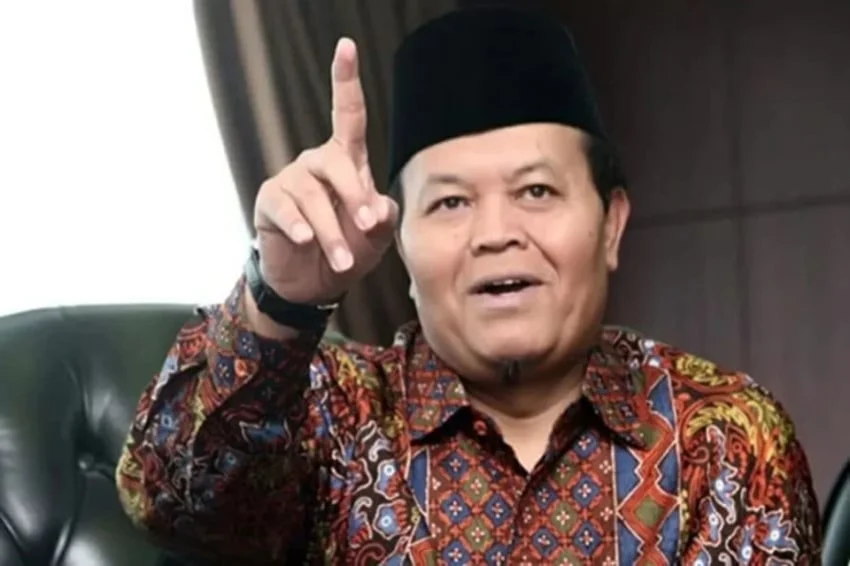
The political landscape of Indonesia experienced a notable shift
following the official announcement regarding the resignation of senior politician Hidayat Nur Wahid from his high-profile position as the Deputy Speaker of the People’s Consultative Assembly (MPR RI). The decision, which quickly drew public and political attention, was formally clarified by the leadership of the Prosperous Justice Party (PKS). According to party executives, the departure from the MPR leadership structure is not a demotion or a result of internal party friction, but rather a strategic repositioning. Hidayat Nur Wahid has been assigned by the party to shoulder a new, highly critical responsibility on the international stage: serving as the Chairperson of the Inter-Parliamentary Cooperation Agency (BKSAP) of the House of Representatives (DPR RI).
The announcement was detailed by PKS Secretary-General Muhammad Kholid during a press briefing. Kholid emphasized that the decision stems from a deliberate party strategy to optimize Hidayat Nur Wahid’s extensive diplomatic capabilities, political seniority, and international networks. As Indonesia continues to navigate a complex geopolitical environment, the legislative body seeks to project a stronger and more assertive voice in global parliamentary forums. By stepping down from his domestic leadership role in the MPR, Hidayat is poised to direct his full attention and political acumen toward parliamentary diplomacy, a sector that has increasingly become a vital instrument of modern Indonesian foreign policy.
Background Context and Strategic Realignment within PKS
To fully understand the weight of this political maneuver, one must examine the institutional architecture of Indonesia’s legislative branch and the specific role of the BKSAP. The Badan Kerja Sama Antar-Parlemen (BKSAP) functions as the diplomatic arm of the DPR RI. It is tasked with fostering relations between Indonesian lawmakers and their counterparts in parliaments around the globe, participating in international parliamentary organizations such as the Inter-Parliamentary Union (IPU) and the Parliamentary Union of the OIC Member States (PUIC), and advocating for Indonesian national interests on multilateral platforms.
Hidayat Nur Wahid, a veteran lawmaker, Islamic scholar, and former Speaker of the People’s Consultative Assembly (2004–2009), brings decades of political experience to his new portfolio. His long-standing career in Indonesian politics has established him as a prominent figure capable of bridging domestic legislative priorities with international advocacy. PKS leadership calculated that placing a figure of Hidayat’s stature at the helm of BKSAP would instantly elevate the profile and negotiating power of Indonesia’s parliamentary diplomacy.
In his official statement, Kholid elaborated on the rationale behind the assignment. He noted that Hidayat’s profound understanding of international relations, combined with his solid reputation in diplomatic and religious circles, makes him uniquely qualified for the post. The party views parliamentary diplomacy not merely as a ceremonial engagement, but as an indispensable tool for building cross-border trust, shaping global policy narratives, and advancing humanitarian causes that resonate deeply with the Indonesian public.
Focus on Global Solidarity and the Palestinian Cause
A core pillar of Hidayat Nur Wahid’s new mandate as the head of BKSAP involves intensifying Indonesia’s engagement with Islamic nations while concurrently expanding diplomatic outreach to global partners committed to democracy, human rights, and international justice. Indonesia has historically maintained a steadfast, constitutionally mandated foreign policy stance centered on supporting global peace and actively opposing colonization, with the Palestinian struggle occupying a central place in the national conscience.
Throughout his legislative career, Hidayat has been an outspoken advocate for Palestinian statehood and humanitarian rights. His new position grants him an elevated platform to rally international parliamentary support, coordinate legislative pressure, and foster solidarity across different regional blocs. PKS leadership has explicitly highlighted this objective, noting that the defense of Palestinian rights is viewed in Indonesia as an undeniable humanitarian imperative that transcends partisan politics.
By steering BKSAP, Hidayat is expected to leverage parliamentary channels to hold international forums accountable, lobby against violations of international law, and encourage fellow global lawmakers to adopt resolutions that favor peace and justice in the Middle East. Furthermore, this focus extends beyond the Islamic world; the strategy entails building robust coalitions with lawmakers in Europe, Latin America, Africa, and Asia who share similar commitments to multilateralism and human dignity.
Chronology of Events and Legislative Transition
The transition process involving Hidayat Nur Wahid’s departure from the MPR and his subsequent assumption of leadership at BKSAP follows a structured internal review by PKS. The party’s central executive board deliberated on legislative assignments in alignment with broader national developments and the evolving needs of Indonesia’s diplomatic engagements.
- Initial Deliberations: PKS leadership evaluated the strategic placement of its senior cadres within the newly constituted parliamentary committees and leadership councils following the legislative term transitions.
- Strategic Assessment: The party identified a pressing need to reinforce Indonesia’s parliamentary diplomacy, recognizing that traditional state-to-state diplomacy executed by the executive branch can be significantly amplified through robust parliamentary networks.
- Decision and Acceptance: Hidayat Nur Wahid accepted the party’s directive to transition from his executive-legislative role in the MPR to the specialized international domain of BKSAP.
- Formal Announcement: PKS Secretary-General Muhammad Kholid officially communicated the reasons for the transition to the public and media, outlining the strategic vision behind the move.
- Legislative Formalities: The administrative processes for his resignation from the MPR leadership and his inauguration as the BKSAP Chair are executed in accordance with the internal regulations and procedural rules of the DPR RI.
Implications for Indonesian Parliamentary Diplomacy
The appointment of a senior political figure like Hidayat Nur Wahid to lead BKSAP signals a potential evolution in how Indonesia conducts soft-power diplomacy. Parliamentary diplomacy—often termed "second-track diplomacy"—operates with a degree of flexibility that executive branches, bound by rigid diplomatic protocols, may not always possess. Lawmakers can engage in frank dialogues, build people-to-people connections, and address sensitive humanitarian issues without triggering immediate diplomatic crises.
Experts in international relations note that elevating the leadership caliber of BKSAP can yield several tangible benefits for Indonesia:
- Enhanced Multilateral Influence: A high-profile chairperson can secure prominent speaking slots, leadership roles in global parliamentary unions, and greater sway in drafting international resolutions.
- Strengthened Bilateral Ties: Direct engagements between Indonesian MPs and foreign legislators can pave the way for economic, educational, and cultural agreements that complement executive-level state visits.
- Responsive Crisis Advocacy: Parliamentary bodies can react swiftly to global crises, issuing joint statements and mobilizing humanitarian solidarity much faster than lengthy executive review processes allow.
Domestic Political Landscape and PKS’s Positioning
Domestically, Hidayat’s move allows PKS to showcase its commitment to international issues while simultaneously grooming or reallocating other cadres within the MPR structure. As an opposition or critical voice within the broader national political spectrum, PKS often utilizes international issues—particularly Palestine and global Islamic solidarity—to connect with its grassroots base and project moral leadership.
By placing one of its most articulate and experienced figures at the forefront of international parliamentary affairs, PKS ensures that its ideological and humanitarian priorities remain prominent on the national agenda. This strategic placement also balances internal party dynamics, ensuring that senior members are deployed where their specific skill sets generate maximum institutional impact.
Reactions and Broader Public Reception
The public reaction to Hidayat Nur Wahid’s transition has been largely receptive, particularly among circles that closely monitor Indonesian foreign policy and Middle Eastern solidarity movements. Civil society organizations focusing on human rights and Palestinian advocacy have historically viewed Hidayat as a reliable ally in the legislature. His transition to BKSAP is seen by these groups as a reinforcement of Indonesia’s traditional foreign policy principles, ensuring that the legislative branch maintains a proactive stance on global injustices.
Political analysts have observed that while stepping down from the MPR Deputy Speaker position removes Hidayat from the core administrative leadership of the highest consultative assembly, the trade-off is substantial. The BKSAP chairmanship offers a specialized arena where his extensive international network can be fully utilized, transforming what might traditionally be viewed as a lateral or downward administrative shift into a high-impact diplomatic mission.
Future Outlook for BKSAP Under New Leadership
As Hidayat Nur Wahid assumes his responsibilities at the head of BKSAP, the agency faces a packed agenda of international conferences, bilateral delegations, and multilateral summits. The effectiveness of his tenure will likely be measured by his ability to translate parliamentary resolutions into actionable international pressure, particularly concerning protracted global conflicts and human rights crises.
Furthermore, the agency is expected to enhance its engagement with emerging geopolitical players and traditional allies alike, ensuring that Indonesia’s foreign policy remains independent, active, and deeply rooted in its constitutional mandate to maintain world peace. With a seasoned diplomat and legislator at the helm, the Indonesian parliament aims to project a unified, principled stance on the global stage, reinforcing the nation’s position as a respected voice in international affairs.