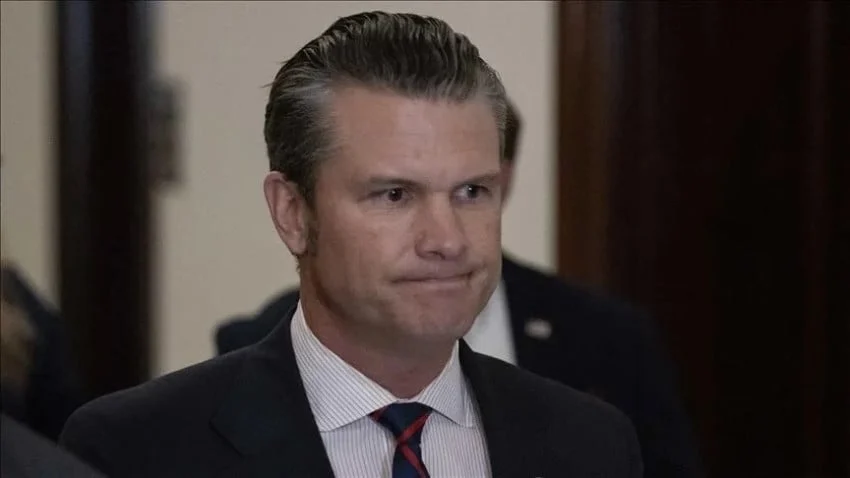
WASHINGTON — The United States House of Representatives has officially commenced a high-stakes procedural vote to determine the future of impeachment proceedings against Defense Secretary Pete Hegseth. This legislative showdown unfolds in the wake of the midterm elections, where American voters registered profound dissatisfaction and frustration regarding the protracted and costly military engagement in Iran—a conflict heavily championed and steered by the Pentagon chief. The ongoing congressional friction marks a pivotal constitutional test for the ruling administration, placing lawmakers under intense public scrutiny as they navigate the geopolitical and domestic fallout of an increasingly unpopular foreign war.
The procedural vote on Tuesday is designed to establish whether a formal impeachment resolution, spearheaded by Republican Representative Thomas Massie, will be sent back to committee—effectively shelving the measure—or advanced to a definitive floor vote scheduled for Wednesday. The outcome of this parliamentary maneuver hangs in a delicate balance, serving as a political barometer for Capitol Hill’s willingness to challenge the executive branch’s military strategy.
Legislative Mechanics and Party Lines
As the procedural vote proceeds, Democratic members of the House are widely anticipated to unite in favor of advancing the resolution. This collective stance presents a profound dilemma for Republican lawmakers, many of whom are grappling with the political fallout of a severe electoral rebuke during the midterms. Legislators from the GOP must now decide whether to align with the Trump administration’s defense posture or distance themselves from a military entanglement that has rapidly lost public support.
Adding significant momentum to the opposition, House Minority Leader Hakeem Jeffries publicly declared his robust support for the resolution, signaling that Democratic leadership views the impeachment initiative as a vital check on executive overreach. The willingness of cross-party elements to engage with the resolution highlights the gravity of the constitutional questions surrounding war powers and military accountability.
The impeachment resolution introduced by Representative Massie is comprehensive, outlining eight distinct articles of impeachment against the combative Pentagon leader. The charges center on two primary allegations: first, that the Defense Secretary initiated an illegal military campaign against Iran without explicit authorization or a formal declaration of war from Congress; and second, that he oversaw a controversial series of kinetic strikes targeting maritime vessels allegedly linked to narcotics trafficking. According to numerous legal scholars and international law experts, these targeted maritime strikes constitute extrajudicial killings, violating domestic and international legal frameworks governing military engagement.
Background Context and Chronological Development
The trajectory leading to the current impeachment proceedings is rooted in a series of escalating military and political decisions that began shortly after Pete Hegseth assumed leadership at the Department of Defense. Known for his hawkish stances and aggressive defense rhetoric, Hegseth quickly pivoted American military strategy toward a more confrontational posture in the Middle East, culminating in the controversial escalation with Iran.
The chronology of events reveals a steady erosion of legislative oversight:
- Early Administration Phase: Pete Hegseth is confirmed as Secretary of Defense, quickly signaling a departure from traditional defense restraint and advocating for proactive deterrence measures in the Persian Gulf.
- The Escalation Phase: Tensions between Washington and Tehran reach a boiling point following a series of covert incidents and retaliatory cyber operations, leading to the deployment of additional naval carrier strike groups to the region.
- The Unilateral Conflict: The Department of Defense authorizes offensive military strikes against Iranian infrastructure and assets without seeking a formal Authorization for Use of Military Force (AUMF) from Congress, citing inherent executive authorities under Article II of the Constitution.
- Maritime Interdiction Campaign: Alongside the broader regional conflict, the Pentagon initiates a high-seas interdiction campaign targeting vessels suspected of drug smuggling, resulting in deadly kinetic strikes that bypass traditional judicial and maritime due process.
- Midterm Elections and Public Backlash: American voters go to the polls for the midterm elections, delivering a sharp rebuke to administration policies, with exit polls and public opinion data highlighting the Iran conflict as a primary voter concern.
- Congressional Intervention: Representative Thomas Massie files a formal resolution containing eight articles of impeachment against Secretary Hegseth, setting the stage for the current procedural votes in the House.
Legal Analysis and Constitutional Implications
The impeachment effort against Secretary Hegseth revives long-standing debates regarding the separation of powers and the War Powers Resolution of 1973. Legal scholars have raised profound concerns over the legality of the Iran campaign, noting that the framers of the Constitution deliberately vested the power to declare war solely in the legislative branch to prevent unilateral executive adventurism.
By launching military operations without congressional authorization, the administration has placed executive authority on a collision course with Article I of the Constitution. Furthermore, the allegations regarding extrajudicial killings during maritime counter-narcotics operations introduce complex international humanitarian law questions. Critics argue that utilizing military force for law enforcement duties outside of an active, declared armed conflict or recognized armed hostility framework undermines the rule of law and exposes military personnel to potential legal liabilities.
If the House votes to advance the resolution and ultimately approves the articles of impeachment, the matter would proceed to the Senate for a trial. While conviction and removal in a polarized Senate remain an uphill battle, the mere initiation of a trial would represent a historic rebuke of a sitting cabinet official and establish a critical precedent for future legislative oversight of executive military actions.
Official Responses and Broader Political Fallout
The unfolding crisis has triggered a flurry of statements from key political actors across Washington. Supporters of the Defense Secretary within the administration have defended his actions as necessary and decisive, arguing that immediate military deterrence was required to protect American personnel and strategic interests from imminent threats emanating from Tehran. Administration officials maintain that the Secretary acted well within the bounds of constitutional authority granted to the Commander-in-Chief and subordinate executive officers.
Conversely, critics and independent watchdogs view the situation as a dangerous erosion of democratic norms. Civil liberties organizations have echoed the legal concerns regarding the maritime strikes, calling for immediate transparency and accountability from the Pentagon. The divide underscores a deepening schism within American politics regarding the appropriate scope of executive power in foreign policy and national security matters.
As the House moves forward with its procedural decisions, the broader implications for US foreign policy remain profound. Regardless of the final outcome of the impeachment vote, the challenge to Secretary Hegseth serves as a stark reminder of the volatile intersection between domestic electoral politics and foreign military interventions, ensuring that questions of war, peace, and constitutional accountability will remain at the forefront of the American political landscape for the foreseeable future.