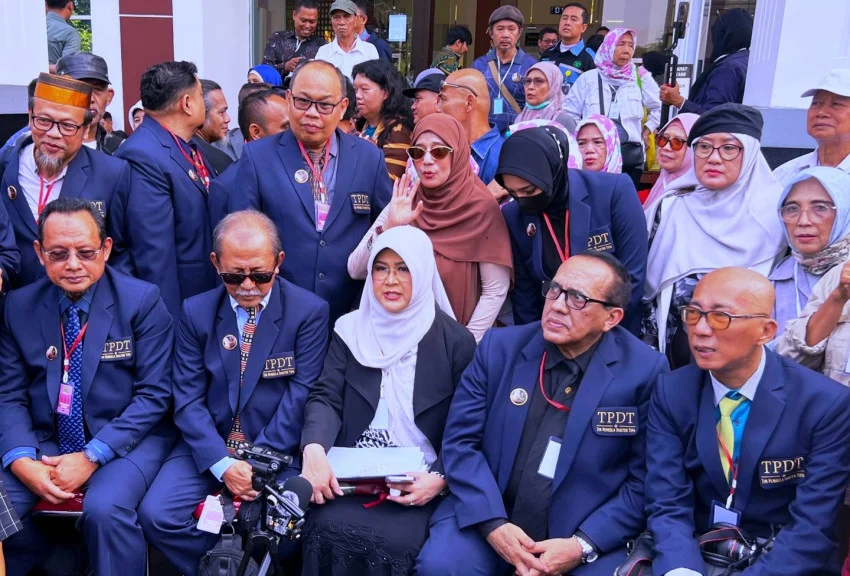
The East Jakarta District Court has issued a landmark interlocutory judgment regarding the criminal case involving Dr. Tifauzia Tyassuma, popularly known as Dr. Tifa, effectively halting the current legal proceedings brought against her by the state. On July 23, 2026, the panel of judges accepted the "perlawanan" or legal objection filed by the defendant and her legal team, the Tim Pembela Dokter Tifa (TPDT). This decision signifies a critical procedural victory for the clinical epidemiologist and social media personality, who has been at the center of a national controversy involving her public questioning of the authenticity of President Joko Widodo’s educational credentials. The ruling emphasizes that the prosecution’s indictment failed to meet the rigorous standards required by the Indonesian Criminal Procedure Code (KUHAP), marking a significant moment for the intersection of legal procedure, freedom of expression, and government accountability.
The court’s decision does not yet touch upon the substance of the allegations—whether Dr. Tifa’s claims were factual or defamatory—but rather focuses on the "legal health" of the document used to bring her to trial. In the Indonesian legal system, an interlocutory judgment (putusan sela) serves as a gatekeeping mechanism. It ensures that the state’s power to prosecute is exercised only when the formal requirements of the law are strictly followed. By accepting the defense’s objection, the court has ruled that the prosecutor’s indictment was "null and void" or at the very least "unacceptable" in its current form, thereby releasing Dr. Tifa from the immediate status of a defendant in this specific case file.
The Legal Framework: Indictment as a Constitutional Safeguard
To understand the weight of this ruling, one must examine the role of the indictment (surat dakwaan) within the framework of a constitutional state (negara hukum). As articulated by Ramdansyah, a prominent advocate from the TPDT and an alumnus of Criminology at the University of Indonesia, justice is not merely the final tap of a judge’s gavel. Instead, justice begins the moment the state decides to bring a citizen before the law. The indictment is the foundation of the entire criminal process. If the foundation is flawed, the entire legal structure built upon it risks collapse, threatening not only the individual’s rights but also the legitimacy of the state’s judicial authority.
Under Article 143 of the KUHAP, a prosecutor is mandated to draft an indictment that is "cermat, jelas, dan lengkap" (careful, clear, and complete). This is not a mere administrative formality. These requirements are designed to ensure that a defendant knows exactly what they are being accused of, including the time, place, and specific actions that constitute the alleged crime. Without such clarity, a defendant cannot mount an effective defense, violating the principle of fair trial. The East Jakarta District Court’s ruling suggests that the prosecution failed to delineate the elements of the alleged offense with sufficient precision, rendering the trial unable to proceed to the examination of witnesses and evidence.
Chronology of the Controversy
The case against Dr. Tifa is rooted in a long-standing and highly polarized public debate regarding the undergraduate degree of President Joko Widodo from Gadjah Mada University (UGM). The chronology of the events leading to the July 2026 ruling highlights the tension between digital activism and criminal law:
- Initial Allegations (2022-2023): Dr. Tifa utilized her social media platforms to post comparative analyses of photographs and documents, questioning the authenticity of the President’s diploma. These posts went viral, sparking a nationwide conversation under the hashtag #IjazahPalsu (Fake Diploma).
- Institutional Rebuttals: Gadjah Mada University officially clarified the matter, asserting that President Joko Widodo was indeed a graduate of the Faculty of Forestry. Despite this, Dr. Tifa and several other activists continued to demand more transparent physical evidence and public verification.
- Police Reports and Investigation: Following the social media firestorm, several parties filed reports with the Indonesian National Police (Polri), alleging that Dr. Tifa was spreading "fake news" or "hoaxes" capable of inciting public unrest, a violation of the Electronic Information and Transactions (ITE) Law.
- Naming as a Suspect: After a series of investigations, Dr. Tifa was named a suspect. The case file was eventually transferred to the prosecutor’s office (P-21), leading to her appearance in the East Jakarta District Court.
- The Defense Objection: During the early stages of the trial, the TPDT filed an eksepsi (objection), arguing that the indictment was vague (obscuur libel) and that the matter was a scientific/academic dispute rather than a criminal one.
- The Interlocutory Judgment (July 23, 2026): The judges ruled in favor of the defense, declaring the indictment invalid.
The Concept of "Choice of Forum"
A pivotal aspect of the defense’s argument, and one reflected in the broader legal analysis of the case, is the concept of "choice of forum." The TPDT argued that the authenticity of a document—especially one of such high public interest as a President’s diploma—is an objective fact that should be settled in a scientific or administrative forum rather than a criminal one.
In a scientific forum, the methodology of analysis is open to peer review, objects are examined transparently, and debates are resolved through evidence. Criminal law, by contrast, is the ultimum remedium (the last resort). Using the heavy hand of the state to silence an analyst or a critic before the underlying object of the dispute (the diploma) has been transparently verified creates a chilling effect on public discourse. The court’s decision to accept the objection provides a "cooling-off" period, suggesting that the state must be more precise if it wishes to characterize academic skepticism as a criminal act.
Supporting Data and Legal Precedents
This ruling aligns with several historical precedents in Indonesian law where indictments were dismissed for lack of clarity. According to data from judicial monitoring groups, a significant percentage of "hoax" cases under the ITE Law face challenges in the indictment stage because prosecutors often struggle to define the "material harm" caused by a social media post.
In Dr. Tifa’s case, the defense highlighted that the prosecution failed to specify which parts of her analysis were definitively "false" and how those statements directly led to "public chaos" as defined by the law. By failing to provide a clear causal link between the social media posts and a specific breach of public order, the indictment was deemed structurally unsound.
Official Responses and Public Reaction
The reaction to the court’s decision has been split along ideological lines. Supporters of Dr. Tifa view the ruling as a victory for the "truth" and a validation of her right to question authority. They argue that if the diploma were authentic beyond a shadow of a doubt, the state would have no issue showing the original document in a transparent setting rather than pursuing a critic in court.
Conversely, legal representatives for the state and supporters of the administration emphasize that the ruling is purely procedural. The Prosecutor’s Office has indicated that they have the right to revise the indictment and re-file the case. "A putusan sela does not mean the defendant is innocent; it means the paperwork needs to be fixed," noted a spokesperson for the prosecution. This sentiment was echoed by some legal analysts who warned that the celebration by Dr. Tifa’s camp might be premature, as the state rarely abandons high-profile cases after a single procedural setback.
Broader Implications for Freedom of Speech
The implications of this case extend far beyond the personal fate of Dr. Tifa. It touches upon the evolving boundaries of the ITE Law and the state’s role in policing "truth" in the digital age. If the court had allowed a flawed indictment to proceed, it would have set a precedent that the state can bring citizens to trial on vague charges, forcing them to undergo the "punishment of the process"—the financial, social, and psychological toll of a criminal trial—regardless of the eventual verdict.
Furthermore, the case highlights the necessity for transparency in governance. As the defense noted, the controversy could have been mitigated much earlier if the disputed object (the diploma) had been subjected to a public, independent verification process. By choosing the path of criminal prosecution over radical transparency, the state inadvertently fueled the very skepticism it sought to extinguish.
Conclusion and Future Outlook
As of late July 2026, Dr. Tifauzia Tyassuma remains a free woman, though the shadow of legal action has not entirely dissipated. The prosecution now faces a choice: they can appeal the interlocutory judgment to a higher court, or they can draft a new, more precise indictment and start the process over.
For the legal community, this case serves as a reminder that the "constitutional fence" of the indictment must be maintained. For the public, it is a lesson in the complexities of the law, where the "how" of a trial is often just as important as the "what." The East Jakarta District Court has sent a clear message: the state’s power to prosecute is not absolute; it is bounded by the requirement of professional, clear, and meticulous legal work. Until the state can meet that burden, the "scientific debate" regarding the President’s credentials will continue to reside in the court of public opinion rather than a court of law.