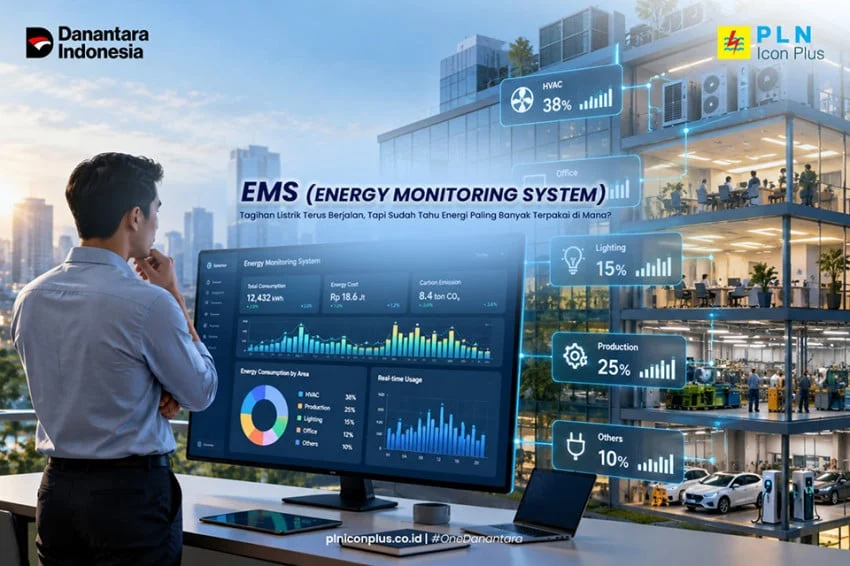
JAKARTA — Modern enterprises operating across multiple locations face an increasingly complex operational landscape, particularly when it comes to monitoring and managing energy consumption. As businesses expand, scaling up physical infrastructure such as branch offices, regional warehouses, retail outlets, and commercial buildings creates a massive influx of decentralized data. Historically, facility managers relied on fragmented, manual approaches—compiling monthly utility bills, tracking disparate meter readings across provinces, and reacting to spikes in energy consumption only after the financial damage had already been done. Today, this reactive framework is rapidly becoming obsolete.
Driven by stricter regulatory frameworks, corporate sustainability commitments, and mounting financial pressures to optimize overhead costs, Indonesian corporations are fundamentally rethinking how they handle energy management. At the forefront of this digital transformation is the Energy Management System (EMS), a sophisticated technological tool designed to consolidate, analyze, and optimize enterprise-wide energy data within a single, integrated platform. Developed by digital solutions providers such as PLN Icon Plus, modern EMS platforms are transforming how multi-site corporations approach resource efficiency, regulatory compliance, and Environmental, Social, and Governance (ESG) reporting.
The Regulatory Push: Aligning with National Conservation Goals
The rising adoption of centralized energy management is not merely a corporate preference; it is increasingly a regulatory necessity. The Indonesian government has systematically tightened energy efficiency mandates to curb national carbon emissions and promote sustainable resource utilization. A cornerstone of this regulatory push is the issuance of Ministry of Energy and Mineral Resources (ESDM) Regulation Number 8 of 2025 concerning Energy Management.
This regulation serves as an operational enforcement mechanism for Government Regulation (PP) Number 33 of 2023 concerning Energy Conservation. Under these legal frameworks, large-scale energy-consuming industries and commercial buildings are legally obligated to implement structured energy management systems, conduct regular energy audits, appoint certified energy managers, and report their consumption metrics to the government.
For businesses, non-compliance carries not only the risk of administrative sanctions but also missed opportunities to capitalize on energy-saving incentives. Consequently, corporate boards can no longer view utility expenditures as fixed operational costs. Instead, energy management has elevated to a board-level priority requiring real-time tracking, granular data analytics, and auditable sustainability metrics.
The Limitations of Legacy Energy Tracking
Before the deployment of integrated platforms like the EMS, managing energy across a sprawling corporate network was a logistical nightmare. Consider a retail chain with hundreds of storefronts scattered across different islands, or a financial institution operating hundreds of branches nationwide. In a traditional setup, each location receives independent physical or digital utility bills. Facility teams must manually collect, verify, and process these invoices, leading to delayed payments, administrative errors, and zero visibility into hourly or daily consumption patterns.
Furthermore, traditional billing data only reveals the aggregate amount of electricity consumed and the total cost incurred during a billing cycle. It provides no insight into operational inefficiencies. For instance, a legacy system cannot isolate whether a sudden spike in electricity bills was caused by malfunctioning air conditioning units running overnight, outdated lighting fixtures, or inefficient industrial machinery.
Without actionable data on where energy is being consumed, how usage patterns fluctuate, and which specific assets are underperforming, enterprises remain blind to potential savings. Modern energy management requires moving past retrospective billing analysis toward proactive, real-time operational intelligence.
How EMS Integration Transforms Enterprise Operations
The introduction of advanced Energy Management Systems bridges the gap between raw utility data and strategic corporate decision-making. By leveraging Internet of Things (IoT) sensors, smart meters, and cloud-based architecture, platforms developed by industry players like PLN Icon Plus aggregate data from hundreds—or even thousands—of distinct operational sites into a unified dashboard.

Through a single, integrated interface, corporate energy managers can monitor real-time electricity consumption, analyze historical usage trends, and track smart meter telemetry data across all geographical locations simultaneously. This centralization eliminates data silos between regional branches and corporate headquarters, ensuring that sustainability officers and finance teams operate from a single source of truth.
Beyond mere observation, advanced EMS solutions streamline administrative workflows. For multi-site enterprises, the platform allows for the centralized management and collective processing of utility bill payments. This capability drastically reduces administrative overhead, eliminates late-payment penalties resulting from lost or delayed invoices, and provides finance departments with predictable cash-flow forecasting for utility expenditures.
Supporting Corporate Sustainability and ESG Accountability
In contemporary global markets, financial performance is inextricably linked to non-financial metrics, particularly ESG disclosures. Institutional investors, consumers, and regulatory bodies increasingly demand transparency regarding a company’s carbon footprint and environmental impact. For businesses seeking to strengthen their sustainability agendas, implementing an EMS is no longer optional—it is a critical enabler.
An enterprise-grade EMS supports the rigorous tracking, calculation, and reporting of carbon emissions associated with energy consumption (Scope 1 and Scope 2 emissions). By accurately converting kilowatt-hours (kWh) consumed across all business units into equivalent carbon dioxide ($CO_2$) metrics, the platform automates the generation of audit-ready ESG reports.
This transparency is vital for companies navigating global supply chain requirements, green financing initiatives, and carbon-reduction targets. With verified data readily available, corporations can substantiate their sustainability claims, mitigating the risks of greenwashing accusations while bolstering their brand reputation among eco-conscious stakeholders.
Economic and Operational Implications for Indonesian Businesses
The widespread adoption of integrated energy management systems carries profound economic implications for the Indonesian business sector. On a microeconomic level, direct energy savings resulting from EMS optimization can translate into substantial operating margin improvements. By identifying energy waste, scheduling equipment shutdowns during non-working hours, and optimizing peak-load usage, businesses routinely shave significant percentages off their monthly utility expenditures.
On a macroeconomic scale, enterprise adoption of EMS aligns directly with Indonesia’s Nationally Determined Contributions (NDC) under the Paris Agreement. As the nation strives to transition toward a lower-carbon economy, industrial and commercial energy efficiency serves as a low-hanging fruit. Reducing unnecessary energy demand at the corporate level eases the burden on the national electricity grid, reduces fossil fuel consumption, and supports the broader integration of renewable energy sources.
Industry observers note that as digital infrastructure matures across Indonesia, platforms that combine energy monitoring with financial settlement capabilities will become standard operating procedure for enterprises. The convergence of smart metering, cloud computing, and stringent government regulations creates an environment where data-driven energy management is both a compliance shield and a competitive advantage.
Conclusion: The Future of Smart Energy Governance
As Indonesian enterprises navigate an increasingly competitive and regulated economic landscape, the transition toward centralized energy governance has reached a tipping point. The complexities of managing multi-site operations demand technological solutions that transcend manual spreadsheets and retrospective billing reviews.
Through integrated platforms like the Energy Management System pioneered by entities such as PLN Icon Plus, businesses are empowered to turn energy data from a passive administrative burden into an active strategic asset. By ensuring compliance with Ministry of Energy and Mineral Resources regulations, streamlining administrative processes, and providing robust data for ESG reporting, EMS stands as a foundational pillar for sustainable corporate growth in Indonesia. Ultimately, organizations that embrace this technological shift will not only safeguard their bottom lines through optimized resource allocation but also secure their positions as responsible, forward-thinking leaders in the modern green economy.