JAKARTA — The Executive Director of Lingkar Madani, Ray Rangkuti, has formally called upon the House of Representatives (Dewan Perwakilan Rakyat – DPR) to exercise its constitutional inquiry rights, known as hak angket, to thoroughly examine the ongoing controversies surrounding the educational credentials and supporting documentation of Vice President Gibran Rakabuming Raka. Furthermore, Rangkuti emphasized that this parliamentary investigative tool is vital for unearthing the origins of an alleged smuggled article within election regulations, which critics claim served as a decisive regulatory pathway enabling Gibran’s candidacy in the national leadership race.
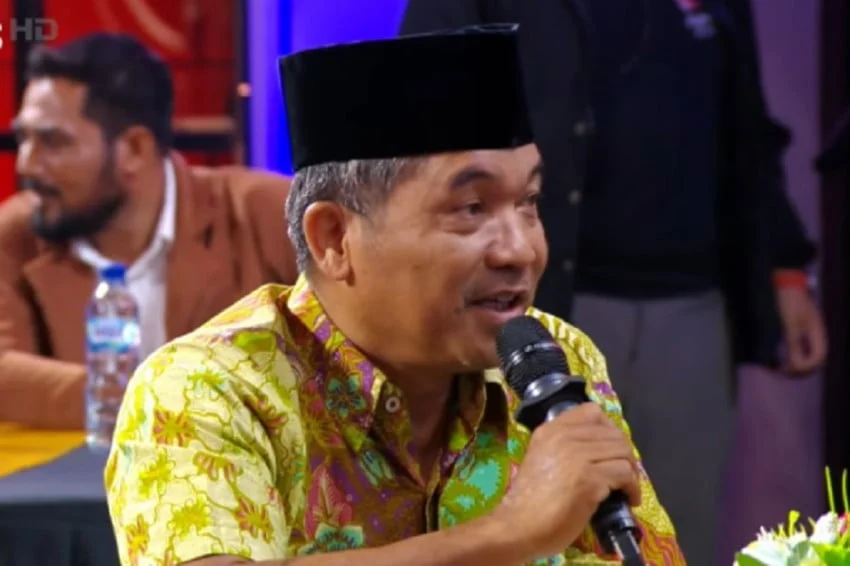
The demand for parliamentary intervention was articulated during a prominent broadcast panel discussion on the television program Rakyat Bersuara, themed "Ada Pasal Selundupan di Kasus Ijazah?" (Are There Smuggled Articles in the Diploma Case?), broadcasted via iNews. Rangkuti argued that public skepticism regarding the authenticity and physical presentation of Gibran’s academic certificates necessitates a formal, transparent investigation within the highest legislative chambers of the country.
Background Context of the Educational Credentials Controversy
The debate surrounding the academic qualifications of Gibran Rakabuming Raka has persisted as a focal point of political contention in Indonesia’s post-election landscape. Critics and civil society organizations have frequently questioned the documentary proof of education submitted during the candidate registration phase with the General Elections Commission (Komisi Pemilihan Umum – KPU).
According to Rangkuti, the fundamental issue lies in the fact that specific documents—often referred to as surat keterangan (suket) or explanatory letters regarding academic equivalency or status—were allegedly utilized in lieu of physical diplomas during crucial verification phases, yet were never publicly scrutinized or formally presented before the Constitutional Court (Mahkamah Konstitusi – MK) during post-election legal challenges.
"And that is precisely why I continue to advocate so that these explanatory letters, and the diplomas that are claimed to exist but were never brought to the Constitutional Court, can be displayed through a forum that I consider official and dignified, namely the inquiry forum in the DPR," Rangkuti stated during the broadcast.
The inclusion of parliamentary inquiry rights is viewed by proponents as a mechanism to bypass administrative deadlocks and demand institutional accountability from election oversight bodies, educational institutions, and administrative agencies.
The Alleged "Smuggled Article" in PKPU Regulations
Beyond the academic credentials themselves, Rangkuti’s appeal for a parliamentary inquiry centers heavily on procedural anomalies within the formulation of electoral laws. Specifically, he highlighted the emergence of Article 18, paragraph (3), of General Elections Commission Regulation (Peraturan Komisi Pemilihan Umum – PKPU) Number 19 of 2023, which governs the nomination procedures for the President and Vice President.
Critics and lawmakers have raised serious concerns that this particular provision was incorporated without formal consultation, discussion, or approval from the DPR. Within the legislative context, regulations formulated by independent commissions that bypass parliamentary oversight are often labeled colloquially as "pasal selundupan" (smuggled articles).
Rangkuti noted that the urgency for a parliamentary inquiry has grown due to statements previously made by key legislative figures, such as Ahmad Doli Kurnia, who served as the Chairman of Commission II of the DPR for the 2019–2024 period. Commission II holds direct jurisdiction over domestic governance, regional autonomy, and general elections, making its oversight of KPU regulatory drafting critical to maintaining legislative supremacy.
"And the inquiry becomes increasingly relevant to our theme tonight because it relates to the existence of a suspected smuggled article, which must be investigated by Commission II regarding the causes and factors of why that article exists and was deemed a smuggled article by Commission II, in accordance with the statement of Brother Ahmad Doli Kurnia," Rangkuti explained.
Chronology of Key Events and Legal Challenges
To understand the trajectory of the current controversy, a chronological overview of the regulatory and legal milestones is essential:
- August–October 2023: The KPU formulates and officially promulgates PKPU Number 19 of 2023 concerning the nomination of presidential and vice-presidential candidates.
- October 2023: Political coalitions register their respective candidates. Gibran Rakabuming Raka registers as a vice-presidential running mate alongside presidential candidate Prabowo Subianto, following a controversial Constitutional Court ruling regarding age limit exceptions for regional heads.
- Early 2024: Public debates intensify regarding the precise nature of the educational documents submitted by candidates, with legal watchdogs questioning the reliance on explanatory letters rather than original degree certificates.
- Post-Election Phase (2024–2025): Various legal challenges, petitions, and administrative lawsuits are filed by civil society coalitions and legal advocates in forums such as the State Administrative Court (Pengadilan Tata Usaha Negara – PTUN) to demand total transparency regarding candidate documentation.
- October 2026: The controversy resurfaces prominently in national media discussions, prompting renewed calls from civil society leaders like Ray Rangkuti for the DPR to utilize its constitutional rights of inquiry.
Defense and Counter-Statements from Legal Representatives
In response to ongoing skepticism regarding the Vice President’s educational background, legal representatives and administrative defenders of the administration have consistently maintained that all documentation complies fully with statutory requirements.
Legal counsel Rullyandi previously asserted that the documentation concerning Gibran Rakabuming Raka’s academic journey—spanning from elementary school through secondary education and culminating at the higher education level—is complete, verified, and legally sound. Representatives have indicated readiness to present these educational records within official judicial proceedings, such as hearings at the State Administrative Court (PTUN), to permanently dispel allegations of document falsification or administrative irregularities.
"The complete educational history, from elementary school to higher education, is fully accounted for," legal representatives have maintained, emphasizing that administrative verification was successfully executed by the election organizers prior to the validation of candidacy.
Understanding the Mechanism of Hak Angket (Right of Inquiry)
Under the 1945 Constitution of the Republic of Indonesia and the Law on the People’s Consultative Assembly, DPR, Regional Representative Council, and Regional House of Representatives (UU MD3), the hak angket is an exclusive constitutional prerogative held by the parliament. It empowers the DPR to conduct investigations into the implementation of laws and/or government policies concerning important, strategic, and broad-reaching matters that are suspected of conflicting with statutory provisions.
The initiation of a parliamentary inquiry requires substantial political backing. According to parliamentary procedural rules, a proposal for an inquiry must be submitted by a minimum number of members representing multiple factions and must subsequently be approved during a plenary session of the DPR. If successfully passed, the inquiry committee is granted extensive investigative powers, including the authority to summon government officials, election commissioners, legal experts, and relevant witnesses under statutory obligation.
However, political analysts point out that invoking hak angket is rarely a purely technical legal exercise; it is profoundly political. The current composition of the DPR features a broad coalition supporting the administration of President Prabowo Subianto and Vice President Gibran Rakabuming Raka. Consequently, securing the necessary political consensus across parliamentary factions to launch an inquiry into the Vice President’s credentials remains a formidable challenge.
Implications for Democratic Governance and Electoral Integrity
The persistent debate over candidate verification standards and regulatory transparency carries significant implications for the broader framework of Indonesian democracy. Civil society organizations argue that upholding rigorous standards in document verification and regulatory drafting is essential to maintaining public trust in democratic institutions.
Proponents of the investigation argue that if regulatory articles can be incorporated into subsidiary legislation without parliamentary oversight or public debate, the system of checks and balances between the executive and legislative branches is severely undermined. Conversely, critics of the inquiry movement caution against weaponizing parliamentary mechanisms for partisan objectives, warning that prolonged political disputes over settled electoral outcomes could distract the government from addressing pressing economic and social development priorities.
As public discourse continues to evolve, the focal point remains whether opposition factions within the DPR will formally adopt Rangkuti’s recommendation to table a motion for an inquiry, or whether the resolution of the dispute will remain confined to ongoing administrative and judicial venues such as the PTUN.