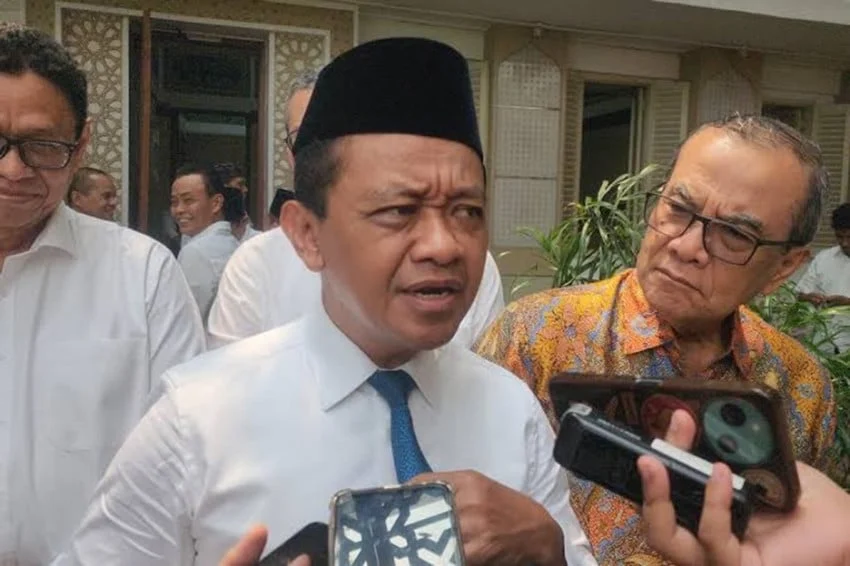
The Indonesian government has signaled an aggressive and uncompromising stance against illicit extractive practices and resource smuggling that continue to siphon billions of dollars from the national economy. In a decisive response to direct orders issued by President Prabowo Subianto, Minister of Energy and Mineral Resources (ESDM) Bahlil Lahadalia has vowed to dismantle illegal mining operations across the archipelago and revoke the operational permits of companies found violating state regulations. This renewed enforcement drive underscores the administration’s broader strategy to secure national sovereignty over its vast mineral wealth, combat systemic corruption, and ensure that the exploitation of natural resources directly contributes to sustainable public welfare rather than illicit private enrichment.
The policy shift comes at a critical juncture for Indonesia’s mining sector, which has long grappled with the enforcement challenges posed by unauthorized extraction, environmental degradation, and the widespread smuggling of high-value commodities. By placing resource governance at the very top of the national agenda, the executive branch aims to plug massive fiscal leaks that have historically hindered national development goals.
Chronology of the Crackdown: From Cabinet Directives to Ground Execution
The intensification of the government’s anti-smuggling and anti-illegal mining campaign traces back to high-level policy declarations made within the executive branch. During a plenary cabinet session held at the Merdeka Palace in Jakarta on Wednesday, October 21, 2026, President Prabowo Subianto delivered a stern warning regarding the pervasive nature of resource smuggling in the country. The head of state specifically highlighted how unauthorized exports and domestic diversion schemes involving strategic commodities—including tin, gold, coal, subsidized fuel, and agricultural fertilizers—were severely undermining the nation’s economic stability.
President Prabowo used stark imagery to describe the gravity of the offense, characterizing the illegal outflow of national assets as an existential threat to the Republic. He equated the smuggling of natural wealth to an act of internal sabotage that actively destabilizes the domestic market and deprives the state of critical tax and non-tax revenues.
Merely 48 hours after the presidential address, Minister Bahlil Lahadalia publicly affirmed his commitment to translating executive directives into immediate administrative and legal actions. Speaking to journalists on Friday, October 23, 2026, Bahlil made it clear that the Ministry of ESDM would act as an unyielding enforcer of the law. Emphasizing the hierarchical accountability within the administration, the minister noted that presidential directives serve as definitive mandates for structural execution, leaving no room for administrative leniency toward compliance defaulters.
The ripple effects of this hardline stance quickly extended beyond the capital, focusing immediate attention on regional hotspots notorious for regulatory non-compliance and illicit extraction. Among the most pressing focal points of this enforcement wave is the island region of Sangihe in North Sulawesi, where unauthorized mining activities have triggered severe economic and environmental concerns.
The Scale of the Crisis: Data, Losses, and Regional Impacts
To fully comprehend the urgency behind Minister Bahlil’s recent declarations, it is necessary to examine the staggering volume of financial losses linked to illegal mining and commodity smuggling in Indonesia. Government estimates and independent economic assessments consistently demonstrate that unauthorized resource extraction is not a localized nuisance, but rather a multi-billion-dollar transnational criminal enterprise.
In the specific case of the Sangihe Islands in North Sulawesi—an archipelago renowned for its rich mineral deposits—illegal gold mining operations have escalated dramatically over recent years. According to regional economic monitors and preliminary investigative audits, unauthorized extraction activities within Sangihe alone have generated an estimated financial loss to the state reaching approximately IDR 200 billion over a mere six-month period. These figures account for uncollected royalties, evaded corporate income taxes, environmental remediation liabilities, and the illicit outflow of refined and unrefined precious metals through unofficial shipping channels.
Nationally, the losses are exponentially higher. The illicit trade in Indonesian tin—of which the country is a major global exporter—has historically suffered from massive leakage through illegal smelters operating outside the oversight of state-owned enterprises and regulatory bodies. Similarly, unrecorded coal shipments leaving remote ports in Kalimantan and Sumatra continue to evade the Domestic Market Obligation (DMO) policies, depriving state electricity utility PLN and national industrial sectors of secure energy supplies while padding the pockets of illicit syndicates.
Furthermore, the domestic smuggling of subsidized fuel and fertilizers compounds the fiscal burden. When resources designated for impoverished farmers and localized transport networks are illegally diverted toward commercial mining operations or smuggled across maritime borders, the state absorbs a double financial blow: the cost of the original government subsidy and the lost economic value of the redirected commodities.
Official Responses and Institutional Alignment
The hardline stance adopted by Minister Bahlil Lahadalia has elicited broad support across various government branches, signaling an unprecedented level of institutional alignment aimed at curbing environmental crime and financial leakage. Law enforcement agencies, including the Indonesian National Police (Polri) and the Attorney General’s Office, are anticipated to work in tandem with the Ministry of ESDM to build airtight cases against the masterminds behind illegal mining networks.
Industry observers and legal analysts point out that previous attempts to clamp down on illegal mining frequently stalled due to bureaucratic friction, jurisdictional overlaps between central and regional governments, and occasional corruption at the local implementation level. By placing the full political weight of the presidency behind the enforcement mechanism, the current administration aims to bypass traditional bottlenecks.
Representatives from formal, legal mining associations have cautiously welcomed the government’s renewed focus, arguing that unchecked illegal mining creates an unfair playing field. Legal mining operators are subjected to stringent environmental impact assessments (AMDAL), strict safety standards, reclamation guarantees, and mandatory tax contributions, whereas illicit operators bypass all such expenditures, yielding artificially cheap outputs at the expense of public safety and environmental sustainability.
Broader Economic Implications and Long-Term Outlook
The rigorous enforcement of anti-illegal mining policies carries profound economic and geopolitical implications for Indonesia. From a macroeconomic perspective, successfully shutting down illicit extraction channels is projected to significantly boost state revenue through improved compliance with royalty payments and tax collection. These recovered funds can subsequently be redirected toward infrastructure development, healthcare, and education initiatives, directly fulfilling the administration’s social welfare objectives.
From an environmental standpoint, unregulated mining practices—particularly gold extraction utilizing hazardous chemicals such as mercury and cyanide—pose catastrophic risks to local ecosystems, watersheds, and marine biodiversity, particularly in fragile island ecosystems like Sangihe. Halting these operations is therefore viewed not merely as a fiscal necessity, but as a critical conservation mandate to protect vulnerable communities from long-term ecological ruin.
However, analysts caution that sustained success will require more than temporary enforcement raids. Long-term resolution depends heavily on addressing the socioeconomic drivers of illegal mining, such as local unemployment and poverty in resource-rich remote regions. Providing viable alternative livelihoods, streamlining the permitting processes for small-scale miners into legal cooperatives (Pertambangan Rakyat), and enhancing real-time digital tracking of commodity supply chains will be essential complementary measures.
As Minister Bahlil prepares to execute the presidential directives, the coming months will serve as a crucial testing ground for Indonesia’s regulatory resolve. The explicit threat of immediate permit revocations and stringent legal prosecution signals that the era of tolerance for illicit resource extraction is drawing to a close, marking a decisive turning point in how the nation manages and protects its natural heritage for future generations.