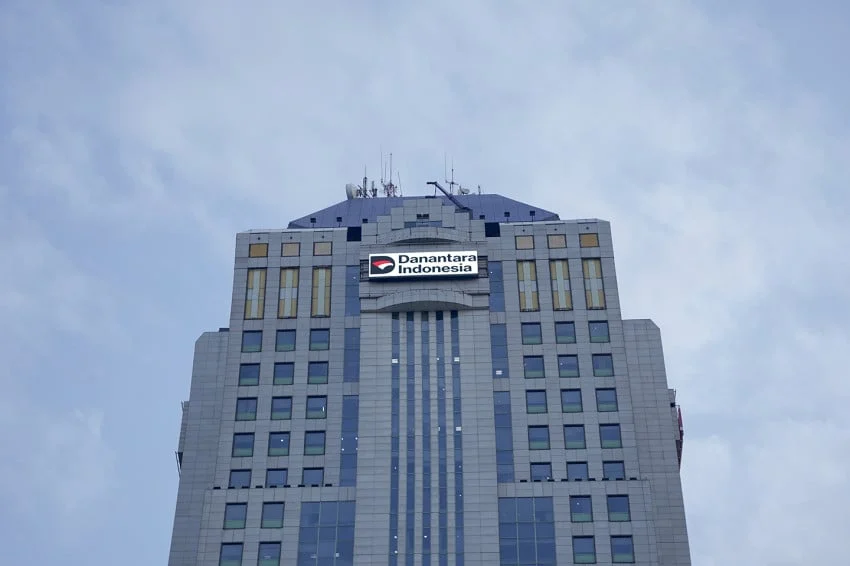
The debut of Danantara Indonesia on the international stage during a prestigious global forum hosted by TIME magazine in New York has drawn considerable attention from financial analysts, communication experts, and policymakers alike. Industry observers have largely characterized the move as a timely and necessary step for Indonesia’s burgeoning sovereign investment ecosystem, provided that the institutional objectives remain transparent and the outcomes are rigorously quantified.
The high-profile engagement marks a foundational moment for Danantara as it seeks to position itself alongside established global sovereign wealth funds and investment powerhouses. While public discourse surrounding international delegations often scrutinizes the immediate financial costs, communication specialists emphasize that participation in premier global platforms must be evaluated through the lens of strategic asset creation rather than conventional operational expenditure.
Strategic Communication and the Shift from Expenditure to Investment
Weighing in on the international deployment, Fardila Astari, a Measurement and Communication Strategic Expert from Reputasia Strategic Communications Consulting, asserted that the decision taken by Danantara holds strategic merit. According to Astari, stakeholders and the general public should analyze the development from a broader, macro-level perspective. She emphasized that any form of participation by a sovereign-backed entity in a tier-one global forum functions inherently as a strategic investment aimed at bolstering international reputation and fostering institutional trust.
Speaking in Jakarta, Astari noted that viewing such initiatives strictly as short-term costs overlooks the nuanced mechanics of modern economic diplomacy and global capital networking. "Partisipasi Danantara harus diperlakukan sebagai investment, bukan expenditure," Astari stated, emphasizing that financial outlays for global positioning must be tied to clear deliverables. "Yang harus dipertanyakan adalah apa tujuannya, value apa yang ingin dihasilkan, dan bagaimana keberhasilannya diukur. Saya melihat keputusan Danantara itu sebagai langkah strategic untuk dikenal secara global."
In translation, Astari stresses that the core inquiry should not center on whether funds were spent, but rather on the strategic value generated, the clarity of the institutional objectives, and the metrics used to evaluate success. Establishing global brand recognition for a newly emerged entity like Danantara is a vital prerequisite for attracting foreign direct investment (FDI), forging cross-border partnerships, and signaling stability to international markets.
Beyond Vanity Metrics: Comprehensive Evaluation Frameworks
A central challenge for sovereign entities engaging in high-profile international forums lies in the accurate measurement of return on investment (ROI). Astari, widely known as Dila, cautioned against relying on superficial indicators—often referred to in communication theory as vanity metrics—such as the frequency of logo placements, social media impressions, or casual mentions in foreign press clippings.
Instead, she advocated for a comprehensive, multi-layered measurement model that encompasses output, outcome, outtake, and ultimate impact. Within this professional framework:
- Output measures the immediate tangible deliverables, such as the number of high-level meetings secured, media briefings held, and networking contacts established.
- Outtake evaluates how the target audience—including international investors, financial analysts, and policymakers—interpreted Danantara’s messaging and whether their perception of Indonesia’s investment climate shifted positively.
- Outcome assesses behavioral changes, such as follow-up inquiries from institutional investors, expressions of interest in joint ventures, or requests for collaborative frameworks.
- Impact measures the long-term macroeconomic consequences, including secured capital inflows, enhanced sovereign credit perception, and the elevation of Indonesia’s standing in global financial indices.
Background and Context of the TIME International Forum
The TIME forum in New York—aligning closely with high-profile global gatherings such as the TIME100 Next initiatives—serves as a crucial nexus where policymakers, visionary leaders, global investors, and cultural icons converge. For emerging market entities, securing a platform at such an event provides an unparalleled opportunity to articulate national economic visions directly to decision-makers who manage trillions of dollars in global capital.
In recent years, Indonesia has intensified its efforts to restructure its sovereign investment landscape. The establishment of Danantara (Daya Anagata Nusantara) is designed to streamline state assets, optimize capital allocation, and act as a super-holding entity capable of driving national strategic projects. By taking this institutional framework to New York, Danantara signaled to the international financial community that Indonesia is not only open for business but is modernizing its governance of state-owned enterprises to meet global standards.
Economic Implications and the Global Sovereign Wealth Fund Landscape
Globally, sovereign wealth funds (SWFs) play an increasingly dominant role in stabilizing domestic economies, funding infrastructure, and steering capital toward sustainable energy transitions and technological innovation. Prominent funds such as Norway’s Government Pension Fund Global, Singapore’s Temasek Holdings, and the Abu Dhabi Investment Authority (ADIA) have long understood that international visibility is intrinsically linked to global capital access.
For Danantara, building an international reputation is not merely a matter of prestige; it is a functional necessity. Global institutional investors—ranging from pension funds in North America to asset managers in Europe and sovereign funds in the Middle East—prioritize transparency, predictability, and institutional credibility when allocating capital across borders. An introduction on a platform like the TIME forum helps demystify Danantara’s mandate, offering a transparent window into Indonesia’s economic trajectory under the current administration.
Furthermore, as global supply chains undergo structural realignment and investors seek diversification away from traditional mature markets, Southeast Asia has emerged as a compelling growth frontier. Indonesia, as the region’s largest economy, holds a pivotal position. Danantara’s proactive outreach in major financial hubs like New York ensures that international capital allocators receive direct, unmediated narratives regarding the country’s strategic priority sectors, including downstream mineral processing, renewable energy infrastructure, digital transformation, and green technology development.
Chronology of Institutional Evolution and Strategic Deployment
The trajectory leading to Danantara’s international debut reflects a carefully sequenced governmental strategy aimed at consolidating state assets and amplifying economic diplomacy:
- Consolidation Phase: The Indonesian government initiates structural reforms to aggregate key state-owned enterprises under a unified strategic holding entity, creating a streamlined vehicle for large-scale investment and asset management.
- Mandate Clarification: Danantara is officially operationalized with a dual mandate: optimizing domestic commercial returns and catalyzing strategic national developments that require heavy capital deployment.
- Domestic Alignment: Prior to its international rollout, the institution focuses on internal governance frameworks, asset valuation, and alignment with national development priorities.
- Global Outreach: Transitioning to the international arena, Danantara selects high-impact global platforms—such as the TIME-hosted events in New York—to establish its brand identity, engage with foreign institutional investors, and project transparency on a world stage.
Expert Analysis: Balancing Visibility with Fiscal Prudence
While communication experts like Fardila Astari validate the necessity of global positioning, financial analysts universally stress the importance of fiscal discipline. Sovereign entities operate under public scrutiny, meaning every dollar allocated toward international engagement must be justifiable through tangible strategic pathways.
The primary risk associated with high-profile international forums is the perception of performative diplomacy without substantive follow-through. To mitigate this risk, Danantara’s leadership faces the ongoing task of pairing external branding campaigns with rigorous, behind-the-scenes deal-making and institutional transparency. When international visibility is successfully matched with robust operational execution, the long-term benefits far outweigh the initial outlays. These benefits include lower costs of capital, stronger partnerships with multinational financial institutions, and increased confidence among foreign direct investors.
Looking Forward: The Road Ahead for Danantara Indonesia
As Danantara continues to integrate into the global financial architecture, its performance will increasingly be judged by its ability to translate international networking into concrete domestic investments. The New York debut represents the opening chapter of a much broader strategy to position Indonesia as an indispensable destination for global capital.
Moving forward, stakeholders will be watching closely to see how Danantara operationalizes the connections made during its international engagements. By adhering to transparent measurement practices, maintaining rigorous standards of corporate governance, and focusing on sustainable, high-impact investments, Danantara has the opportunity to redefine how emerging market sovereign funds engage with the global community. The foundation has been laid in New York; the ultimate measure of success, however, will be written in the long-term economic resilience and developmental progress of Indonesia.