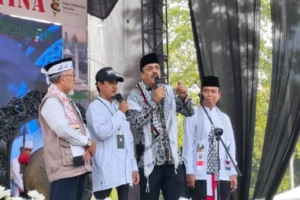
The Ministry of Religious Affairs has traditionally been viewed through the narrow lens of ritual administration, pastoral care, religious education, and pilgrimage logistics. However, as the administration of President Prabowo Subianto and Vice President Gibran Rakabuming Raka marks its two-year performance milestone, a strategic shift has begun to reshape public perception. According to recent performance disclosures analyzed by policy experts, the ministry is rapidly expanding its portfolio to become a pivotal driver of grassroots economic resilience and community-based commercial empowerment.
This evolution aligns directly with the national vision outlined in the administration’s foundational policy framework, the Asta Cita. Specifically, the third pillar of the Asta Cita prioritizes the expansion of high-quality employment, the vigorous development of entrepreneurship, the scaling of creative industries, and the robust development of supporting infrastructure. By mobilizing religious institutions—ranging from Islamic boarding schools (pesantren) and mosques to churches, temples, viharas, and monasteries—the state is deliberately tapping into an underutilized economic engine.
The Paradigm Shift: From Ritual Administration to Economic Agency
For decades, state interventions through the religious sector focused predominantly on spiritual infrastructure and doctrinal education. While these remain core responsibilities, contemporary socioeconomic realities demand a broader mandate. Sigit Kamseno, a Junior Expert Public Relations Officer at the Ministry of Religious Affairs, highlighted this transition in a recent performance review. The core thesis of this strategic pivot is simple yet transformative: vast demographic size must be systematically translated into structured economic productivity.
Indonesia boasts one of the largest religious populations in the world, yet high piety has not automatically translated into proportional economic dominance. Historically, religious communities have frequently functioned merely as consumer bases for external commercial entities rather than active producers, innovators, and asset owners. The Prabowo-Gibran administration’s medium-term development plan seeks to reverse this dynamic. By fostering entrepreneurial capacity within faith-based institutions, the government aims to transform passive congregations into active contributors to the gross domestic product (GDP).
Chronology and Policy Integration: Tracing the Economic Turn
The integration of religious infrastructure into the national economic agenda did not occur overnight. The policy trajectory can be traced through several critical phases leading up to the current administration:
Phase One (2019–2024): Laying the Groundwork for Halal and Cooperative Ecosystems
In the preceding years, the government laid the groundwork for economic formalization, most notably through the mandatory halal certification rollout overseen by the Halal Product Assurance Organizing Agency (BPJPH), housed under the Ministry of Religious Affairs. This initiative initially faced logistical hurdles but ultimately established a standardized framework for micro, small, and medium enterprises (MSMEs) to access broader domestic and international markets. Simultaneously, the ministry scaled up various cooperative (kopontren) training modules within Islamic boarding schools.
Phase Two (October 2024–Present): Alignment with the Asta Cita Framework
Following the inauguration of President Prabowo Subianto and Vice President Gibran Rakabuming Raka, policy coordination shifted toward aggressive employment generation and poverty alleviation. The Ministry of Religious Affairs was tasked with operationalizing the Asta Cita mandates, specifically targeting the informal sector and religious community assets. This involved leveraging existing community networks to disburse micro-grants, establish digital marketplaces for faith-based cooperatives, and introduce financial literacy programs tailored to local religious leaders.
Macroeconomic Data and the Untapped Potential of Faith-Based Assets
To understand the gravity of this policy pivot, one must examine the sheer scale of assets and networks controlled by religious communities across the archipelago. Indonesia is home to hundreds of thousands of registered houses of worship, tens of thousands of Islamic boarding schools, and thousands of religious educational foundations spanning multiple faiths.
According to data from the Ministry of Cooperatives and SMEs, alongside internal Ministry of Religious Affairs metrics, the potential economic turnover within the pesantren ecosystem alone runs into trillions of rupiah annually. Historically, this capital remained fragmented, operating primarily on cash-waqf (endowments), tithes, and community donations without formal integration into the broader national banking and production chains.
Furthermore, economic analysts point out that community-based enterprises possess a distinct resilience against macroeconomic shocks. Unlike large corporations that rely heavily on global supply chains, faith-based cooperatives and local MSMEs are deeply rooted in domestic consumption and hyper-local production models. By upgrading these entities through digital transformation, supply chain integration, and professional management training, the state can stimulate localized growth that directly impacts the Gini coefficient and lowers regional unemployment rates.
Four Pillars of Economic Independence
The rationale for embedding economic empowerment within the religious ministry’s mandate rests upon four foundational pillars articulated by public policy observers and ministry officials.
First, the demography-to-productivity conversion. A large population is an economic demographic bonus only if individuals possess the skills, capital, and market access required to generate high-value output. Transitioning congregations from being end-users to becoming manufacturers, service providers, and business owners creates sustainable wealth generation channels.
Second, social dignity through financial autonomy. Economic independence directly correlates with social mobility and political agency. Individuals who generate stable, independent incomes possess greater autonomy over their futures, reducing systemic reliance on state welfare or temporary social assistance programs. The strategic shift emphasizes moving away from purely consumptive social aid toward productive capacity building—providing the metaphorical fishing rod rather than the fish.
Third, decentralized macroeconomic fortification. When millions of small-scale enterprises anchored around religious institutions grow simultaneously, the cumulative effect is a robust, decentralized economic cushion. These micro-enterprises stimulate rural and semi-urban economies, ensuring that capital does not concentrate solely in major metropolitan centers like Jakarta or Surabaya.
Fourth, the ethical and spiritual compass of commerce. Unchecked market capitalism frequently leads to severe wealth polarization, environmental degradation, and ethical erosion. By anchoring economic activities within spiritual values, the state promotes a stakeholder capitalism model where profitability is balanced with social responsibility, community welfare, and ethical governance. Wealth accumulation is thus framed not as an end in itself, but as a means to achieve broader societal well-being and equitable distribution.
Official Responses and Stakeholder Reactions
The integration of economic programs into a traditionally non-economic ministry has drawn broad commentary from economists, civil society organizations, and religious leaders.
Dr. Hendri Saparini, an economist and founder of the Center of Reform on Economics (CORE) Indonesia, noted that utilizing non-traditional government apparatuses to drive MSME growth is a pragmatic approach in a vast, archipelagic nation like Indonesia. "State institutions alone cannot reach every village and community group. Utilizing religious networks—which already command high levels of social trust and community adherence—creates an efficient delivery mechanism for capital, training, and market access," she explained during a recent economic seminar in Jakarta.
Meanwhile, representatives from various religious boards have expressed cautious optimism, emphasizing the importance of transparent management and technical capacity building. Kyai Haji M. Cholil Nafis, a prominent Indonesian Islamic scholar and institutional leader, emphasized that religious institutions must modernize their operational frameworks to meet contemporary commercial standards. "Islamic boarding schools and religious community groups have the social capital, but they require structural assistance in accounting, digital marketing, and quality control to compete in the open market," he stated.
Similarly, interfaith dialogue organizations have welcomed the inclusive framing of the economic empowerment agenda, noting that poverty affects marginalized communities across all religious demographics. Ensuring that empowerment programs are distributed equitably among churches, temples, and viharas reinforces social cohesion and national unity.
Broader Implications and Future Outlook
As the Prabowo-Gibran administration approaches the midpoint of its initial policy cycle, the success of the Ministry of Religious Affairs’ economic empowerment initiatives will be measured by tangible metrics: the number of formal businesses established, the volume of capital accessed by faith-based cooperatives, the reduction of regional poverty rates, and the integration of traditional institutions into the national digital economy.
The policy represents a structural departure from conventional governance silos. By recognizing that spiritual well-being and material prosperity are fundamentally intertwined, the state is leveraging its institutional architecture to address structural inequality at the grassroots level.
However, significant challenges remain. Bureaucratic inertia, resistance to administrative modernization within traditional institutions, and the risk of inefficient fund allocation are perennial hurdles in large-scale public programs. Continuous monitoring, rigorous auditing, and public-private partnerships will be essential to ensure that these economic initiatives yield sustainable results.
Ultimately, if the Ministry of Religious Affairs successfully transitions from a purely administrative body to an active catalyst for community-based enterprise, it could redefine the role of religious governance in the 21st century. By proving that faith and finance can work in tandem to foster national resilience, Indonesia offers a compelling model of inclusive economic development rooted in cultural and spiritual values.