A sweeping wave of coordinated bomb threats targeted at least 27 commercial passenger aircraft across Europe has triggered widespread aviation chaos, forced emergency landings, and prompted military intervention. The sophisticated and disruptive hoax campaign paralyzed airspace operations in multiple countries on Thursday, marking the second major incident of its kind within a single week. The security breaches forced transport authorities, international airlines, and law enforcement agencies to execute high-stakes emergency protocols, underscoring the persistent vulnerabilities and operational strains facing modern European civil aviation security.
The alarming sequence of events unfolded rapidly throughout Thursday, affecting major flight corridors connecting key European metropolitan hubs. According to preliminary reports and international aviation monitors, at least 27 commercial flights operated by prominent carriers—including Aer Lingus, Wizz Air, LOT Polish Airlines, Finnair, easyJet, and Iberia—were subjected to fraudulent explosive device warnings. The targeted routes involved major destination cities such as Paris, Rome, Milan, Prague, Brussels, and Sofia, creating a domino effect of cascading delays, unexpected flight diversions, and emergency tarmac evacuations.
The severity of the threats prompted extraordinary defensive measures by national authorities. Most notably, the French government was forced to deploy active-duty military fighter jets to intercept and escort compromised civilian airliners through its sovereign airspace. The sight of armed fighter aircraft flanking commercial passenger planes served as a stark reminder of the gravity with which European defense forces treat potential airborne terror threats, even when initial intelligence suggests the warnings may be hoaxes.
The Ground Incident in Warsaw: A Microcosm of the Crisis
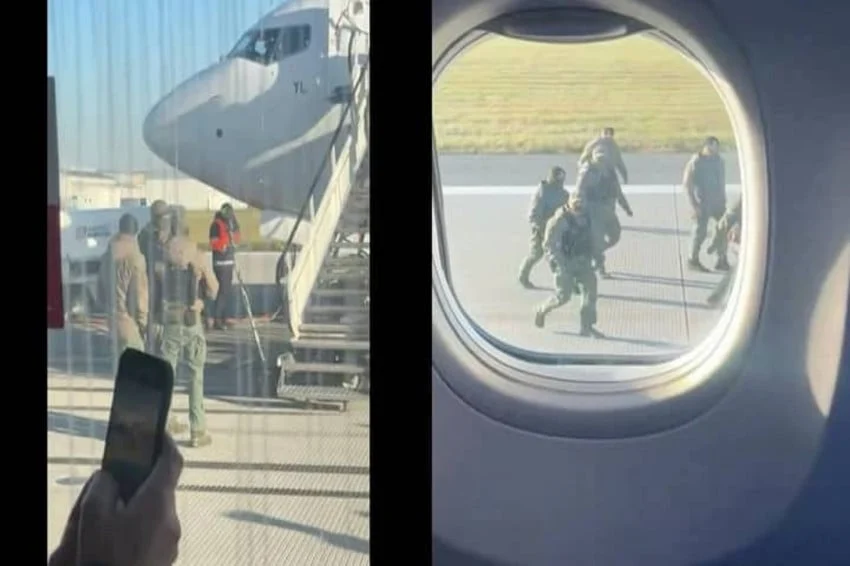
One of the most prominent disruptions occurred at Chopin Airport in Warsaw, Poland. A scheduled LOT Polish Airlines flight preparing for departure from Warsaw to Paris was abruptly halted while actively taxiing down the runway. Ground control and security teams ordered the immediate cessation of the takeoff sequence following the receipt of an urgent security alert regarding the aircraft.
Eyewitness accounts and video footage circulated widely across digital media platforms captured the tense moments on the tarmac. Passengers could be seen disembarking the aircraft via mobile stairs under the watchful eye of heavily armed airport security personnel and emergency response units. According to affected travelers, flight deck crews informed passengers that the scheduled departure was temporarily suspended due to an unspecified security evaluation.
Following exhaustive explosive ordnance disposal (EOD) sweeps and comprehensive security screenings of the aircraft, passenger luggage, and cargo holds, authorities determined the threat to be a false alarm. Passengers were subsequently transferred to a replacement aircraft to complete their journey to the French capital, though the incident resulted in a severe departure delay of approximately three hours. Similar scenes of disruption, albeit varying in operational response, played out at multiple European airfields as airport authorities raced to manage the sudden influx of red-alert notifications.
Chronology of a Security Nightmare
The Thursday incident represents a troubling escalation in a pattern of systematic disruptions targeting the European aviation sector. Industry analysts and transport security agencies confirmed that this episode constitutes the second major wave of widespread bomb hoaxes directed at commercial aviation within a single week.
The timeline of the crisis highlights the immense logistical burden placed on air traffic control (ATC) networks. As threat notifications flooded regional aviation authorities, ATC personnel were forced to reroute aircraft mid-flight, prioritize emergency landing slots, and coordinate rapid-response protocols with local law enforcement and counter-terrorism units. Flights already airborne were directed to secondary airports or instructed to hold in designated airspace sectors while security assessments were conducted. Meanwhile, departures at origin airports were systematically frozen, stranding tens of thousands of passengers in terminal buildings as departure boards turned uniformly red with delay notices.
The coordination required to manage 27 simultaneous or near-simultaneous threats stretched emergency response capabilities to their limits. Ground handling agents, federal police, bomb squads, and airline customer service representatives worked under intense pressure to mitigate panic, secure perimeters, and initiate secondary screening procedures for thousands of affected travelers.
Broader Industry Impact and Operational Implications
The financial and operational implications of this coordinated hoax wave are profound. Major European carriers, already navigating complex post-pandemic operational recoveries, supply chain constraints, and geopolitical airspace restrictions, absorbed heavy financial losses stemming from unscheduled fuel burns, passenger compensation claims, missed connections, and misplaced aircraft rotations.
Furthermore, the cascading nature of air traffic management delays meant that the disruption was not localized to the immediate flights targeted by the threats. A single grounded aircraft in Warsaw or an emergency diversion in France can trigger a ripple effect of delays spanning dozens of subsequent flights across the European continent, inconveniencing thousands of connecting passengers who had no direct connection to the initial security alerts.
Security experts note that such widespread hoax campaigns are frequently designed to achieve specific psychological and economic objectives rather than kinetic destruction. By overwhelming the administrative and operational capacity of law enforcement agencies, perpetrators aim to exhaust security resources, test emergency response times, and sow public distrust in transport infrastructure security. The economic cost of deploying military fighter jets, mobilizing specialized EOD units, and delaying commercial fleets runs into the millions of euros per incident.
Official Responses and Ongoing Investigations
In the wake of the crisis, European transport authorities, aviation safety regulators, and national intelligence services launched comprehensive cross-border investigations to identify the origin of the threats. Cybersecurity units and digital forensics teams are actively examining the communication channels through which the bomb warnings were transmitted to airlines and airports, searching for digital footprints, IP addresses, and operational signatures that could link Thursday’s events to previous threat waves.
Law enforcement agencies have reiterated that issuing false bomb threats is a severe criminal offense carrying stringent penalties under international and domestic aviation laws. Governments across the European Union are expected to convene emergency security consultations to evaluate current threat-sharing mechanisms and explore ways to enhance the resilience of civil aviation against remote, non-kinetic disruptions.
As air traffic slowly returned to normalcy following the clearance of the affected aircraft, the incident served as an urgent wake-up call for the global aviation community. It highlighted both the unwavering vigilance of Europe’s defense and security apparatus and the ongoing vulnerability of modern transport networks to coordinated campaigns of psychological warfare and technological disruption.