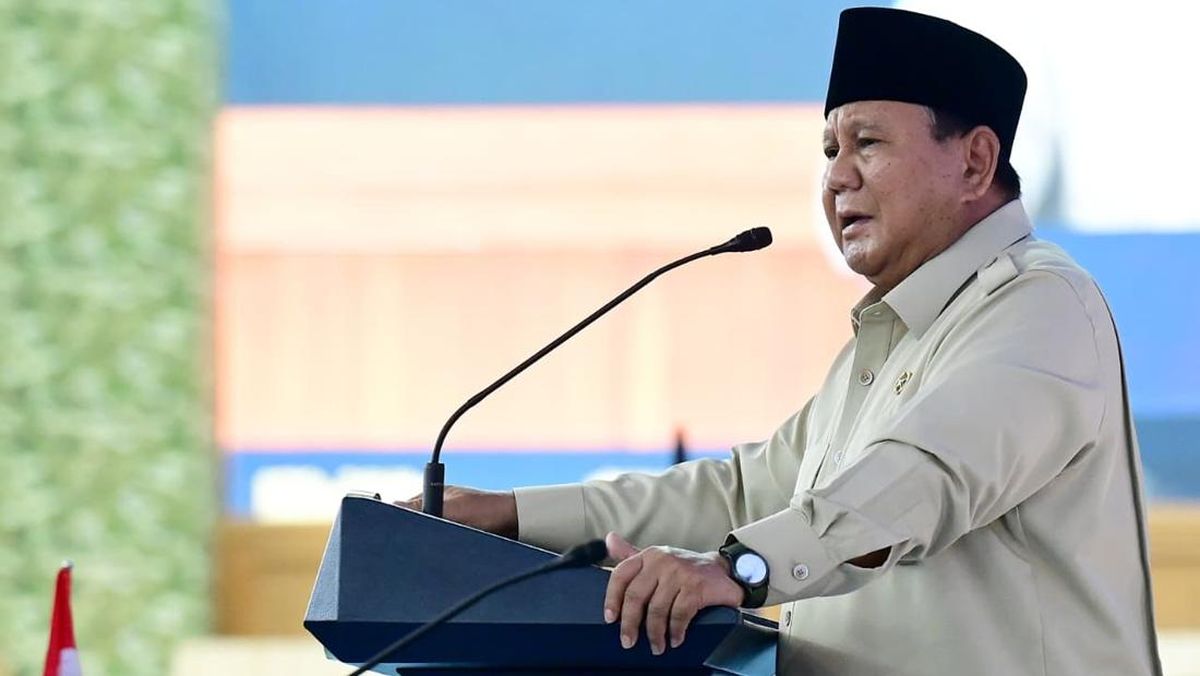
President Prabowo Subianto has unveiled an ambitious national initiative to renovate all schools across Indonesia by 2029, a program designed to dramatically upgrade the nation’s educational infrastructure. This announcement, made during a Plenary Cabinet Meeting at the State Palace in Central Jakarta on Monday, July 20, comes as Indonesia also garners significant international acclaim for its advancements in digital governance and education from the International Telecommunication Union (ITU), a specialized agency of the United Nations. The President emphasized that while the global recognition underscores Indonesia’s strides, the journey to educational excellence is far from over, necessitating continued robust investment in both physical and digital learning environments.
The comprehensive school renovation program is poised to be a cornerstone of President Subianto’s educational agenda, aiming to address long-standing disparities in school facilities across the archipelago. The President outlined a clear, phased approach for the renovation efforts. For the current year, a target of 77,000 schools is set for completion. This momentum is projected to accelerate significantly, with an ambitious goal of renovating 100,000 schools in 2028 and another 100,000 in 2029. The ultimate objective is to ensure that by the close of his term, every school in Indonesia, from elementary to high school levels, will have undergone necessary improvements, providing conducive and safe learning environments for millions of students.
A key innovation in the implementation strategy for this massive renovation drive is the direct allocation of funds. President Subianto stated that the renovation budget would be disbursed directly to school principals. This mechanism is a significant departure from traditional, often centralized, procurement processes, which have historically been plagued by bureaucratic delays, inefficiencies, and, in some instances, allegations of corruption. By empowering school leadership with direct financial control, the government aims to streamline the renovation process, reduce administrative overheads, and ensure faster execution of projects at the local level.
Crucially, this decentralized funding model will be accompanied by robust oversight. President Subianto highlighted that the utilization of these funds would be closely monitored by school committees, which typically comprise parents, teachers, and community representatives. This localized oversight mechanism is intended to foster greater transparency and accountability, ensuring that funds are spent judiciously and effectively meet the specific needs of each school. The President noted, "The money will be sent directly to the school principals, overseen by parent committees, teacher committees, and so on. And it turns out the results are very good." This statement suggests that pilot programs or similar decentralized funding models might have already yielded positive outcomes, informing the decision to scale this approach nationwide.
Addressing Decades of Infrastructure Deficiencies
The urgency of this renovation program is underscored by the prevalent state of educational infrastructure across Indonesia. For decades, many schools, particularly in remote, underdeveloped, and frontier (3T – Terdepan, Terluar, Tertinggal) regions, have suffered from dilapidated buildings, inadequate sanitation facilities, and a severe lack of proper learning resources. Reports from the Ministry of Education and Culture and various NGOs have consistently highlighted the grim reality of thousands of schools operating with crumbling walls, leaky roofs, unsafe electrical systems, and insufficient classroom space. These conditions not only pose health and safety risks to students and teachers but also significantly impede the quality of education delivered, affecting student concentration, attendance, and overall academic performance.
Historically, efforts to improve school infrastructure have been ongoing, but often piecemeal or bogged down by complex administrative layers. Previous administrations have launched various programs, but the sheer scale of the problem has meant that a significant portion of schools still require substantial upgrades. The current government’s commitment to a full nationwide renovation by 2029 signifies a comprehensive, top-down mandate to tackle this fundamental issue head-on. This initiative is not merely about cosmetic improvements but aims to create functional, resilient, and modern learning spaces equipped to support 21st-century education. The direct funding mechanism is expected to cut through the red tape that often delayed projects and inflated costs in the past, putting more control and responsibility in the hands of the communities directly affected.
Indonesia’s Ascent in Digital Education: International Acclaim
In parallel with the ambitious physical infrastructure revamp, Indonesia has also been lauded on the international stage for its remarkable progress in leveraging digital technology for public services and education. During the same cabinet meeting, President Subianto proudly announced that Indonesia recently received the highest award from the International Telecommunication Union (ITU) for its achievements in e-government and digitalized education. The ITU, as the United Nations specialized agency for information and communication technologies, plays a pivotal role in promoting the development and cooperation of telecommunications worldwide. Its recognition of Indonesia’s efforts carries significant weight, positioning the country as a leader in digital transformation within the global community.
Indonesia outranked 122 other nations in receiving the highest honor in both the e-government and digital education categories. This prestigious award is a testament to the nation’s strategic investments and innovative policies aimed at integrating digital solutions into public administration and the learning process. The President specifically highlighted the instrumental role of the "Rumah Pendidikan" (Education House) platform in securing this international accolade. This integrated digital portal has emerged as a cornerstone of Indonesia’s digital education strategy.
The "Rumah Pendidikan" platform is an extensive online resource hub that has garnered significant traction, serving over 6.9 million users across the archipelago. It offers a vast repository of educational content, providing access to 4,843 free learning resources. These resources include e-books, video lessons, interactive modules, and professional development materials designed to support both students and teachers. The platform is also integrated with interactive flat panels, which the government has been distributing to schools, enhancing classroom engagement and making learning more dynamic.
The impact of "Rumah Pendidikan" is particularly profound in the 3T regions, where access to quality educational resources and professional development opportunities for teachers has traditionally been limited. By providing free, accessible digital content, the platform empowers hundreds of thousands of teachers in these underserved areas, enabling them to enhance their pedagogical skills, access updated curricula, and deliver more engaging lessons despite geographical isolation or lack of physical resources. This initiative directly addresses the digital divide, ensuring that students and educators in even the most remote parts of Indonesia are not left behind in the digital age.
Synergy Between Physical and Digital Transformation
President Subianto underscored that the award from the UN’s ITU validates Indonesia’s digital education efforts on a global scale. However, he cautioned against complacency, stating, "This award from the UN proves that our education digitalization is recognized globally. We are not easily satisfied; the journey is still long, but we want to improve all our schools." This statement articulates a holistic vision where technological advancements are complemented by fundamental improvements in physical infrastructure. The synergy between these two pillars—renovated schools equipped with digital tools—is crucial for fostering a truly modern and equitable education system.
The renovation program will ensure that schools are not only structurally sound but also possess the necessary infrastructure to support digital learning, such as stable electricity, internet connectivity (where feasible), and appropriate spaces for interactive flat panels and other digital devices. Conversely, the "Rumah Pendidikan" platform and other digital initiatives ensure that once the physical infrastructure is in place, the content and tools for effective learning are readily available and accessible. This integrated approach aims to create a comprehensive ecosystem where every student has access to both a safe, stimulating physical environment and a wealth of digital learning opportunities.
Challenges and the Path Forward
Implementing a program of this magnitude is not without its challenges. The sheer financial outlay for renovating hundreds of thousands of schools will require significant budgetary allocations from the state budget (APBN) and potentially involve regional budgets (APBD). Logistics, including the procurement of materials and the deployment of skilled labor across a vast and diverse geography, will also be complex. Despite the direct funding mechanism, vigilance against misuse of funds will remain critical, requiring robust monitoring not just from school committees but also from government audit bodies like the Supreme Audit Agency (BPK) and regional inspectorates.
Furthermore, while digital education has seen remarkable growth, bridging the remaining digital divide, especially in areas with poor internet penetration or low digital literacy, will require ongoing efforts. Investment in expanding broadband infrastructure, providing digital literacy training for both teachers and parents, and ensuring access to devices will be essential to maximize the benefits of platforms like "Rumah Pendidikan."
Stakeholder engagement will be paramount. The success of the renovation program will depend on the active participation and collaboration of local governments, school communities, parents, teachers, and construction industry partners. Clear communication, transparent reporting, and effective grievance mechanisms will be crucial in ensuring accountability and maintaining public trust throughout the multi-year initiative.
Broader Implications for Human Capital Development
The ambitious school renovation program, coupled with the acclaimed digital education initiatives, holds profound implications for Indonesia’s human capital development. Improved school facilities are directly linked to better learning outcomes, reduced dropout rates, and enhanced student well-being. A safer, more comfortable, and resource-rich learning environment motivates students to attend school regularly and engage more deeply with their studies. Similarly, digital literacy and access to vast online resources prepare students for the demands of the 21st-century workforce, equipping them with critical thinking, problem-solving, and technological skills.
By investing heavily in both physical infrastructure and digital capabilities, Indonesia is laying a strong foundation for a more skilled, educated, and competitive workforce. This, in turn, is expected to contribute significantly to economic growth, poverty reduction, and overall national development. The international recognition from the ITU further solidifies Indonesia’s position as a regional leader in leveraging technology for educational and governmental advancements, potentially inspiring other developing nations.
In conclusion, President Prabowo Subianto’s declaration of a nationwide school renovation target by 2029, alongside Indonesia’s recent international recognition for digital education, marks a pivotal moment in the country’s educational trajectory. The commitment to directly fund school renovations under local oversight, combined with the continued expansion of innovative digital platforms like "Rumah Pendidikan," signifies a comprehensive and forward-looking strategy. While challenges undoubtedly lie ahead, the government’s resolute focus on enhancing both the physical and digital learning environments underscores a deep commitment to nurturing the potential of Indonesia’s youth and securing a brighter future for the nation.