Jakarta, Indonesia – Her Majesty Queen Máxima of the Netherlands has successfully concluded a significant four-day working visit to Indonesia, spanning from Monday, November 24, to Thursday, November 27, 2025. This visit, her fifth to the archipelago, underscored her dedicated commitment not in her capacity as Queen of the Netherlands, but as the United Nations Secretary-General’s Special Advocate (UNSGSA) for Inclusive Finance for Development, a role she has held with distinction since 2009. Her mission during this period was to advance the global agenda on financial health and inclusive finance, engaging with a diverse array of stakeholders from policymakers and financial institutions to local communities and micro-entrepreneurs across various regions of Indonesia. The comprehensive itinerary focused on understanding and promoting initiatives that enhance financial resilience and well-being for all segments of society, particularly the unbanked and underserved populations, aligning directly with the United Nations’ Sustainable Development Goals (SDGs).
A Global Advocate for Financial Well-being and Development
Queen Máxima’s role as UNSGSA places her at the forefront of global efforts to ensure universal access to affordable, useful, and safe financial services. This mandate, established by former UN Secretary-General Ban Ki-moon, recognizes financial inclusion not merely as an economic concept but as a fundamental enabler for poverty reduction, gender equality, improved health, and overall sustainable development. The core objectives of the UNSGSA’s work include advocating for national strategies for financial inclusion, promoting innovative financial products and services, fostering digital financial literacy, and strengthening consumer protection frameworks. Her visits typically involve high-level policy dialogues with government officials and central bank governors, as well as on-the-ground interactions with beneficiaries of financial inclusion programs, offering a holistic perspective on the challenges and successes within different countries.
Since her appointment, Queen Máxima has been instrumental in raising awareness and mobilizing action on financial inclusion globally. She consistently emphasizes the transformative power of digital finance in reaching remote populations and empowering women and small businesses. Her advocacy often highlights the need for robust regulatory environments that foster innovation while safeguarding consumer interests. Indonesia, with its vast geographical spread, diverse population, and rapid digital transformation, serves as a crucial case study and partner in advancing these global objectives. The nation’s progress and ongoing challenges in extending financial services to its more than 280 million citizens provide invaluable insights for the broader international financial inclusion community.
Indonesia: A Strategic Partner in Financial Inclusion
Indonesia has made significant strides in improving financial inclusion over the past decade. The Financial Services Authority (OJK) reported that the national financial inclusion index reached 85.10 percent in 2023, a substantial increase from 67.8 percent in 2016. This progress has been driven by a combination of government initiatives, central bank policies, and the rapid adoption of financial technology (fintech). Programs like the National Strategy for Financial Inclusion (SNKI), launched in 2016, and various microcredit schemes such as Kredit Usaha Rakyat (KUR) for small and medium-sized enterprises (SMEs) and PNM Mekaar, specifically targeting women micro-entrepreneurs, have played a vital role. The expansion of mobile banking, e-wallets, and agent-based banking has also been critical in bridging the access gap, particularly in remote areas.
However, challenges persist. Disparities in financial access remain between urban and rural areas, and certain vulnerable groups, including women, youth, and those in the informal sector, still face barriers. Financial literacy, consumer protection, and the responsible use of digital financial services are ongoing areas of focus. Queen Máxima’s repeated visits underscore the international community’s recognition of Indonesia’s efforts and the potential for further advancements. Her engagements provide an opportunity to share best practices, identify areas for improvement, and catalyze further collaboration between international bodies, the Indonesian government, and the private sector.
A Comprehensive Itinerary: Deep Dive into Indonesia’s Financial Landscape
The Queen’s latest visit was meticulously planned to offer a multi-faceted view of Indonesia’s financial inclusion ecosystem, encompassing rural development, urban innovation, policy dialogue, and private sector engagement.
Day 1: Empowering Communities in Central Java (Tuesday, November 25, 2025)
The visit commenced in Central Java, a region known for its vibrant cultural heritage and burgeoning industrial and artisanal sectors. Queen Máxima’s first stop was a garment factory in Sragen Regency. Here, her focus was on the financial health of factory workers, many of whom are low-to-middle income earners. Discussions likely centered on the benefits of digital wage payments, micro-savings programs, and access to affordable credit, which can significantly enhance the financial resilience of employees and their families. The interaction provided insights into how corporate practices can contribute to broader financial inclusion goals, particularly through partnerships with financial institutions to offer tailored services to workers.
Following Sragen, Queen Máxima traveled to Kampung Batik Laweyan in Solo City, a historic hub for traditional batik production. This visit was particularly relevant to understanding the financial needs of micro, small, and medium-sized enterprises (MSMEs) and artisans. In Laweyan, she engaged with local batik entrepreneurs to explore their experiences with financial products and services. The discussions aimed to highlight how access to capital, digital payment solutions, and financial literacy training can empower artisans, help them scale their businesses, and preserve cultural heritage through economic viability. The informal sector often faces significant hurdles in accessing formal financial services, and her presence brought attention to innovative solutions for these vital economic contributors.
The day concluded with Queen Máxima attending a Women’s World Banking event at Pura Mangkunegaran, Solo. This majestic historical palace provided a unique backdrop for a crucial dialogue on women’s economic empowerment. She engaged in direct conversations with young people, university students, and female entrepreneurs, delving into their personal experiences with financial products and services. The event likely explored topics such as gender-sensitive financial product design, the role of financial education in empowering women, and the impact of digital tools in overcoming barriers to access. Women’s World Banking, a global non-profit, is dedicated to designing and investing in financial solutions for low-income women, making this interaction highly pertinent to the UNSGSA’s mission.
Day 2: Policy Dialogue and Innovative Solutions (Wednesday, November 26, 2025)
The second day shifted towards higher-level policy discussions and innovative approaches to financial challenges. In the morning, Queen Máxima participated in a roundtable discussion at the local United Nations office. This gathering brought together various development organizations operating in Indonesia, allowing for a collaborative exchange on strategies for financial inclusion. The dialogue likely focused on aligning efforts, identifying synergies, and addressing systemic challenges through a coordinated approach, ensuring that UN agencies and their partners maximize their collective impact on the ground.
Subsequently, she visited the International Finance Corporation (IFC), a member of the World Bank Group. The discussions here focused on the critical role of the private sector in fostering economic growth and financial health. The IFC’s mandate to invest in private enterprises in developing countries makes it a key player in expanding access to finance, particularly for SMEs and infrastructure projects. Queen Máxima’s engagement with the IFC likely explored how innovative lending products and investments can contribute to sustainable development and expand financial access in a market-driven manner, ultimately enhancing financial inclusion and stability.
A highlight of the day was the visit to the Gran Harmoni Cibitung subsidized housing complex in Bekasi Regency, West Java. This complex is notable for providing low-emission homes for low- and middle-income communities, addressing both affordable housing and environmental sustainability. Queen Máxima visited a resident’s home and interacted with representatives of first-time homebuyers, gaining firsthand insight into the challenges and aspirations of individuals seeking affordable housing. Critically, she then inspected a waste bank (bank sampah), an innovative scheme offered by Bank Tabungan Negara (BTN) where residents can pay their housing installments by collecting and selling recyclable waste. This groundbreaking initiative not only provides an alternative payment method but also promotes environmental awareness and community engagement. She also observed the process of signing sale and purchase agreements for dozens of prospective homeowners, witnessing the tangible impact of accessible housing finance. This model exemplifies how financial innovation can simultaneously tackle social, economic, and environmental issues, offering a replicable solution for developing economies.
The day concluded with Queen Máxima visiting Deloitte Indonesia. Her discussions with employers focused on how businesses can contribute to the financial health of their employees and clients. This engagement explored corporate social responsibility initiatives, employee wellness programs, and the broader role of the private sector in promoting financial literacy and responsible financial behavior. It underscored the idea that financial health is not solely a government or individual responsibility but a collective endeavor involving all stakeholders.
Day 3: High-Level Engagements and Future Roadmaps (Thursday, November 27, 2025)
The final day of Queen Máxima’s visit was dedicated to high-level policy engagements, cementing the strategic importance of her mission. She participated in a crucial financial literacy agenda discussion with the Otoritas Jasa Keuangan (OJK – Financial Services Authority), Bank Indonesia (BI – Central Bank), and the Ministry of Finance (Kemenkeu) of the Republic of Indonesia. This tripartite meeting is vital for coordinating national financial inclusion strategies, strengthening regulatory frameworks, and enhancing public financial literacy programs. The dialogue likely covered progress reports, identified remaining gaps, and charted future roadmaps for accelerating financial inclusion, emphasizing the importance of a coherent and collaborative approach across key government bodies.
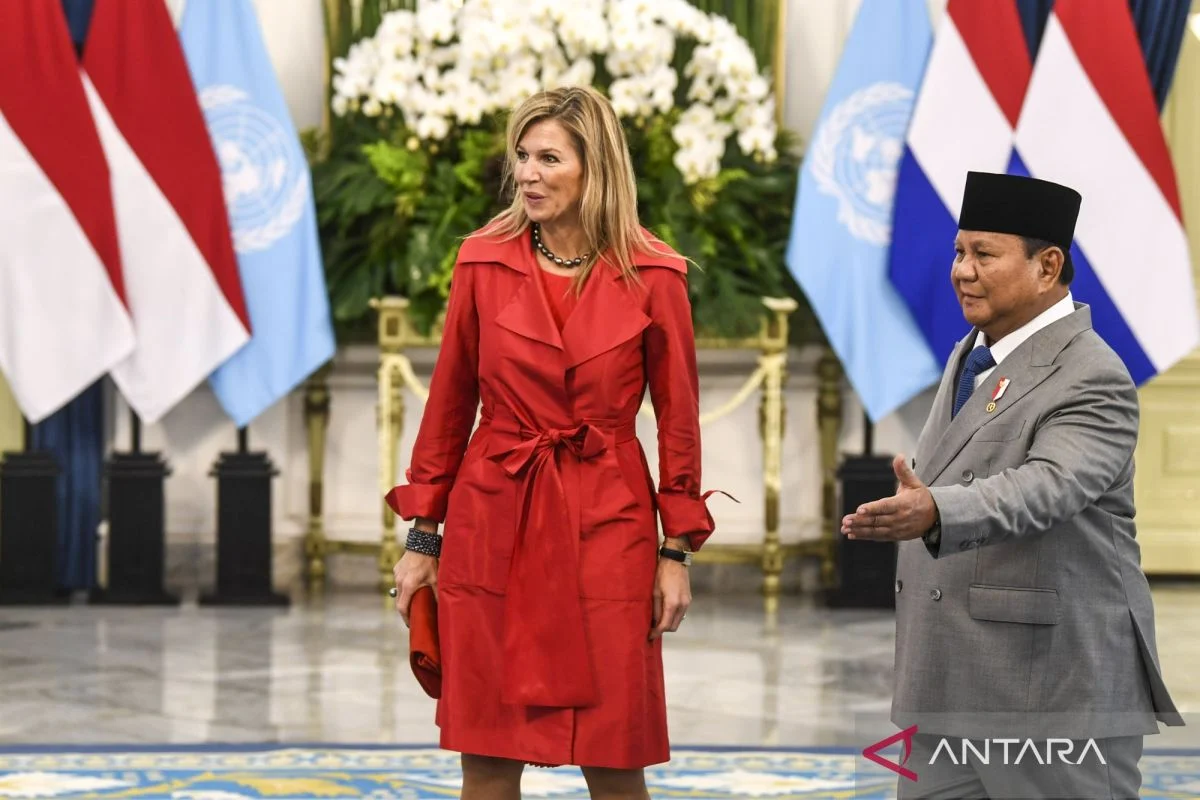
The culminating event of her visit was a meeting with President Prabowo Subianto at the Merdeka Palace in Jakarta. This high-level audience provided Queen Máxima with the opportunity to convey her findings, impressions, and recommendations derived from her extensive engagements across the country. The meeting, which included a private session and a luncheon, served to reinforce the strong bilateral relationship between the Netherlands and Indonesia, particularly in areas of economic cooperation and sustainable development. Her insights, backed by her global perspective as UNSGSA, would undoubtedly contribute to Indonesia’s ongoing efforts to foster an inclusive and resilient financial sector. The President’s reception underscored the significance Indonesia places on financial inclusion and its collaboration with international partners.
The Enduring Commitment: Queen Máxima’s History with Indonesia
This recent visit marks Queen Máxima’s fifth trip to Indonesia, reflecting a sustained and deep engagement with the country’s development trajectory. Her previous visits as UNSGSA took place in 2012, 2016, and 2018, each focusing on different facets of financial inclusion, from digital payments to microfinance and financial literacy. These recurrent engagements demonstrate a long-term commitment to supporting Indonesia’s progress and learning from its experiences.
In a distinct capacity, she also accompanied her husband, King Willem-Alexander, during a state visit to Indonesia in March 2020. That visit, marked by formal diplomatic protocols and broader bilateral discussions, highlighted the historical and contemporary ties between the two nations. The clear distinction between her role as Queen and her expert capacity as UNSGSA emphasizes the seriousness and technical nature of her financial inclusion mission. Her consistent presence underscores Indonesia’s strategic importance in the global financial inclusion landscape and the mutual benefits derived from such high-level international cooperation.
Impact and Implications: Catalyzing Indonesia’s Financial Future
Queen Máxima’s visit carries significant implications for Indonesia’s financial inclusion agenda and its broader development goals.
- Policy Reinforcement and Innovation: Her engagements with OJK, BI, and the Ministry of Finance serve to reinforce existing policies and potentially inspire new initiatives. The discussions provide an external, expert validation of Indonesia’s efforts while also offering constructive feedback based on global best practices. The spotlight on innovative solutions like the waste-to-mortgage program can encourage replication and scaling of similar models across the country, showcasing how financial services can be tailored to local contexts and needs.
- Global Recognition and Collaboration: The visit elevates Indonesia’s profile in the global financial inclusion discourse. By showcasing its achievements and challenges to a prominent international advocate, Indonesia strengthens its position as a key player in regional and global efforts to achieve universal financial access. This can facilitate further international partnerships, technical assistance, and investment.
- Public Awareness and Education: The media coverage and public attention generated by Queen Máxima’s visit invariably raise public awareness about the importance of financial health, literacy, and responsible financial behavior. Her interactions with various community groups, particularly youth and women, can inspire greater participation in financial services and a deeper understanding of their benefits.
- Economic Resilience and Poverty Reduction: By advocating for inclusive financial systems, Queen Máxima’s work directly contributes to strengthening the economic resilience of individuals and communities. Access to savings, credit, insurance, and digital payments empowers people to manage their finances, invest in their futures, and mitigate risks, thereby contributing significantly to poverty reduction and sustainable economic growth. The focus on MSMEs and vulnerable groups directly addresses economic inequalities.
- Digital Transformation: The emphasis on digital finance throughout her visit aligns with Indonesia’s rapid digitalization. Her advocacy helps ensure that this transformation is inclusive, addressing issues of digital literacy, cybersecurity, and consumer protection to prevent new forms of exclusion.
Looking Ahead
As Queen Máxima concludes her impactful visit, the work of fostering financial inclusion in Indonesia continues. The insights gained, the partnerships forged, and the policy dialogues initiated during her trip are expected to contribute to the ongoing evolution of Indonesia’s financial landscape. The challenge remains to sustain the momentum, scale successful initiatives, and ensure that no one is left behind in the journey towards a more financially inclusive and resilient society. The global community, through the UNSGSA’s office, will continue to observe and support Indonesia’s progress as it strives to achieve its ambitious financial inclusion targets and contribute to the broader Sustainable Development Goals.
Born on May 17, 1971, Queen Máxima married King Willem-Alexander in 2002 in Amsterdam, Netherlands. Her unwavering dedication to global financial inclusion continues to inspire action and drive progress worldwide.