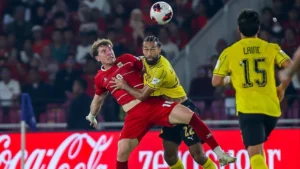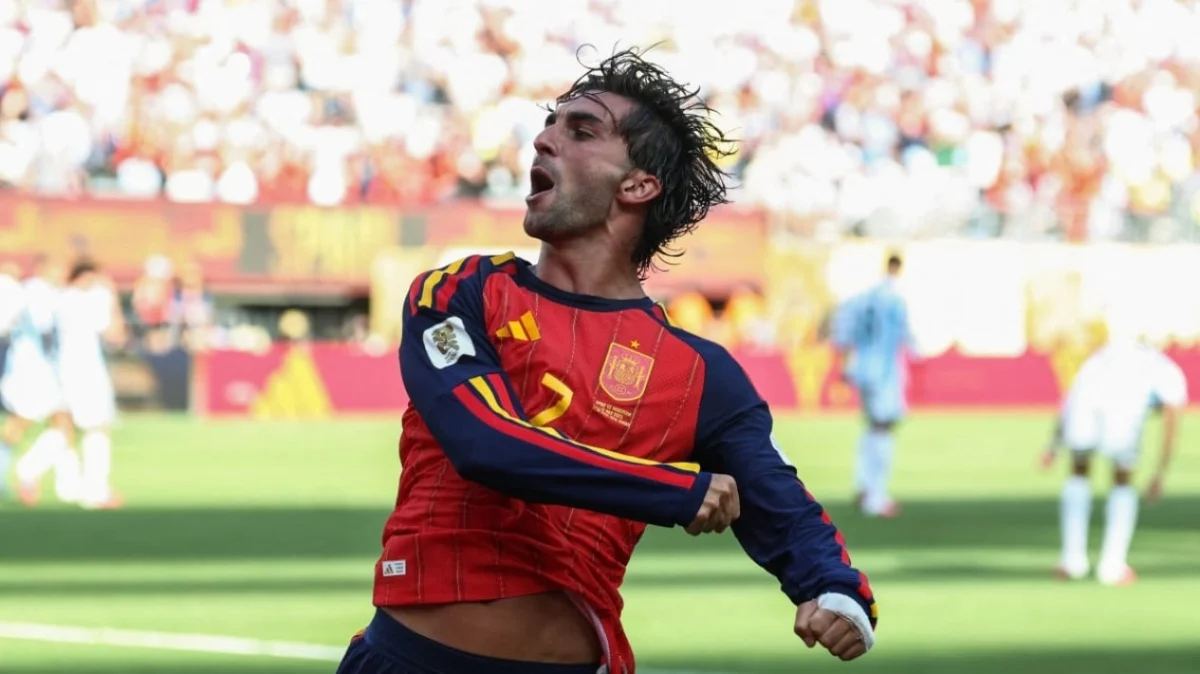
Spain has officially been crowned the champions of the 2026 FIFA World Cup, securing their second-ever title in a nail-biting final against Argentina. The decisive moment came in the 106th minute of extra time, with Ferran Torres finding the back of the net to seal a 1-0 victory for "La Roja" at the iconic MetLife Stadium in New Jersey, USA. This triumph marks the end of a 16-year wait for Spanish football, with their previous World Cup glory dating back to their historic win in South Africa in 2010.
The final match, held on Monday, July 20, 2026, at 05:11 WIB (local time), was a testament to tactical discipline and defensive resilience from both sides. However, Spain consistently dictated the tempo of the game during regulation time, effectively stifling Argentina’s attacking threats. The South American giants, led by the legendary Lionel Messi, found themselves largely on the back foot, struggling to create clear-cut opportunities against a well-organized Spanish defense under the guidance of manager Luis de la Fuente.
The breakthrough finally arrived in the first period of extra time. Ferran Torres, who had been a constant menace throughout the match, seized a crucial opportunity within the penalty area, calmly slotting the ball past the Argentine goalkeeper to give Spain the lead. While Torres appeared to score again in the 113th minute, the linesman’s flag was raised for offside, denying him a brace but not diminishing the significance of his match-winning goal. The 1-0 scoreline held firm until the final whistle, igniting jubilant celebrations among the Spanish contingent and their global fanbase.
This victory culminates a stellar and consistent campaign for Spain throughout the 2026 World Cup. Their journey began with a surprising goalless draw against Cape Verde in their opening Group H fixture. However, "La Furia Roja" quickly found their rhythm, bouncing back with an emphatic 4-0 win over Saudi Arabia, followed by a narrow 1-0 victory against Uruguay, securing their position as group winners.
The knockout stages saw Spain demonstrate remarkable composure and tactical acumen. They dispatched Austria with a convincing 3-0 victory in the Round of 32. Their Round of 16 clash against Portugal was decided by a solitary goal from Mikel Merino, a testament to their ability to grind out results. In the quarter-finals, Spain overcame a resilient Belgium side with a hard-fought 2-1 win. Their path to the final was cemented with a commanding 2-0 semi-final victory over reigning champions France, with goals from Mikel Oyarzabal (penalty) and Pedro Porro proving decisive.
A Legacy Rekindled: Spain’s Decade-Long Quest for Supremacy
The 2026 World Cup title is more than just a trophy; it represents a significant chapter in the annals of Spanish football history. The 2010 triumph in South Africa, where Spain defeated the Netherlands 1-0 in extra time thanks to an iconic goal by Andrés Iniesta, etched their name in the pantheon of world football champions. That generation, often lauded for its tiki-taka style of play, set a benchmark that subsequent teams have strived to emulate.

The intervening years saw periods of transition and near misses. While Spain continued to produce talented players and maintain a strong presence in major tournaments, the elusive World Cup trophy remained out of reach. The 2014 World Cup in Brazil was a disappointing defense of their title, failing to advance from the group stage. The 2018 tournament in Russia saw them reach the Round of 16, where they were eliminated by the host nation on penalties. The 2022 World Cup in Qatar also ended in the Round of 16, with a penalty shootout loss to Morocco.
The 2026 campaign, therefore, was a redemption arc for Spanish football. Manager Luis de la Fuente, who took the reins after the Qatar tournament, instilled a renewed sense of belief and tactical flexibility within the squad. While retaining elements of their traditional possession-based football, this Spanish team displayed a greater pragmatism and resilience, proving adept at adapting to different opponents and match situations.
The Final Showdown: A Tactical Masterclass at MetLife
The final at the 82,500-capacity MetLife Stadium, a venue steeped in sporting history, was anticipated to be a clash of titans. Argentina, driven by the desire to secure a World Cup title for Lionel Messi in what was likely his final appearance on the global stage, entered the match with immense pressure and expectation. However, Spain’s tactical discipline proved to be the decisive factor.
From the outset, Spain pressed high and effectively disrupted Argentina’s build-up play. Their midfield, anchored by seasoned campaigners and dynamic young talents, controlled possession and dictated the tempo. The defensive unit, marshaled by experienced center-backs and supported by diligent wing-backs, remained largely unbreached.
Argentina’s strategy, heavily reliant on the individual brilliance of Messi and the attacking prowess of players like Lautaro Martínez, struggled to find its rhythm against Spain’s suffocating defensive structure. The sheer intensity and organization of the Spanish team left little room for error, forcing Argentina into speculative long balls and isolated attacking forays.
The introduction of Ferran Torres in the latter stages of the second half proved to be a masterstroke by Luis de la Fuente. The winger’s pace, directness, and clinical finishing provided a new dimension to Spain’s attack, ultimately leading to the decisive goal. His ability to find space in congested areas and convert a half-chance into a goal underscored his importance to the team’s offensive strategy.
Road to Glory: A Statistical Overview of Spain’s Triumph
Spain’s World Cup campaign was statistically impressive, highlighting their balanced approach to the tournament.

- Goals Scored: Spain netted a total of 12 goals across their seven matches. This included a mix of attacking flair and crucial goals from set-pieces and individual brilliance.
- Goals Conceded: Their defensive solidity was a key feature, with only 2 goals conceded throughout the tournament, showcasing an average of less than 0.3 goals per game. This included clean sheets in the final and against France in the semi-finals.
- Possession: While not always dominant, Spain maintained a healthy average possession of around 58%, demonstrating their ability to control the game when necessary.
- Key Performers: Ferran Torres emerged as the tournament’s top scorer for Spain with 5 goals, including the crucial winner in the final. Mikel Oyarzabal and Mikel Merino also contributed vital goals at different stages of the knockout rounds. The defensive unit, comprising players like Pau Torres, Aymeric Laporte, and Dani Carvajal, played a pivotal role in their success.
Reactions and Implications: A New Era Dawns for Spanish Football
The victory has been met with widespread jubilation in Spain, with spontaneous celebrations erupting in cities across the nation. Prime Minister Pedro Sánchez hailed the team’s achievement, stating, "This is a historic moment for Spain. The team has shown incredible determination, skill, and passion. They have made an entire nation proud."
The Spanish Football Federation (RFEF) released a statement praising the players, coaching staff, and supporters. "This World Cup title is the culmination of years of hard work and dedication. We are immensely proud of this group of players who have written a new chapter in our footballing history. We also extend our gratitude to our incredible fans who have supported us every step of the way."
For Argentina, the defeat is a bitter pill to swallow, particularly for Lionel Messi, whose quest for a World Cup title remains unfulfilled. However, the team’s performance throughout the tournament, reaching the final, has garnered respect and admiration. National media outlets in Argentina acknowledged the team’s valiant effort, with many praising Messi’s leadership and commitment.
The implications of this Spanish victory are far-reaching. It reaffirms Spain’s status as a global footballing powerhouse and sets a new benchmark for future generations of Spanish talent. The success is likely to inspire a new wave of young players to pursue careers in football, potentially strengthening the domestic league and the national team for years to come.
Furthermore, the 2026 World Cup, hosted collaboratively by the United States, Canada, and Mexico, has been hailed as a resounding success. The tournament captivated audiences worldwide, showcasing the sport’s global appeal and the ability of North America to host such a monumental event. The final at MetLife Stadium, with its electric atmosphere and dramatic conclusion, provided a fitting climax to a memorable World Cup.
As the confetti settles and the celebrations continue, Spain can bask in the glory of being crowned world champions once again. The memory of Ferran Torres’s decisive strike in extra time will be etched in the minds of football fans for generations, marking the return of "La Roja" to the pinnacle of the sport. The legacy of the 2010 champions has been honored, and a new golden era of Spanish football appears to have dawned.