
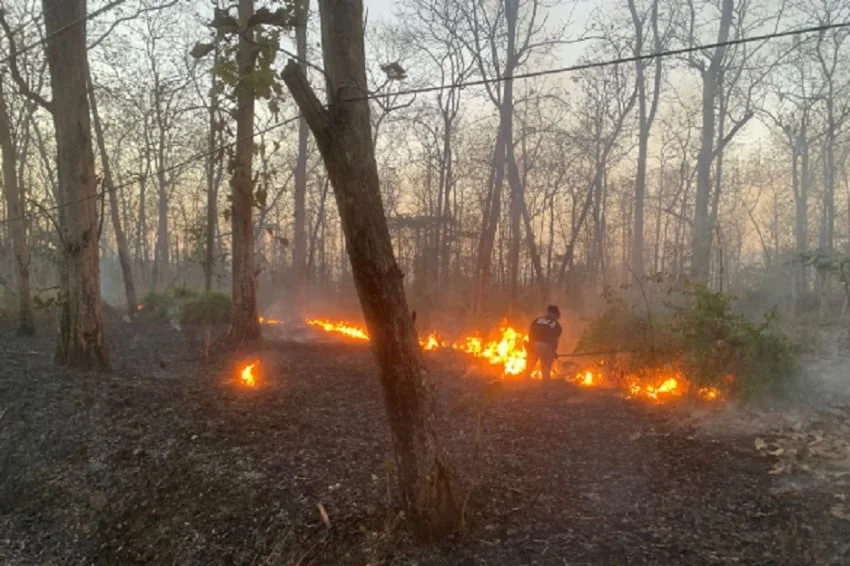
The Ministry of Forestry has released the findings of a comprehensive scientific investigation into the ecological and financial fallout of a severe forest and land fire, locally known as Karhutla, which recently devastated sections of the Baluran National Park located in Situbondo Regency, East Java. According to the rigorous assessment conducted by esteemed forestry and environmental experts from the Bogor Agricultural University (IPB), Professor Bambang Hero Saharjo and Professor Basuki Wasis, the total cost required to restore the ravaged ecosystem across a measured area of 3,141 hectares is estimated at approximately Rp5.52 billion.
This valuation encompasses both immediate environmental remediation and long-term ecosystem rehabilitation. The scientific evaluation sheds critical light on the vulnerability of Indonesian conservation areas, particularly during extended dry seasons, while providing a methodological framework for calculating the true ecological cost of environmental degradation.
Comprehensive Scientific Assessment and Methodology
The collaborative research initiative was commissioned to establish an objective, science-based baseline of the damage inflicted upon the flora, fauna, and atmospheric composition within the Baluran National Park. Known widely as the "Africa Van Java" due to its sweeping savannas and unique wildlife populations, the park represents a vital biodiversity hotspot in the easternmost tip of Java.
To arrive at the financial estimation of Rp5.52 billion, the IPB expert team deployed established ecological valuation methodologies. These frameworks account for the loss of vegetative cover, degradation of soil structure, impairment of hydrological functions, and the immediate threat to endemic wildlife habitats. Professor Basuki Wasis, an expert in soil science and environmental damage assessment, focused heavily on the sub-surface and topsoil impacts, noting that intense heat severely diminishes soil fertility, destroys microbial communities, and accelerates erosion rates during subsequent rainy seasons.
Simultaneously, Professor Bambang Hero Saharjo, a leading authority on forest fires and atmospheric emissions, spearheaded the carbon accounting and air quality impact analysis. His calculations revealed that the fires released approximately 7.63 tons of carbon dioxide ($CO_2$) and 0.38 tons of particulate matter into the atmosphere. These emissions not only contribute to regional air pollution and pose public health hazards to surrounding communities but also run counter to Indonesia’s broader national commitments to reducing greenhouse gas emissions under international climate agreements.
Ministry Officials Clarify Legal Scope of the Study
Amid public interest regarding legal proceedings tied to the incident, Ministry of Forestry officials have clarified the precise legal and administrative boundary of the scientific report. Kepala Balai Penegakan Hukum Kehutanan Wilayah Jawa, Bali, dan Nusa Tenggara (Directorate General of Law Enforcement for Forestry in the Java, Bali, and Nusa Tenggara Region), Aswin Bangun, emphasized that the findings serve as an overarching evaluation of ecological damage rather than a definitive calculation of liability assigned to a specific individual.
Specifically, the valuation represents the total environmental damage across the 3,141-hectare perimeter and does not directly attribute the entirety of the financial loss to a suspect identified in ongoing investigations as MF. Law enforcement agencies maintain that while the scientific study provides vital evidence regarding the scale of destruction, individual criminal liability must be established through distinct judicial processes and evidentiary standards managed by investigators and prosecutors.
The Broader Context of Karhutla and Conservation Vulnerabilities in Java
Forest and land fires in Indonesia have historically been concentrated in the vast peatlands and forest concessions of Sumatra and Kalimantan. However, the recurring droughts driven by climatic phenomena such as El Niño have increasingly exposed Java’s protected areas, national parks, and conservation zones to extreme fire risks.
Baluran National Park, spanning over 25,000 hectares, features a delicate ecosystem comprising marine habitats, mangrove forests, lowland forests, and extensive deciduous savannas. During the dry season, the accumulated dry grasses and timber create a tinderbox environment where a single spark—whether originating from human negligence, agricultural burning outside park boundaries, or deliberate illegal acts—can rapidly escalate into an uncontrollable wildfire.
The recent incident at Baluran underscores a structural shift in regional fire management priorities. Traditionally, monitoring and rapid-response infrastructure have been heavily skewed toward the outer islands. The severity of the Baluran fire serves as a stark reminder that Java’s densely populated landscape and fragmented conservation areas require equally robust surveillance, early-warning systems, and rapid-response firefighting capabilities.
Chronology and Emergency Response
While the Ministry’s official comprehensive report was finalized and released in November 2026, the management of Baluran National Park has been on high alert following the peak of the dry season fire outbreaks.
The initial ignition points were detected by park rangers utilizing ground patrols and remote monitoring tools. The rapid spread of the flames was fueled by high ambient temperatures, strong winds, and low relative humidity, which are characteristic of the regional dry season.
Upon detecting the anomalies, the Balai TN Baluran (Baluran National Park Office) personnel mobilized immediately, establishing firebreaks, deploying portable water pumps, and coordinating with local disaster management agencies (BPBD), military personnel, police, and community volunteers. This coordinated multi-agency response prevented the fire from breaching critical wildlife habitats, including core zones inhabited by the endangered Javan banteng (Bos javanicus), green peafowl, and various primate species.
Aswin Bangun specifically praised the readiness and agility of the Baluran National Park personnel. "The wildfire vulnerability in Java demands much more intensive monitoring of conservation areas," Aswin stated. "We deeply appreciate the preparedness of the Baluran National Park officers. Their swift action serves as a vital example of the importance of vigilance and rapid response against potential threats to regional security and ecological integrity."
Policy Implications and Regulatory Crackdown
The disclosure of the Baluran assessment coincides with a broader, uncompromising stance by the Indonesian government against environmental crimes and illegal land-clearing practices. In parallel with localized conservation assessments, federal authorities have intensified administrative and punitive measures against corporate entities and individuals found culpable of instigating destructive fires.
Recent policy actions highlight this aggressive enforcement trajectory. Notably, the government has moved to revoke the Hak Guna Usaha (HGU)—the official cultivation rights titles—of multiple commercial enterprises scientifically linked to negligent or deliberate fire management practices that contributed to regional Karhutla crises. These regulatory maneuvers signal a zero-tolerance policy toward entities that compromise national ecological security for short-term economic gain.
For conservation areas like Baluran, the implications of the Rp5.52 billion restoration estimate extend far beyond simple accounting. The figure dictates the budgetary allocation required for active reforestation, soil bio-engineering, invasive species management, and the rebuilding of guard posts and early-warning towers.
Furthermore, environmental policy analysts argue that the integration of academic institutions—such as the involvement of IPB professors—into the assessment phase establishes a new standard for transparency and scientific credibility in environmental litigation and restoration planning. By relying on peer-reviewed methodologies for carbon accounting and soil degradation analysis, the Ministry of Forestry strengthens its legal footing when pursuing restitution through civil lawsuits against environmental offenders.
Future Outlook for Baluran National Park
As Indonesia navigates the complexities of climate change adaptation and biodiversity conservation, the rehabilitation of Baluran National Park will serve as a critical benchmark for national conservation policy. The successful allocation and execution of the Rp5.52 billion recovery fund will determine how rapidly the native flora can re-establish itself and whether the displaced wildlife populations can return to their natural habitats without long-term population decline.
Ministry officials have indicated that the restoration blueprint will incorporate climate-resilient planting strategies, prioritizing native tree and grass species that are naturally adapted to fire-prone savanna ecosystems while enhancing community buffer zones to mitigate human-wildlife conflicts and prevent future encroachments. Through a combination of rigorous scientific assessment, enhanced legal enforcement, and proactive on-the-ground preparedness, the Indonesian government aims to safeguard Baluran’s irreplaceable ecological heritage for generations to come.
